History, a haunted bride and the waters of Loch Assynt
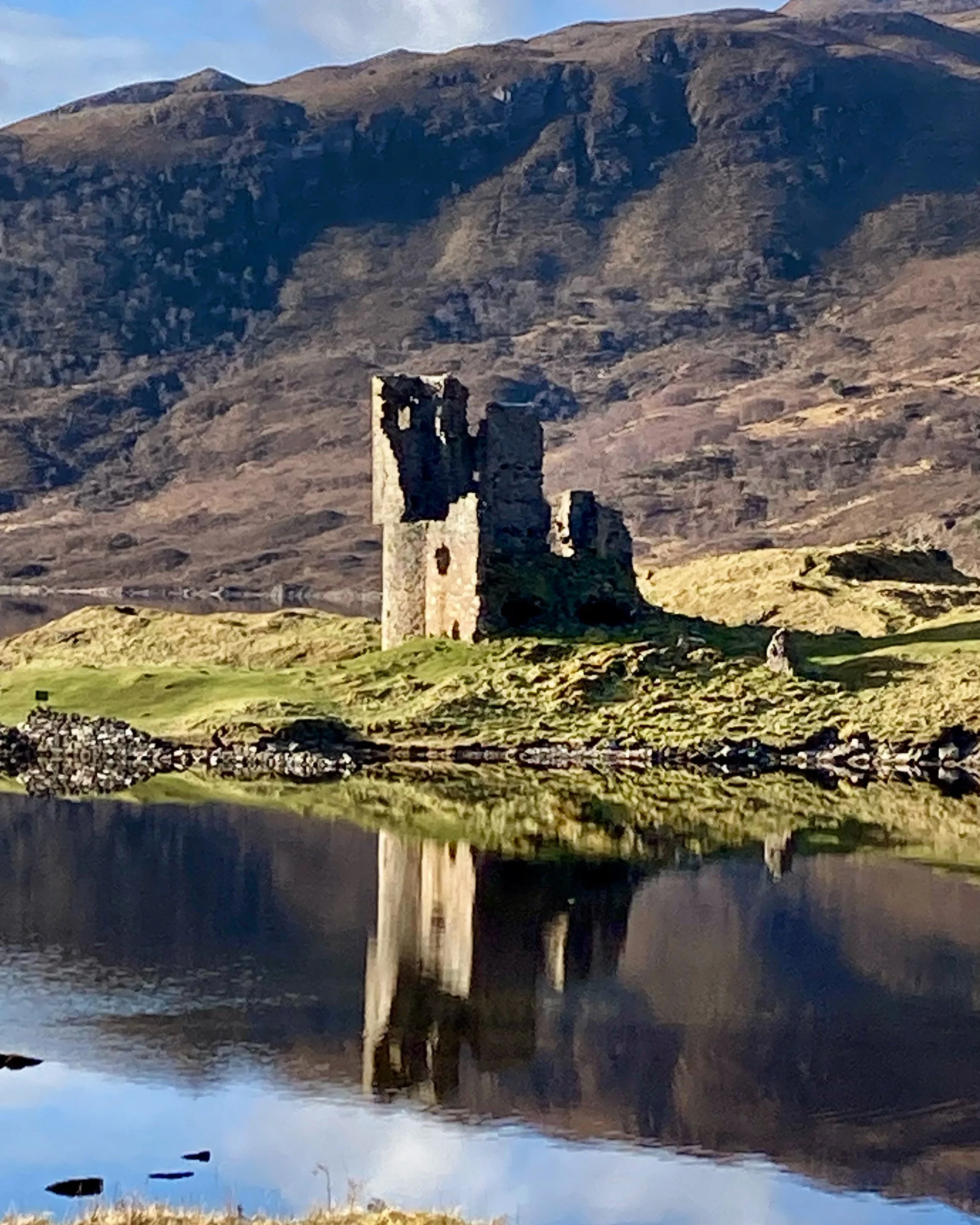
Ardvreck Castle , reflected of Loch Assynt.,
An easy excursion from Eddrachilles, this ruined castle holds enough history and folklore to keep you thinking long after you have left the loch.
Some of the Scottish stories I remember best were told to me during my Highland childhood. There were selkies, unhappy brides and bargains with the Devil, usually made by someone who had failed to consider quite how the payment might be collected. Knowing the places where these things were supposed to have happened gave the stories a particular hold on the imagination.
Ardvreck Castle is one of my favourites to share with guests. Standing on its rocky peninsula in Loch Assynt, it is reputedly among the most haunted castles in Scotland. There is, admittedly, considerable competition.
You can appreciate Ardvreck simply for its setting. The surviving walls rise above the water, with the hills of Assynt beyond, and it makes a rewarding stop during a day exploring this part of the Highlands. But spend a little time with its history and the ruin becomes much more than a picturesque foreground.
A home for the MacLeods
Built around 1490 and enlarged in the following century, Ardvreck was the stronghold of the MacLeods of Assynt. What survives is only a fragment of a tower house that once rose through three or four storeys, with vaulted rooms, fireplaces and a spiral stair. It was a family home, a place of defence and a statement of the laird’s authority.
The Assynt MacLeods belonged to the Lewis branch of the clan. Their island connections matter: the history of this western mainland is closely bound to that of the Hebrides. The other principal MacLeod branch held Harris and Dunvegan on Skye, while the Assynt family exercised its power here among the lochs and hills.
Behind them lay the Norse–Gaelic heritage of the western seaboard. MacLeod means “son of Leod”, a name of Norse origin, and family tradition claimed descent from the kings of Man and the Isles. That royal ancestry remains uncertain, but the connections between the islands and mainland were very real. By Ardvreck’s time, its inhabitants were part of Gaelic Highland society, with all the alliances, marriages and rivalries that came with land and influence.
It was a much wider world than the castle’s seemingly remote position might suggest.
A fugitive at Ardvreck
The castle’s most notorious historical episode came in 1650, when James Graham, Marquess of Montrose, fell into the hands of Neil MacLeod of Assynt.
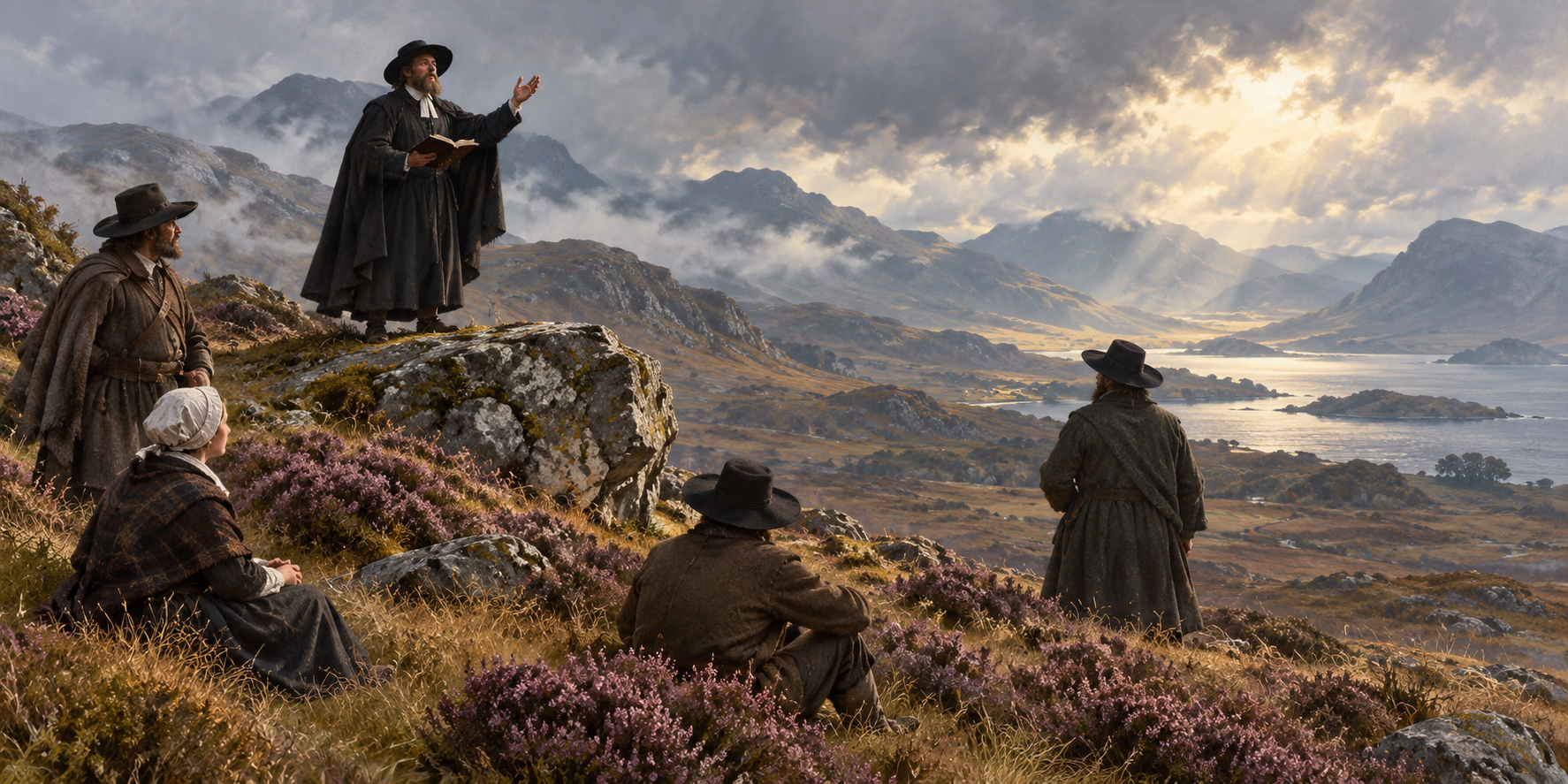
To understand why, we need a little of the troubled politics of seventeenth-century Scotland. The Covenanters took their name from the National Covenant of 1638, opposing Charles I’s interference in the Scottish Church. Arguments about worship and authority developed into armed conflict, becoming part of the wars that engulfed Scotland, England and Ireland.
The loyalties were complicated. Montrose himself began as a Covenanter before becoming one of the most formidable commanders fighting for the royal cause.
On 27 April 1650, while campaigning for Charles II, he was defeated at Carbisdale (Invershin near Lairg, Sutherland) He escaped into the hills, but his flight ended in Assynt.
The familiar account tells of Neil MacLeod’s wife welcoming him to Ardvreck, only to trap him and summon his enemies. Other accounts describe his capture outside the castle and his arrival there as a prisoner. What is certain is that he was held at Ardvreck and handed over to the Covenanter authorities.
Montrose was hanged in Edinburgh on 21 May 1650. In the story later immortalised by the poet William Edmondstoune Aytoun, his great rival Archibald Campbell, Marquess of Argyll and chief of Clan Campbell, watched the captive being paraded through Edinburgh with a smile. Eleven years later, the tables had turned. Following the restoration of Charles II, Argyll himself was executed in Edinburgh, this time by beheading. His head was displayed on the same spike that had held Montrose’s. In those turbulent years, victory offered remarkably little security.
As a Campbell myself, I cannot quite leave my clan out of the telling. We seldom emerge as the heroes of these Highland stories, although who gets to tell the story has always had something to do with that.
For royalists, Montrose’s surrender became an infamous betrayal. His captors regarded him as an enemy commander. Meanwhile, the king whose cause he served had been negotiating with the Covenanters himself. There is enough human drama here without adding a single ghost.
The MacLeods’ own fortunes subsequently declined. In 1672 the Mackenzies captured Ardvreck, ending MacLeod rule in Assynt. Nearby Calda House, built in 1726 as a more comfortable residence, belongs to the next chapter. Today, both stand roofless beside the loch.
The bride who was promised to the Devil
Folklore offers a rather fascinating account of how Ardvreck came to be built.
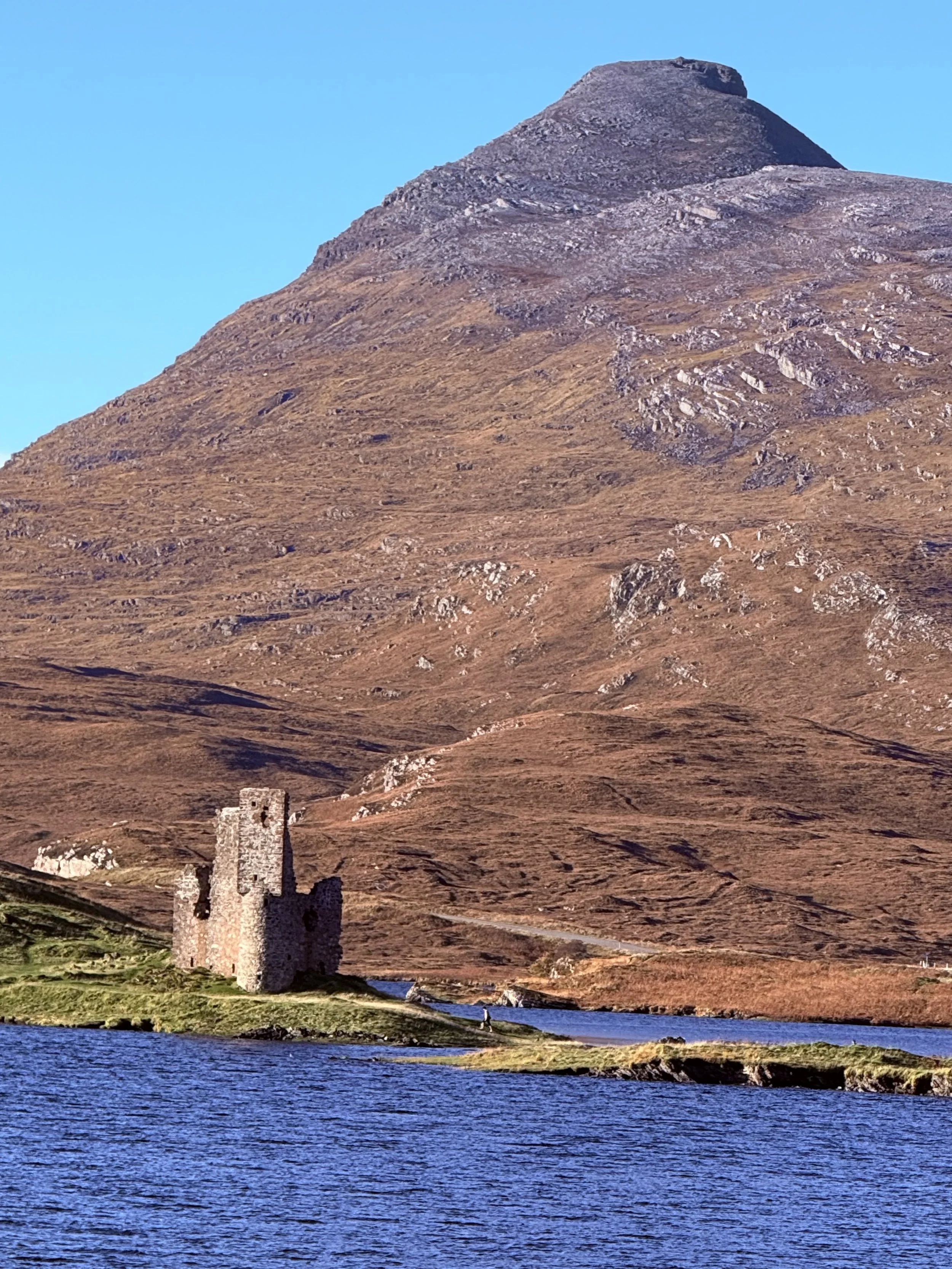
Ardvreck Castle, Loch Assynt, right beside the North Coast 500 route
The laird, struggling with the construction of his castle in these remote lands, was approached by the Devil with an offer of assistance. The proposed price was his soul.
Negotiations continued until the Devil caught sight of the laird’s beautiful eldest daughter. A new bargain was agreed: her hand in marriage in return for the speedy completion of the troublesome building.
Within three days the castle was finished.
The wedding was hastily arranged, with the young woman unaware of her bridegroom’s identity. Only at the ceremony did she discover the terrible truth.
Here, as often happens with stories passed from one teller to another, the versions diverge.
In one, the horrified bride throws herself into Loch Assynt and drowns. Her ghost remains beside the water, where her moaning and weeping are said to be heard to this day.
In another, she leaps into the loch to escape and finds shelter in underwater caves. Kindly spirits transform her into a mermaid, keeping her beyond the Devil’s reach. The splash of her tail can sometimes be heard upon the water, while her tears for the life she might have lived are said to make the loch rise and fall.
A third version makes her a selkie: a seal with a human soul, able to shed her sealskin and walk upon the earth again.
Each leaves a different impression. The first is a haunting born of grief; the others allow the young woman an escape, although at the cost of the life she knew.
A landscape made for legends
The Devil, unsurprisingly, does not accept the loss of his bride gracefully.
In his fury he takes revenge upon the MacLeods, summoning rocks from Chaos and raining them down upon their lands. Look around the rocky country of Assynt and Inchnadamph and you can understand why such a story found a home here.
In the telling we shared on our Facebook page, even the upheavals of the Moine Thrust become part of his revenge. This is the remarkable geological zone where older rocks were pushed over younger ones. Its formation belongs to a past vastly more ancient than any castle, but the storyteller attributes the disturbance to the Devil’s rage.
I enjoy the way these tales give familiar features of the landscape another life. A splash on the loch becomes a mermaid’s tail. A change in the water level becomes the tears of a lost bride. Scattered rocks become evidence of a supernatural temper.
You can know something of the geology and still enjoy the story.
Visiting from Eddrachilles
Ardvreck makes an easy excursion from the hotel, whether you are exploring Assynt, heading towards Lochinver or combining a little history with a day of hill walking.
The castle stands beside the A837 near Inchnadamph, with parking nearby and a short walk to the ruins. Allow around half an hour for a leisurely look, although the setting may encourage you to stay longer. The ground can be wet and uneven, so suitable footwear is useful. Please respect any access notices and resist the temptation to climb the fragile walls.
Take the history with you when you go. Imagine the occupied tower house, the family who held these lands and the arrival of a defeated commander whose fate was soon to be decided.
Then look out across the loch and choose your ending for the bride.
There are plenty more Scottish stories to share back at Eddrachilles, and books to enjoy by the fireside. I should be interested to hear which version you bring back with you.
Fiona Campbell Trevor, Joint Owner Eddrachilles Hotel
Sources and further reading
Historical background draws on the sources below. The smile attributed to Argyll is presented as part of Aytoun’s later poetic telling. The legends preserve the versions shared in the hotel’s Facebook post of 5 March 2025.
Discover Assynt — Ardvreck Castle
Highland Historic Environment Record — Ardvreck Castle, MHG12103
Historic Environment Scotland — Battle of Carbisdale, BTL19
National Records of Scotland — The Marquis of Montrose’s death and re-assembly
Associated Clan MacLeod Societies — Castles and Fortifications
William Edmondstoune Aytoun — The Execution of Montrose, in Lays of the Scottish Cavaliers
Archibald Campbell, 1st Marquess of Argyll — biographical overview