
North West Highlands UNESCO Geopark
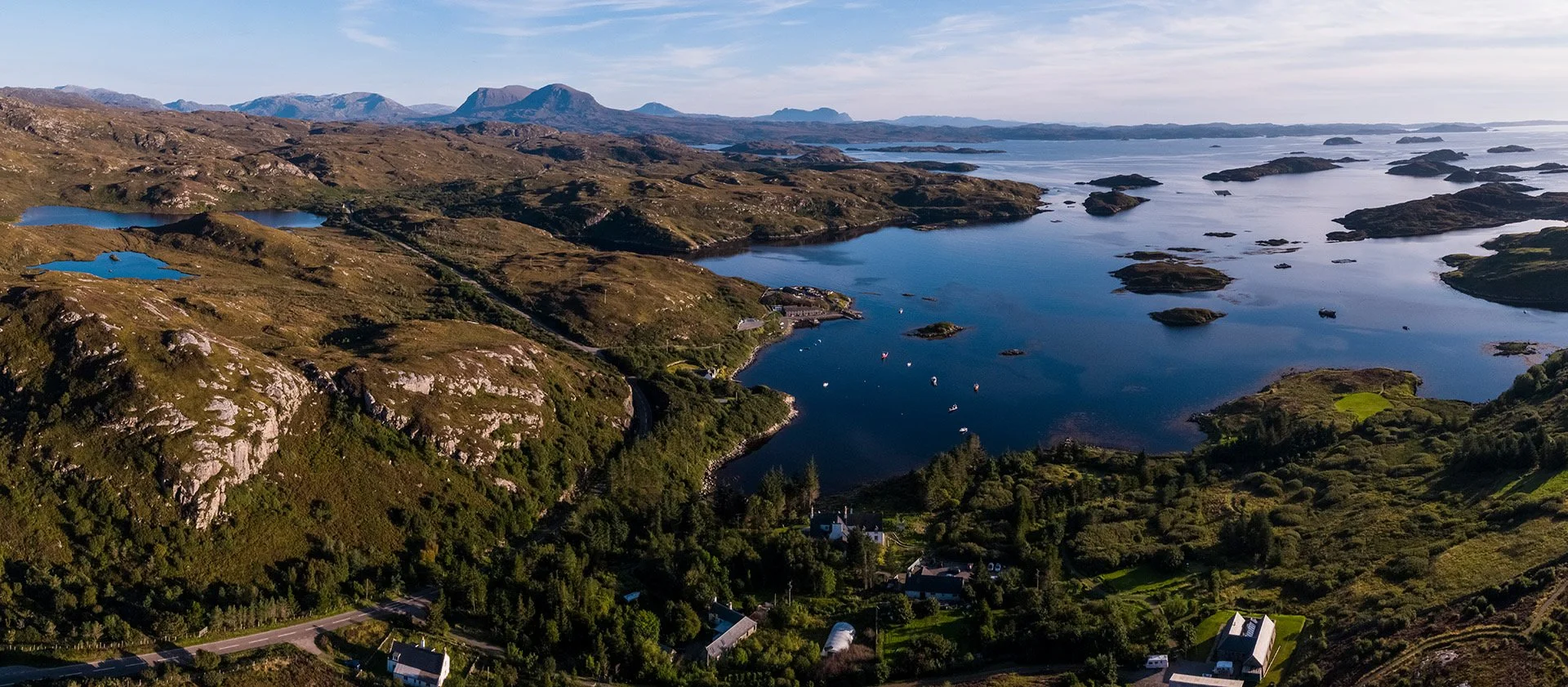
North West Highlands UNESCO Geopark — at a glance
One of Europe’s most geologically significant landscapes
Rocks up to 3 billion years old, among the oldest on Earth
Iconic peaks including Suilven, Quinag, Stac Pollaidh, Foinaven and Arkle
Excellent interpretation for non-specialists, with clear routes and guides
Best explored over three to five nights from a central base
Is the Geopark for me?
The North West Highlands UNESCO Geopark isn’t a theme park or a tick-box attraction.
It will suit you well if you:
Enjoy landscape with meaning, not just views
Like understanding why a place looks the way it does
Prefer slow exploration to tightly scheduled days
Are comfortable with space, silence and single-track roads
Plan to stay three nights or more, allowing time for weather and wandering
You don’t need specialist knowledge — curiosity and unhurried time matter far more than expertise.
It may be less suited if you’re looking for:
A packed itinerary of attractions close together
Short stopovers or overnight-only touring
Constant facilities, cafés or mobile coverage
For guests who give it time, the Geopark offers something rare: a landscape that rewards attention, patience and reflection.
Eddrachilles Hotel sits within the North West Highlands UNESCO Geopark, one of fewer than 200 Global Geoparks worldwide. As Geopark Ambassadors, we are based at the heart of a 2,000-square-kilometre landscape where you can trace Earth’s story back more than three billion years.
This is not scenery to be rushed. The Geopark rewards guests who stay several nights, explore slowly, and want to understand why this landscape looks and feels as it does.
Planning Your Time
Just fifteen minutes from Eddrachilles, The Rockstop at Unapool is the Geopark’s interpretation centre. Designed for interested non-specialists, the exhibition explains what you’re seeing and why it matters, without requiring prior geological knowledge.
There’s a small shop selling field guides and locally made items, as well as a café. The Rockstop is staffed entirely by knowledgeable volunteers. Opening hours vary seasonally; we’ll always have up-to-date information at the hotel.
Many guests combine a Rockstop visit with a boat tour from Kylesku. Alongside sea stacks and Britain’s highest waterfall, the geological highlight is seeing the Moine Thrust from the water — where ancient rocks sit dramatically on top of much younger limestone.
For independent exploration, the Geopark provides excellent downloadable guides written by geologists for non-specialists. We keep printed copies at Eddrachilles:
The Rockstop: Your Gateway to Understanding
Space Simply to be
The North West Highlands is one of the most sparsely populated regions in Europe. Space. Silence. Long horizons largely untouched by human presence. You can walk for hours and see no one, sit on a hillside and hear nothing but wind and water.
For guests seeking genuine mental rest — what we think of as contemplative tourism — this emptiness is the point. Standing on rock that predates human history by billions of years has a way of restoring perspective. Concerns don’t vanish, but they often feel more manageable.
The Geopark’s Rock Routes and quieter back roads are designed for slow exploration, whether on foot, by bicycle or at the pace that single-track roads naturally enforce. Mobile signal is patchy, facilities are sparse, and the landscape resists hurry. What may initially feel like inconvenience often becomes liberation after a day or two.
Journey Through Deep Time
The Lewisian gneiss beneath your feet crystallised around 3 billion years ago, before complex life existed on Earth. When these rocks formed, there were no plants, no animals, and no oxygen-rich atmosphere. To stand on them is to encounter deep time directly.
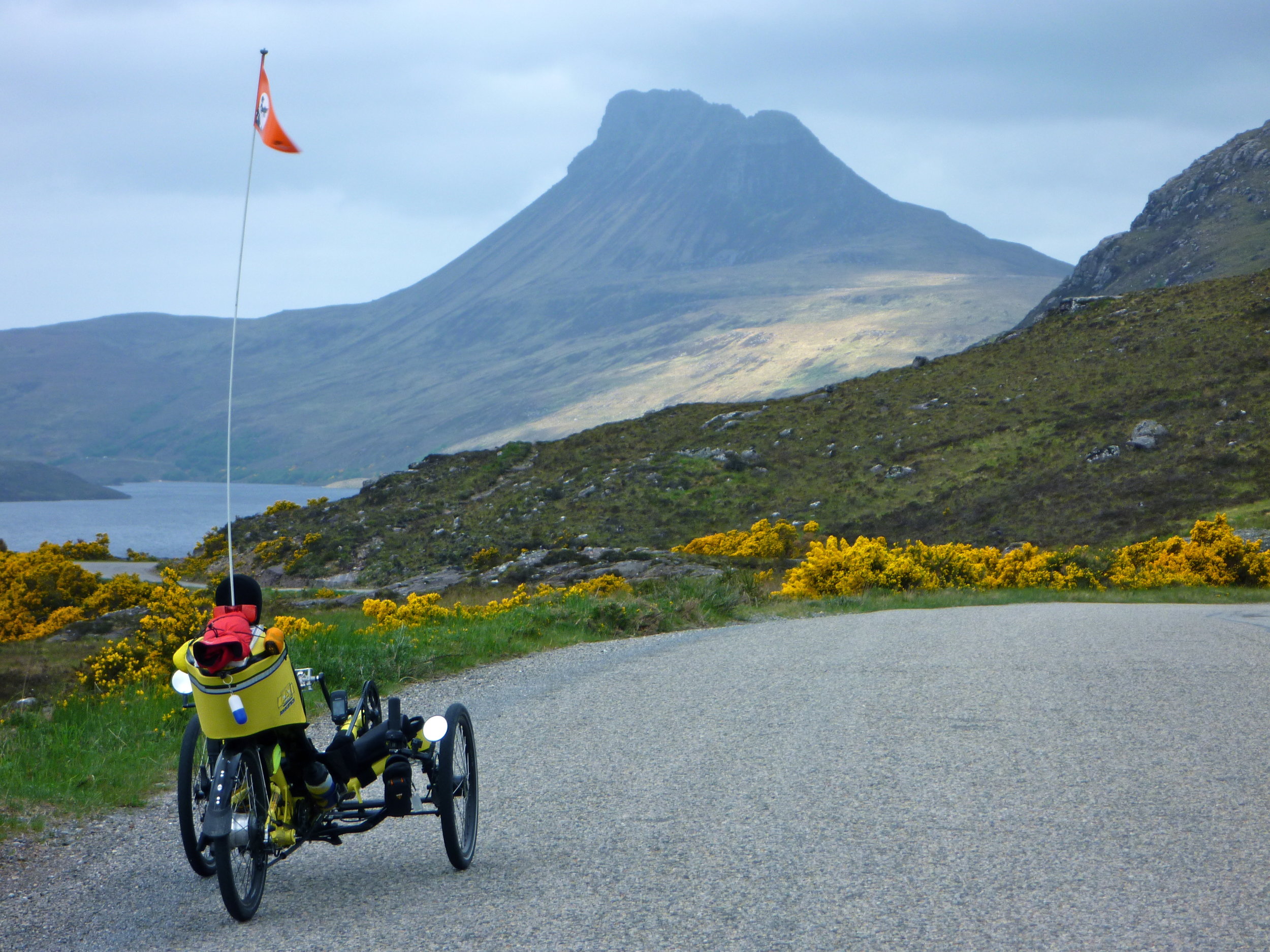
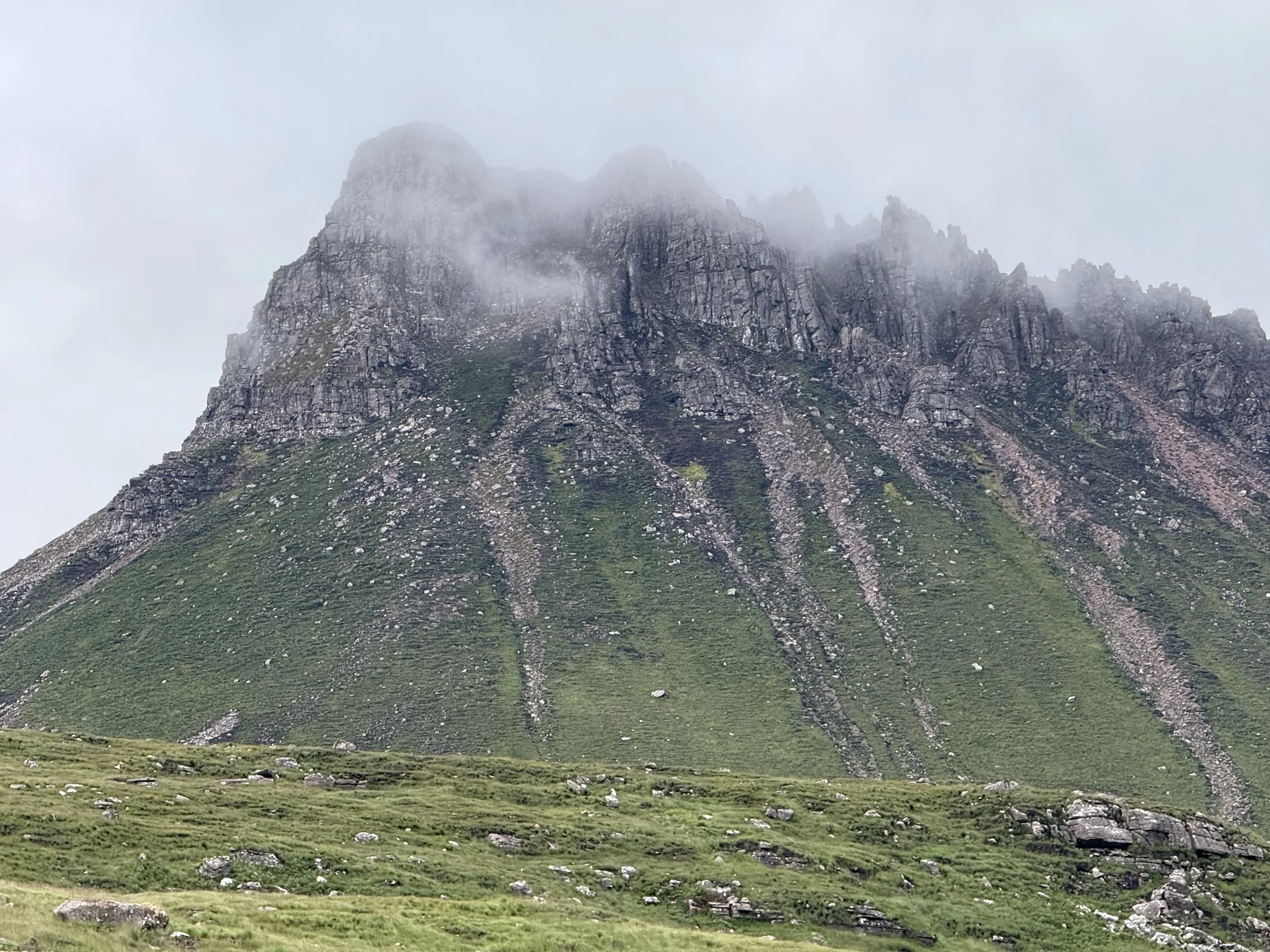
The skyline tells a layered geological story. The ridges of Foinaven and Arkle are formed from pale Cambrian quartzite that catches the light. The iconic Assynt peaks — Quinag’s triple summits, Suilven’s prow, the distinctive cone of Stac Pollaidh — are remnants of ancient Torridonian sandstone mountains, weathered into dramatic, sculptural forms over hundreds of millions of years.
The Geopark is also home to the Moine Thrust, one of the most important geological discoveries in the world. Work here in the 1880s transformed understanding of how mountains form, proving that older rocks could be pushed on top of younger ones during continental collision. You can see this clearly on boat tours from Kylesku, where ancient Lewisian gneiss sits visibly atop much younger limestone — a geological story made tangible.
What makes this landscape exceptional is not just its age, but its clarity. Minimal vegetation and superb rock exposures mean the story is unusually readable. You don’t need a geology background to sense that this is somewhere extraordinary.
From Ancient Geology to Your Table
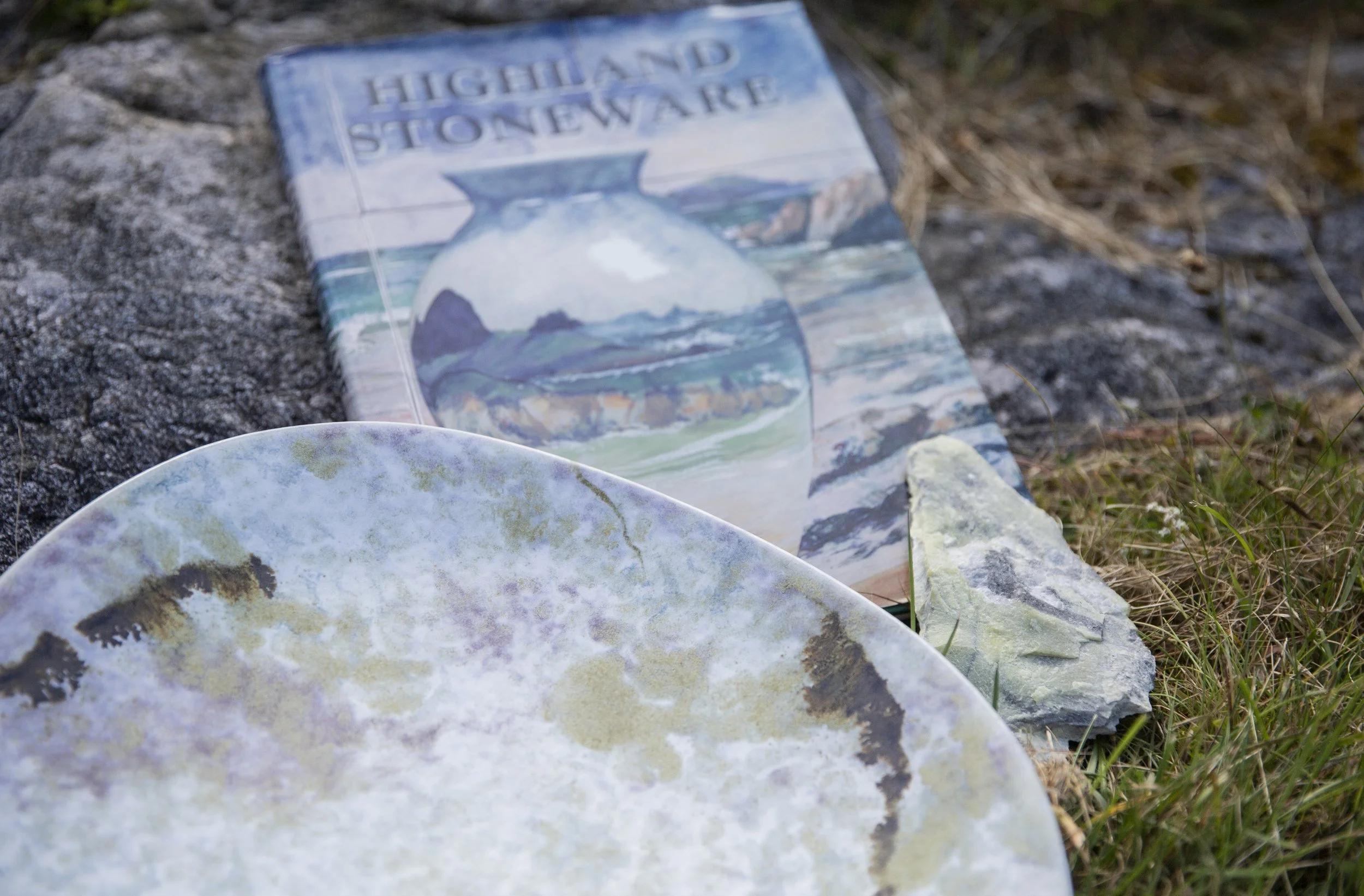
The connection between geology and culture here is direct and tangible. The pottery you'll eat from in The Glebe Kitchen is Highland Stoneware's Ledmore range, glazed with colours derived from the Geopark's rocks. The distinctive grey-greens, ochres, and earth tones aren't decorative choices; they're the actual colours of Ledmore marble weathered quartz, and iron-rich stones from the beach at Stoer. For more information on the processes involved in producing these Geological glazes, we recommend a visit to Highland Stoneware’s workshop and retail in Lochinver.
But the influence runs deeper. The ancient, hard rocks that make this landscape dramatic also make it agriculturally marginal. Thin, acidic soils support rough grazing but not intensive farming—which is why you see crofts here, not farms. Those crofts produce the lamb on our menu. The geology creates the lochs and river systems that support wild salmon. The rocky, island-studded coastline shapes where and how fishing happens, determining what seafood reaches our kitchen. Even the venison connects—red deer range these hills because the terrain and vegetation suit them.
This is what UNESCO recognition actually means: not just that rocks here are old, but that geology, ecology, culture, and human activity form an integrated whole. When we describe Eddrachilles as offering "sense of place," this deep connection between ancient stone, current landscape, and lived culture is what we mean.
FAQs
Most guests find three to four days allows meaningful engagement without feeling rushed.
One day might follow a Rock Route, with stops at key sites, the Rockstop and a boat tour
Another may focus on hillwalking — from gentle coastal walks to classic summit ascents
A third often becomes slower exploration: back roads, small beaches, stopping wherever catches your eye. Or perhaps a visit to Highland Stoneware in Lochinver for souvenir shopping.
Weather matters. Clear conditions transform the experience, while low cloud or rain can make this a day for the Rockstop or the boat tour. The landscape isn’t going anywhere — it has been here for three billion years.
We keep detailed route suggestions, current Rockstop hours and weather-appropriate recommendations at the hotel. As Geopark Ambassadors, part of what we offer is local knowledge: what works best in current conditions, and what most visitors miss.
For hillwalking routes that highlight geological features, see our Hillwalking Guide.
For sea-based exploration, see Kylesku Boat Tours.
“The North West Highlands UNESCO Geopark: where 3 billion years of Earth’s history shapes everything you see, taste, and touch.”
-
Three to four days minimum. The Geopark covers 2,000 square kilometres, and single-track roads mean journeys take longer than maps suggest. More importantly, understanding develops over days rather than hours. Guests staying a week often find they’ve only scratched the surface.
-
ot at all. The Rockstop exhibition and Geopark guides are designed for interested non-specialists. Basic understanding — knowing roughly how old the rocks are, or why colours differ — often transforms the experience.
-
ay to September offers the longest days and most settled weather. April–May and September–October can be spectacular, with clearer air, fewer midges and dramatic light, though some facilities may have reduced hours. We’re open April through October, which spans the practical window for Geopark exploration.
-
Rain can enhance rock colours and textures. Boat tours run in most conditions, and the Rockstop offers indoor interpretation on weather-challenged days. Summit walks in cloud are less rewarding, which is why staying several nights makes such a difference.
-
No. The Geopark's significance depends on features remaining in place for others to study and appreciate. Rock collecting is prohibited and can damage important exposures. The Rockstop shop offers geological specimens, field guides, and Highland Stoneware pottery—legitimate souvenirs that don't diminish what you came to see.