
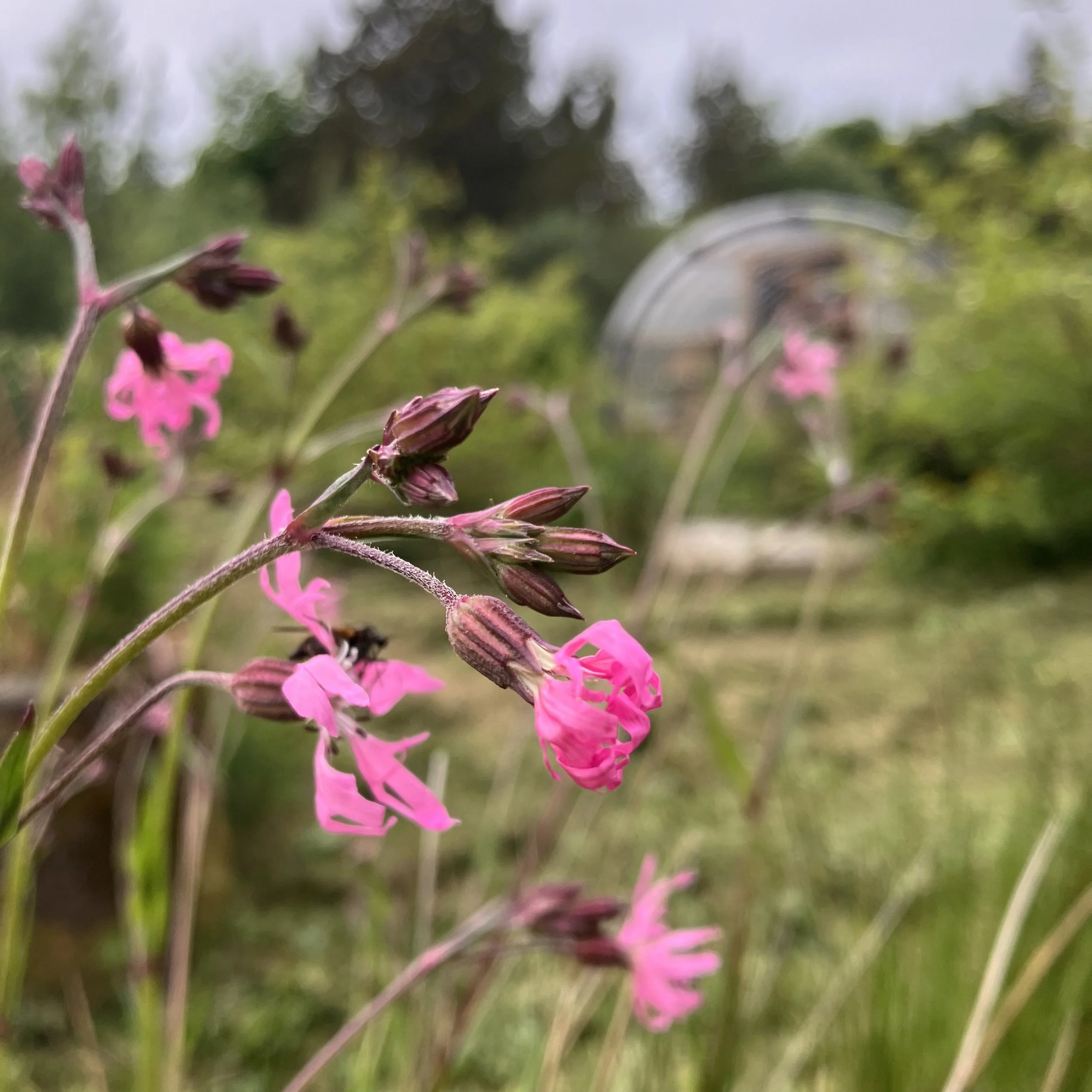
Ragged Robin, one of the native wild flowers, re-establishing its presence at Eddrachilles
The Garden at Eddrachilles
At the edge of Badcall Bay, near Scourie, in the centre of the North West Highlands UNESCO Geopark, where ancient Lewisian gneiss meets the Atlantic, over three acres of woodland garden are slowly taking shape. This is very much a work in progress—a developing landscape where guests can wander among native wildflowers, commemorative plantings, and carefully chosen specimens that are learning to thrive in one of Scotland's more demanding garden environments.
This is gardening at the extremes: on the same latitude as Juneau, Alaska, technically within the Arctic periphery, yet also at the northern limit of Britain's temperate coastal rainforest. Salt spray, relentless westerly gales, shallow soils over some of the oldest rock on Earth's crust, and the peculiar challenge of North Highlands 18-hour summer daylight that favours weeds as much as wanted plants, these factors all shape what grows here and how we garden.
Our Story
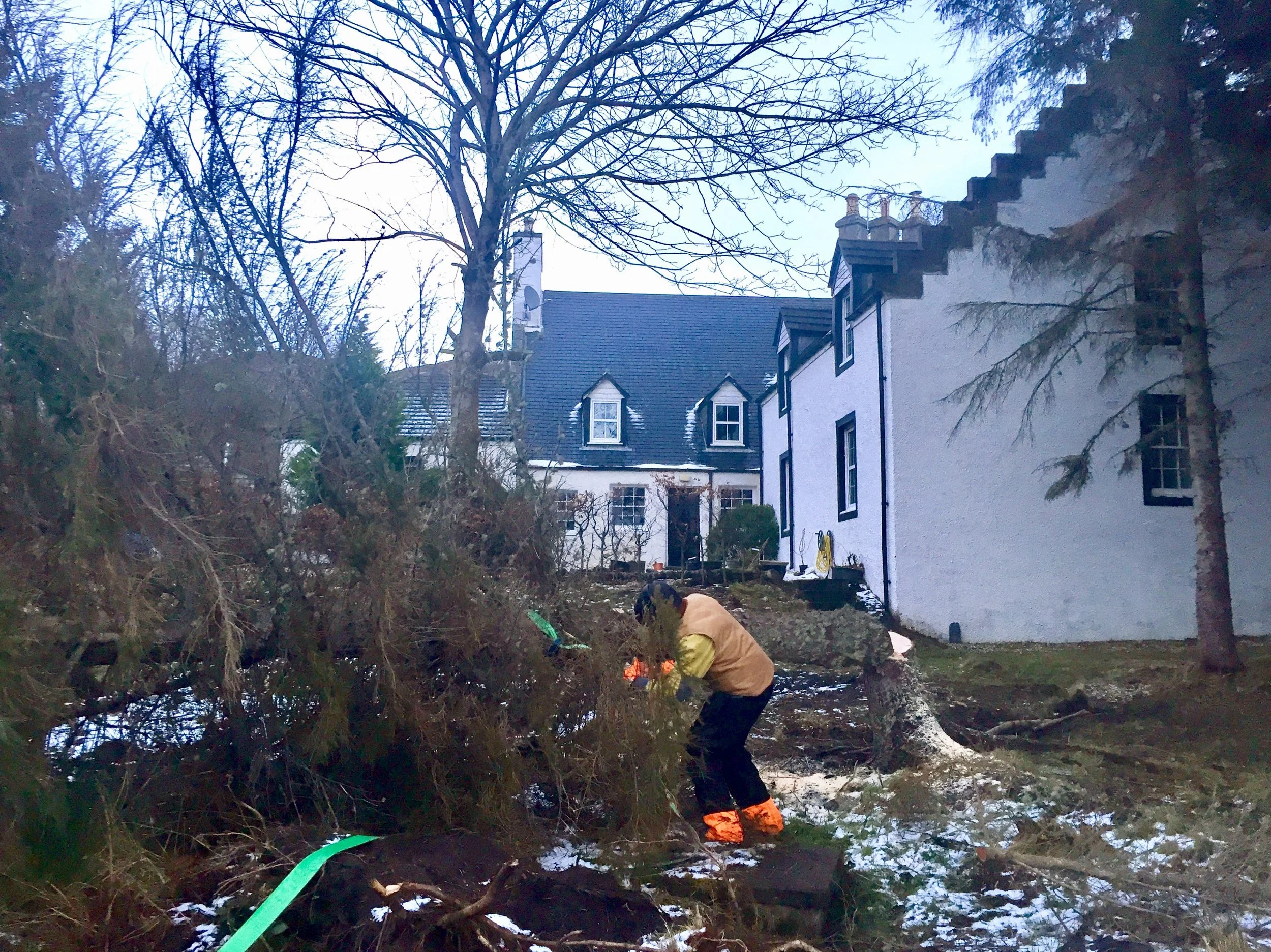
2017 removing trees too close to the hotel.
Eddrachilles has always been shaped by the land around it. Originally this the manse and glebe of the parish, its rough grazing supporting a life of self-sufficiency on the coast. In the 1970s a dense plantation of Sitka spruce was established here — useful as timber, but a monoculture with little light and little wildlife.
When we became custodians of Eddrachilles, one of our first tasks was to begin restoring the balance. Between 2016 and 2017 much of the plantation was felled. Since then the grounds have steadily been transformed. During the pandemic we added paths so that guests could wander freely. In 2022 we installed a Shetland-designed Polycrub, a resilient greenhouse that allows us to grow fresh produce despite our northerly latitude and coastal gales.
The Grounds Today, Ten Years On
Today the grounds combine the remainder of the plantation, tall sitka spruces, young coastal woodland plantings , open slopes , and benches that encourage moments of pause and reflection. These are not a formal or demonstration garden, but a gentle place where sea and mountain views become part of the experience. We hope you will explore, rest awhile, and enjoy the well-being they offer. Picnics are also available to order.
The vision guiding our work is a woodland garden in naturalistic style: resilient, evolving, and honest about the challenges it faces. We plant for decades ahead, knowing that full maturity will come long after our stewardship ends. In the end, that is the greatest joy of being a gardener here.
What you might find:
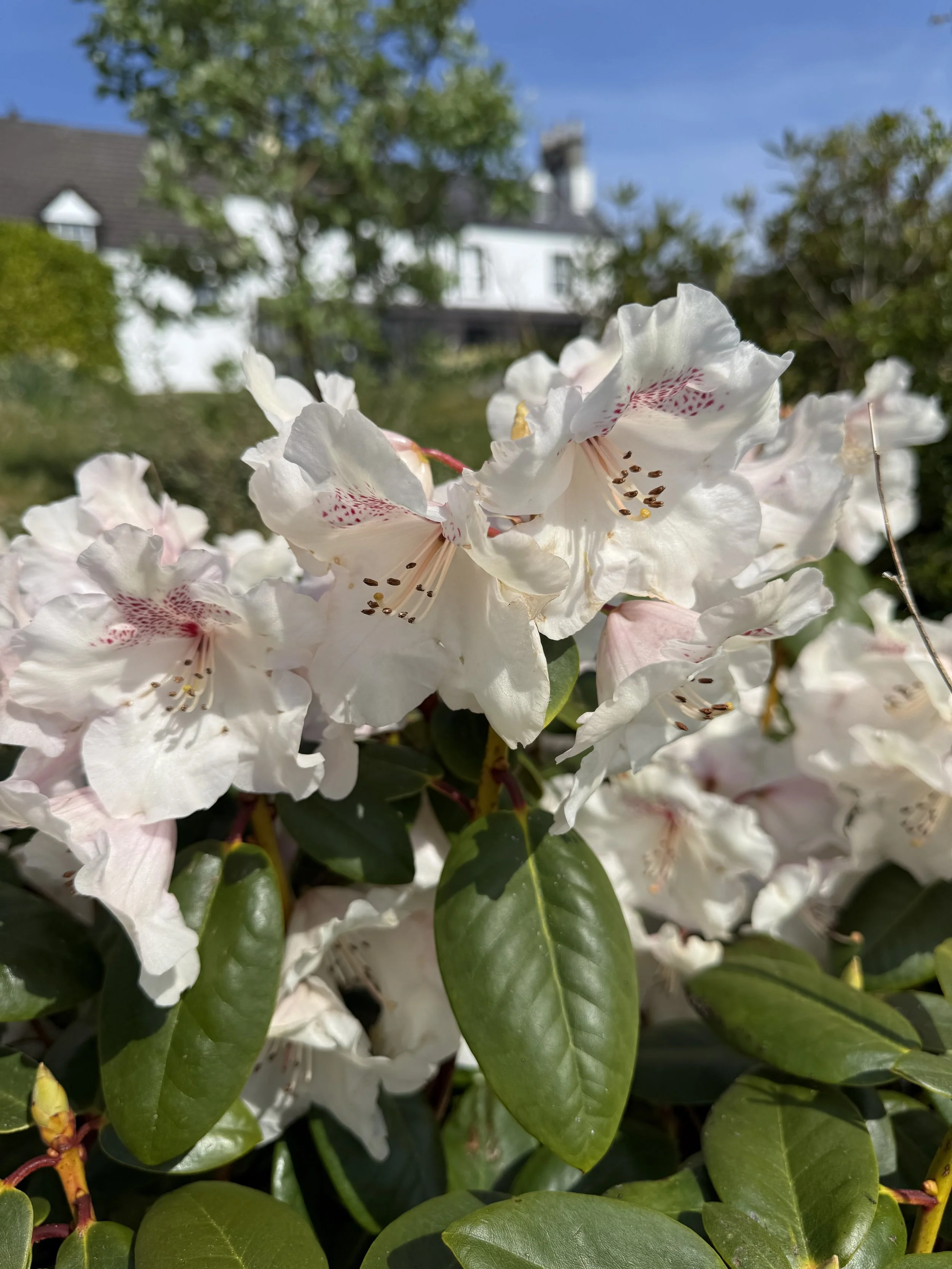
Rhododendrons and azaleas span the flowering season from April through July. We source non-invasive Scottish-grown varieties from Glendoick, choosing hardy forms that can withstand exposure. Those planted in 2018 now bloom reliably each spring; more recent additions from 2020-21 are contributing their first flowers. During the pandemic depths, planting these for an uncertain future felt like an act of faith—and a fair bit of Highland defiance.
Spring arrives in waves of colour. Thousands of bulbs—daffodils, tulips, miniature narcissi, alliums, iris—are chosen for their ability to endure wind and return year after year. Favourites include late-flowering, scented Winston Churchill daffodils, reliable Jetfire for exposed areas, and lily tulips such as Menton, Seattle, and Queen of the Night. We time planting carefully to ensure April guests share in the display.
The damp garden has grown wetter since tree removal, and we've encouraged this evolution. Native species introduced in 2018—ragged robin, water irises, primulas—thrive alongside carefully chosen cultivars. The shallow ditches that run with winter water provide essential habitat for amphibians and beetles, while stoats have claimed the rocky banks as safe territory. We deliberately leave this area undisturbed until well into spring.
The cottage garden can be viewed from the courtyard view or cottage garden view rooms. It has a mix of plantings from traditional floral favourites like Hollyhocks, to roses, tubs of bulbs and dalhias. It’s dominated by the busy bird feeders especially as the migratory birds return in late April.
The Colonels’ dell is the final resting place of a former owner and First World War hero, Lt Colonel Cuthbert. This was the first area that we opened up, structured a winding path around the steep drop, and planted specimen azaleas and hydrangeas. We currently clearing some of the slope of returning gorse and bracken and planting a rockery on quite literally a rock face.
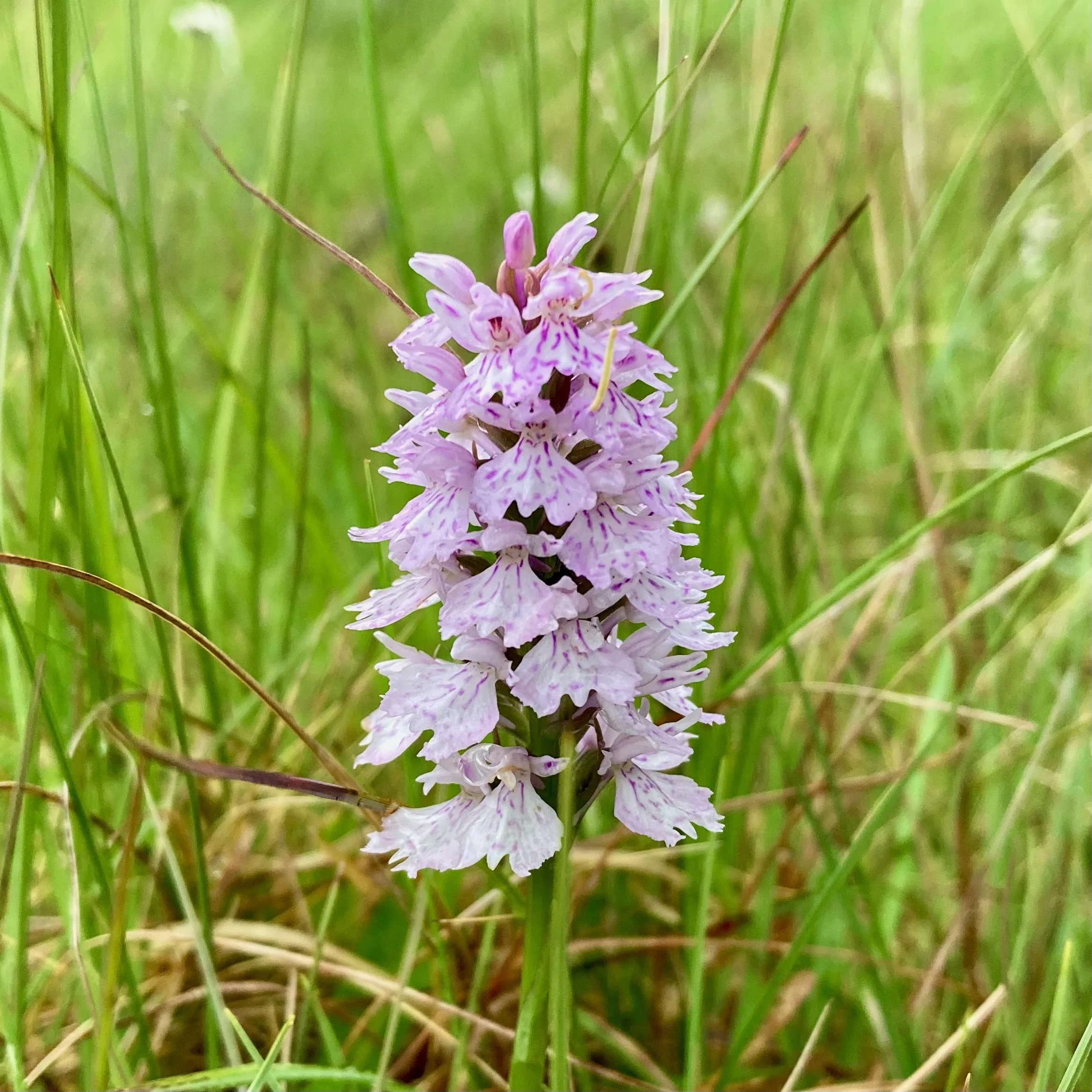
Wildflowers and wildlife receive equal attention. In mid-May, mowers rest for a month to allow native orchids to bloom—plants that can take seven years to reach maturity. Native bluebells die back fully before cutting. Dandelions and willowherb, often dismissed as weeds, provide crucial food for pollinators when daffodils and rhododendrons offer little. Nettles remain in clumps as vital habitat for Sutherland's rich variety of moths and butterflies.
The courtyard pond overflows with frogspawn each April. Frogs, toads, and newts contribute to the garden's balance—providing slug control and, in harder winters, sustenance for otters sheltering in nearby scrubland. A previous owner attempted to keep fish in the pond. Those fell victim to an enterprising otter who came across from the shelter belt in the winter for a spot of “take away” dining. Otters are occasionally still seen in the grounds in the winter but these shy creatures do not visit during the busier summer months.
Owls love the tall trees and the conversations of their offspring fill the dusk air in the summer months.
We have seen more herons fishing in the bay (they have a small colony by a local loch) in the past year. 2025 was also an excellent year for spotting eagles (peak time between 2pm and 3pm) enjoying the thermals at the end of the bay. This does vary from year to year.
Finally, the seals are a particular favourite. There is a growing colony on the skerries and islands in the bay and it is not usual for one or two to slap the water and demand a conversation from the shore as we garden on the slopes. They also seem to really enjoy observing dogs!
A respected conservationist who visited recently suggested that the biodiversity across our three acres likely stands at two to three thousand different species of flora and fauna—testament to what can be achieved when native habitat is allowed to recover and thrive.
Sustainability
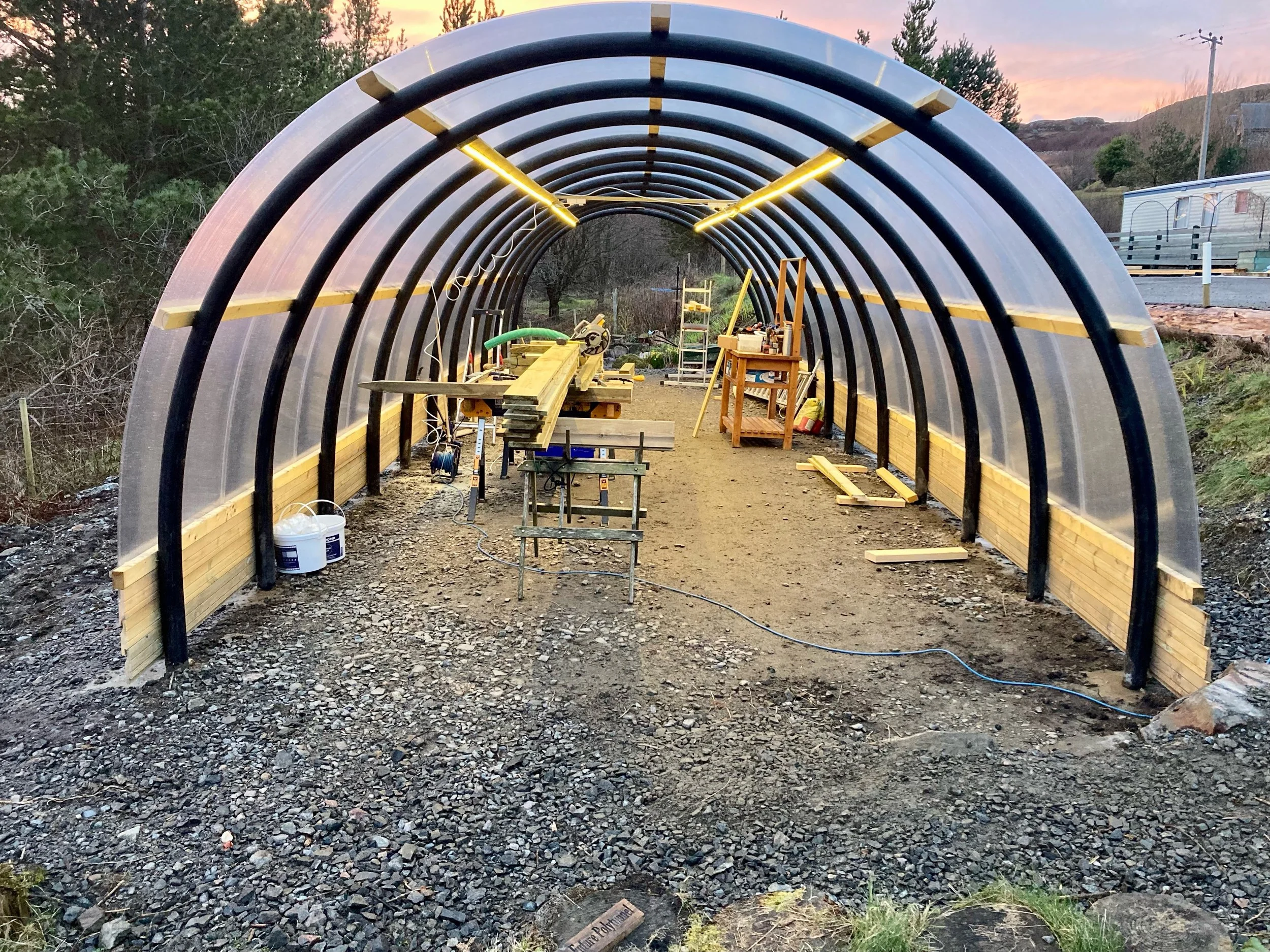
Polycrub under construction, re-using materials destined for land-fill.
We've moved entirely away from peat-based compost since 2018, developing our own using garden waste, wood chippings, kitchen peelings from the hotel, cardboard from deliveries, and seaweed harvested from the foreshore.
Next to the car park stands our Polycrub — Shetland's answer to the polytunnel. Built from linked polycarbonate panels, it withstands our fiercest gales and lasts 30-40 years compared to conventional polytunnels' three-year polythene cycle, a reduction in the burden for landfill waste. The black ribs are old piping from fish farm production, also diverted from landfill. Inside, raised beds produce tomatoes, courgettes, aubergines, salad leaves, and herbs. Unheated yet surprisingly warm, it allows fig trees to overwinter happily and has earned enthusiastic approval from Eddrachilles' cats. Every summer, several toads take up residence—judging by their growth, it proves an excellent hunting ground.
Legacy Planting
Trees carry memory and meaning here. Snow Queen birches commemorate Fiona's sister Tricia. A copper beech honours Richard's mother. A Tai-haku "Great White" acknowledges our connections to Japan. This remarkable variety, thought extinct in Japan by the late 19th century, was rediscovered in a Sussex garden in the 1920s and eventually reintroduced to its homeland from Britain.
Guest suggestions have shaped the landscape too: a Royal Burgundy cherry for the late Queen's Platinum Jubilee, an oak for King Charles III's coronation. Volunteer rowans and hazels seed themselves wherever they find opportunity reminding us of the resilience of Highlanders. Each new planting adds another layer to Eddrachilles' evolving story. What suggestions would you make? We really would love to know.
An Ongoing Project
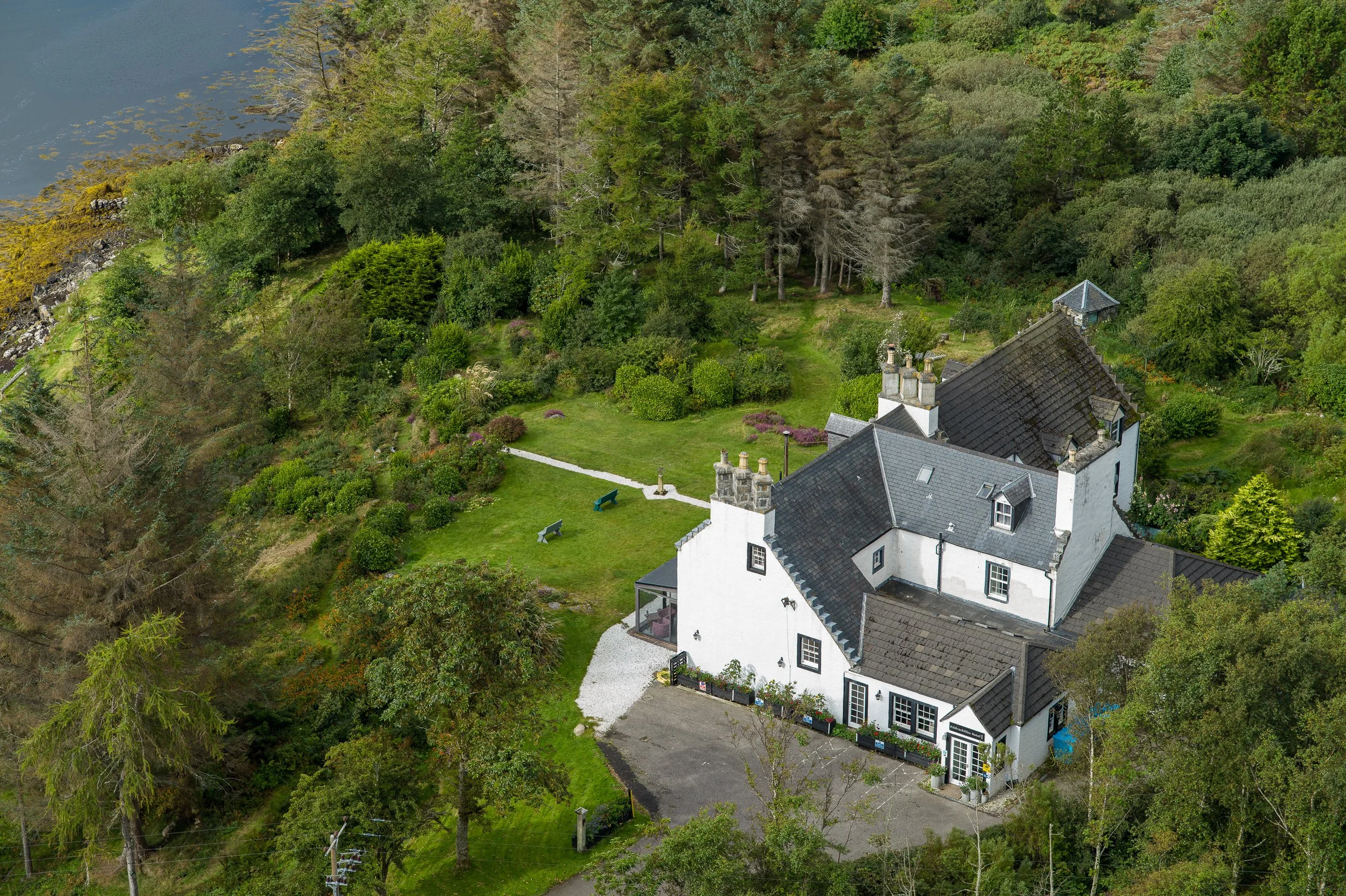
Tree management continues as part of responsible stewardship. This winter, 2025-2026 we have removed five dying spruces which wereover fifty years old—legacy plantings now presenting risk to the hotel building. These need skilled foresters to bring down the 50 ft high trees representing over 50 years of growth.
Before long, we will face difficult decisions regarding the fate of other Sitka spruces, particularly the band on the west side of the garden which provides a wind break. The work is careful, considered, and necessary to the garden's long-term health.
We plant with realistic expectations. This remains very much a working project, pursued with determination rather than professional design credentials. We're under no illusions: some visitors will regard this as a poor excuse for a garden, expecting formality and manicured precision. Others will revel in the naturalistic style, finding in it echoes of Byron's celebration of wild places—"there is a rapture on the lonely shore." This is the start of a long project. Some years bring abundant success; others, valuable lessons. The garden teaches daily—often three steps forward and two back—but it remains a challenge we relish.
For guests, we offer paths to wander, benches positioned for contemplation, and a developing landscape shaped by ancient rock, Atlantic weather, and our commitment to creating something meaningful for those who follow. The full effect will not be seen for decades, but each season brings new rewards worth sharing.
Frequently Asked Questions
-
No, this is a small emerging woodland garden with naturalistic plantings. The original walled garden was split from the former manse building some years ago. All historical photos of Eddrachilles show an area of open intense grazing and then a dense sitka spruce plantation from the mid 20th century. On the title deed, however, the area was referred to woodland and Badcall derives from hazel or scrub growth in Gaelic so we assume it has a natural tendency to woodland.
-
No, we don’t have hard surface paths and the slopes to the shore are steep. We are installing new non-slip steps this winter with a hand rail but full accessibility remains regrettably a challenge. Guests with mobility impairments have enjoyed the views from the lawn immediately in front of the sun lounge.
-
Spring and Summer. We have Spring bulbs, rhoddies and azaleas making late April, May and June particularly attractive. Wild flowers in the Northern Highlands peak by mid July,, there are relatively few late summer and autumn flowering varieties. Autumn can come early in Sutherland on the coast and our leaf colour is short lived. The shortening days by October also necessitate an earlier die back. That said, September has sunny days and guests often enjoy sitting by the shore with the local seals for company.
-
We encourage dog owners to keep their dogs on a lead at all times for their safety and the safety of other guests. It’s new territory and a great adventure with unfamiliar scents so your dog may be more excited than you think. If you can keep your dog under strict control with excellent recall, then it’s possible. We have intsalled a “dog proof’ cattle grid across the driveway entrance and there is fence around the grounds (except for the shore boundary). However, at low tide there would be access onto neighbours grounds.
-
Some. It’s still pretty limited due to the poor soil quality and depth; we are not at the heart of the Geopark for nothing!. We do have a large Polycrub (like a PolyTunnel) where we can grow salads, tomatoes, aubergines, courgettes, and herbs in the summer. Herbs and salads are also interplanted in the cottage garden courtyard. We then grow leeks, garlic and onions in winter plus overwinter some of our wet soil hating perennials.