When Night Falls Again
We are often told that “night falls” when the sun goes down, daylight fades and darkness arrives—as though someone has flicked a celestial switch.
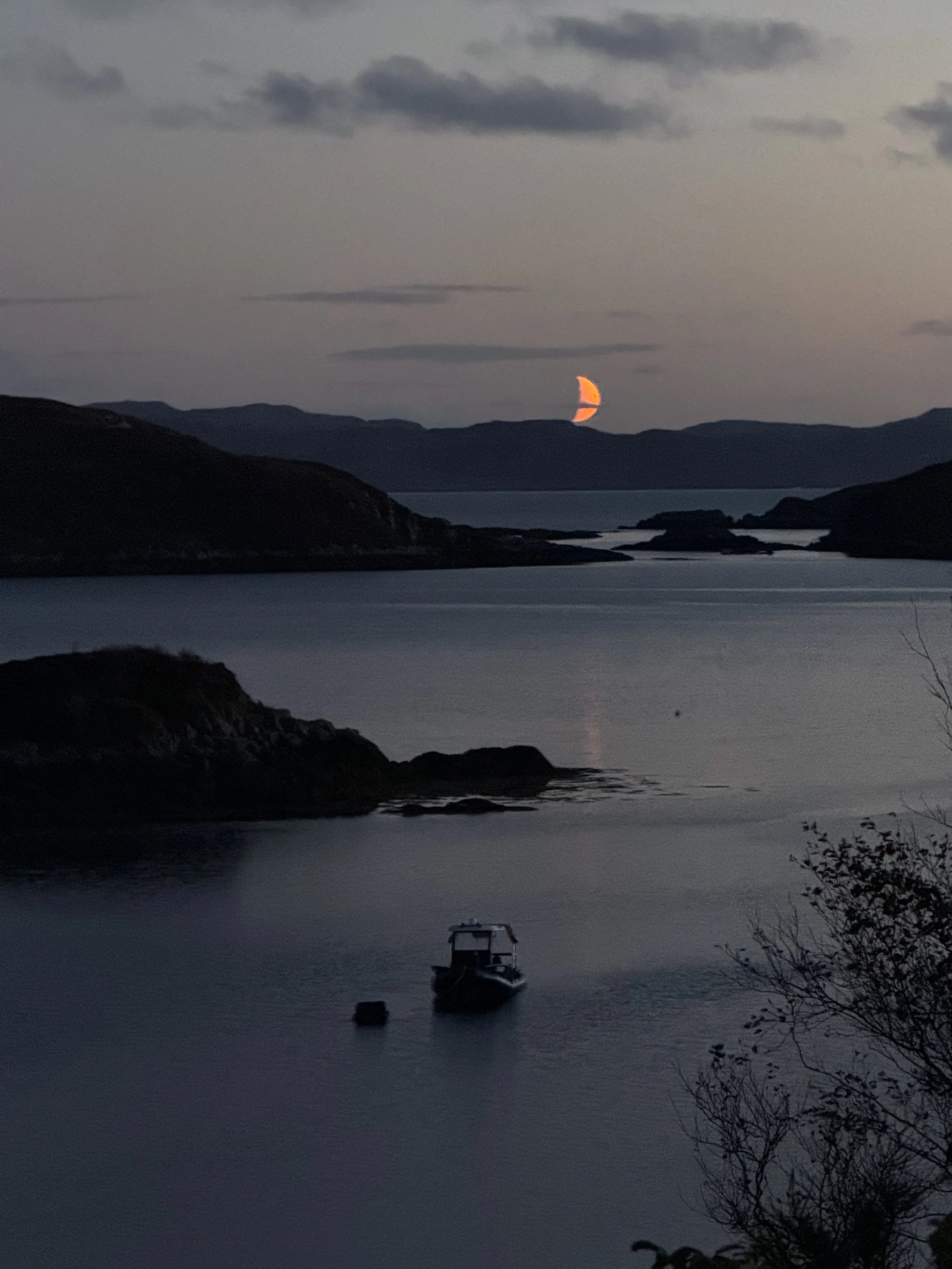
Here in the far northwest, that explanation feels particularly inadequate. Sunset is not the same as darkness, and night does not arrive at a single, precise moment. Light withdraws gradually, passing through a series of recognisable stages. In high summer, it never entirely leaves us at all.
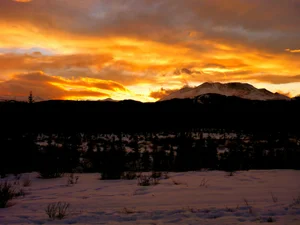
Twilight has three phases. Civil twilight is the lingering light immediately before sunrise and after sunset, when there is usually still enough natural light to see our surroundings clearly. Nautical twilight follows, when the horizon remains visible at sea and the brighter stars begin to appear. Astronomical twilight is the final, deepest stage: the last residual glow before true night begins—or the first hint of returning light before dawn.
The sequence runs in reverse each morning. Astronomical dawn becomes nautical dawn, then civil dawn, before sunrise finally marks the beginning of the day. In the evening, sunset is followed by civil dusk, nautical dusk and astronomical dusk: only then does night truly fall.
At Eddrachilles, at 58° 19′ north, this annual pattern produces some rather wonderful extremes.
Our last true nightfall of spring occurred on 26 April. After that, the sun no longer travelled far enough below the horizon for complete darkness to return. Astronomical twilight itself disappeared after 18 May, leaving us with those luminous Highland summer nights when the colour may fade from Badcall Bay, but the sky never becomes entirely dark.
The longest day came on 21 June, giving us 18 hours and 17 minutes between sunrise and sunset. It would be misleading to call what followed the “shortest night”: there was no true night to measure, only the long, lingering stages of twilight.
The cycle began to turn on 26 July, with the return of astronomical twilight. Now the change becomes perceptible. The evenings are still remarkably long, but the light is beginning to soften earlier and the first brighter stars can once again be seen.
On 17 August, true nightfall returns to Badcall Bay for the first time in nearly four months.
It is one of those quiet seasonal thresholds that rarely receives much attention. Nothing changes abruptly. The gardens are still full, the days remain long, and summer has by no means departed. Yet, for a brief time after astronomical dusk, genuine darkness settles over the bay once more.
From then on, the nights lengthen steadily towards the winter solstice. On 21 December, our shortest day will last just 6 hours and 22 minutes, followed by the longest night of the year: 12 hours and 28 minutes of astronomical darkness.
We notice these shifts closely here, not only as figures in a calendar but in the changing character of the landscape: the angle of evening light across the water, the return of stars above the bay and, eventually, the glow from the hotel windows against a properly dark Highland sky.
Night does not simply fall. It retreats, returns and gathers around us by degrees—and on 17 August, night begins to return to Eddrachilles.
Written by Richard Trevor, joint owner of Eddrachilles Hotel, and skipper of Tricia Marie - our heritage gentleman’s motor yacht.