Spring in the Garden at Eddrachilles
2026 - the Year when I Learn to Stop Worrying and Love the Deer
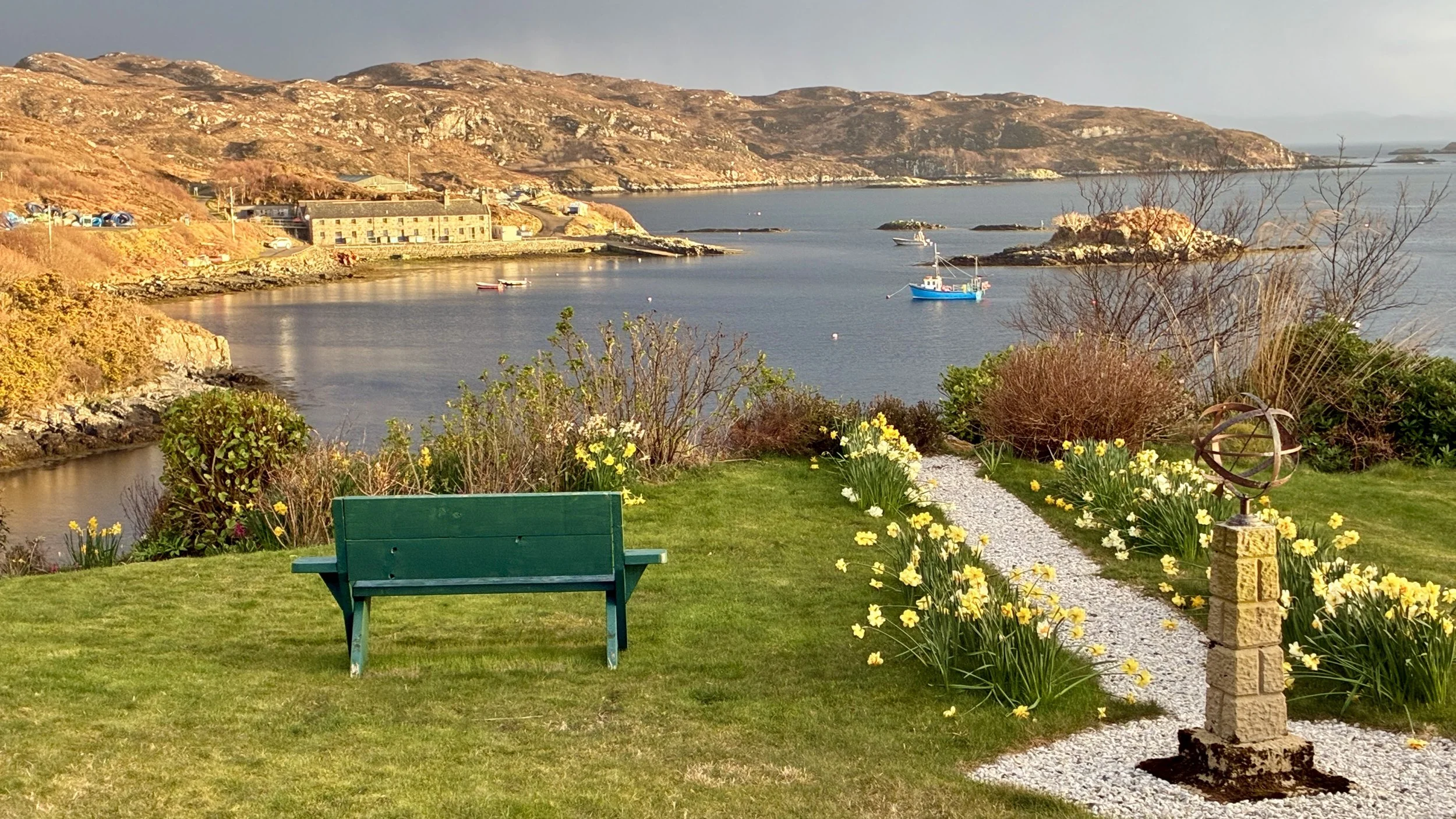
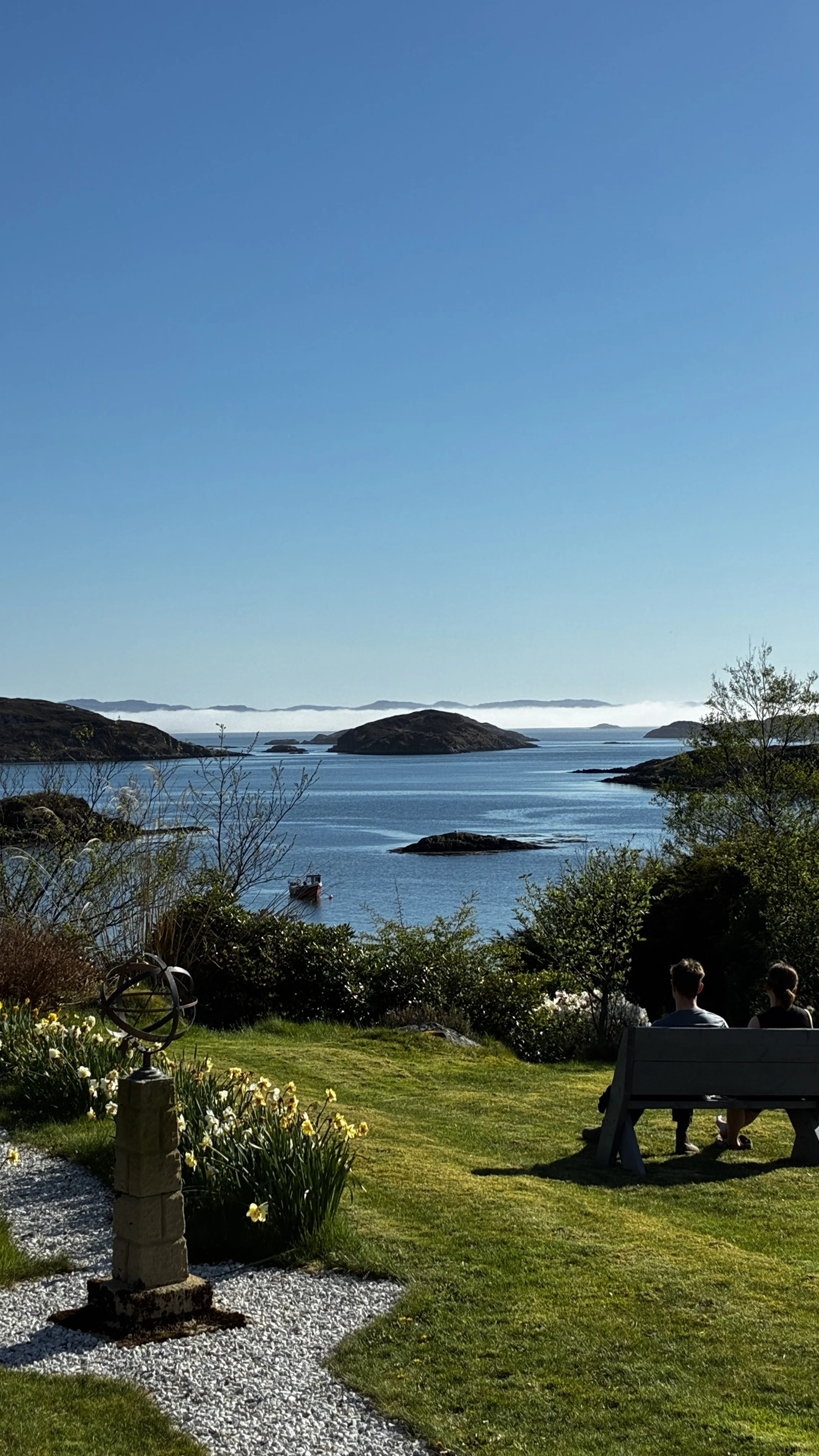
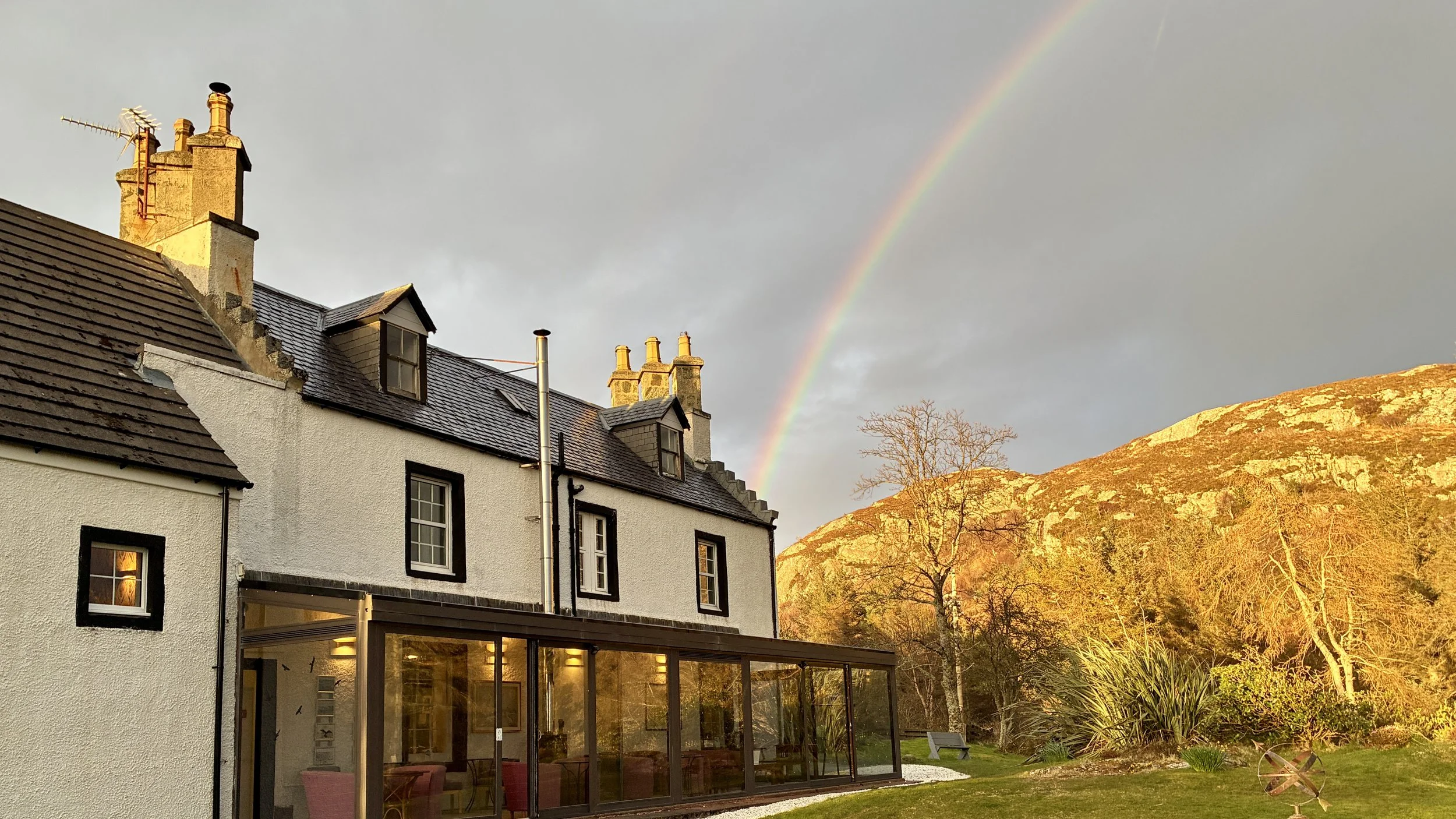
Spring evening, the view from the lawn, looking over Badcall Bay
Every autumn, somewhere between the last breakfast service and the hotel closing for the season, I make a list.
It is an ambitious list. A confident list. A list written by someone who has apparently forgotten every previous October list, and the winter that followed it, and the gap between what was promised and what actually happened.
This year’s list included, with typical Highland optimism:
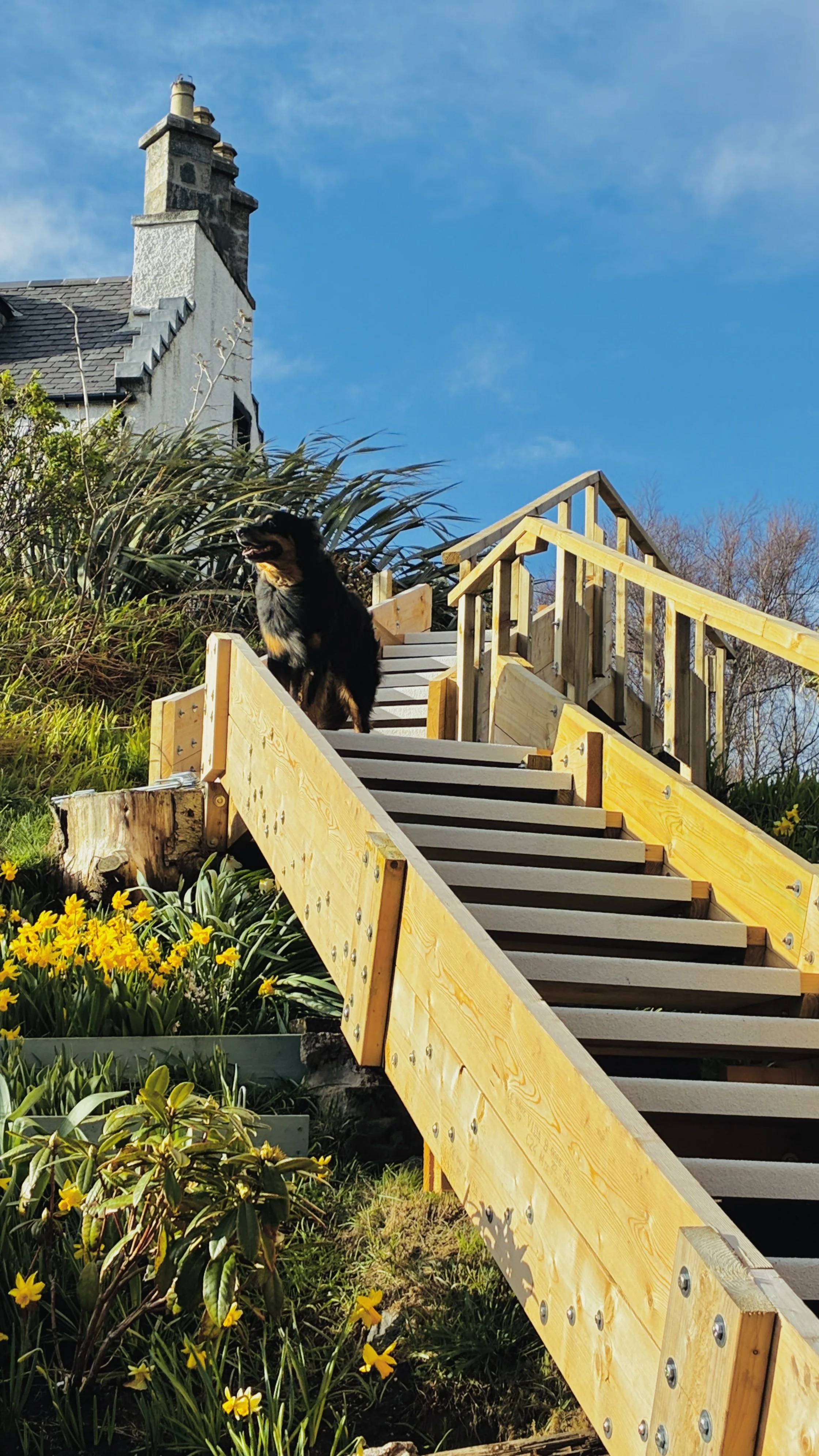
new garden steps to improve access, several flights (done!)
the complete eradication of gorse from the upper slopes.
The total defeat of the encroaching brambles.
All hedges trimmed to perfection by mid-March.
And — the centrepiece, the jewel in the crown — a magnificent sweep of tulips across the garden slopes, a river of colour that would greet our returning guests like something from a Dutch master.
Gentle Reader, the deer got the tulips.
But let’s not get ahead of ourselves.
The Winter That Happened Instead
After an unusually dry early winter — we received less than 70 per cent of our typical rainfall — spring arrived in the Northwest Highlands not with gentle warmth and birdsong, but with sustained, warm and wet gales. Week after week of them, mid-February through to the end of March. The kind of wind that has opinions, and expresses them forcefully, and is not interested in your seed catalogues or your intended schedules.
I should say, for those reading this who garden in more southerly or sheltered locations: I am a complete amateur gardener, with cats and dog(s) and I do know what I am doing. Mostly. I have a Hori Hori — a Japanese soil knife, the essential tool of the serious gardener — and I can identify a Glendoick specimen rhododendron at twenty paces. I have three Hori Horis, in fact, because I keep losing them. This is not relevant to the gardening, but it is relevant to understanding the kind of mature and slightly batty lady gardener with chain saw that I am.
The point is: gardening at 58° North (think Juneau in Alaska), on a south-facing coastal slope above Badcall Bay, in the heart of a UNESCO Geopark, with Atlantic gales arriving at their own schedule and sea spray as a year-round companion, requires a particular combination of genuine knowledge and absolute humility. The plants may not care about your plans. The weather certainly doesn’t.
What the Gales Did
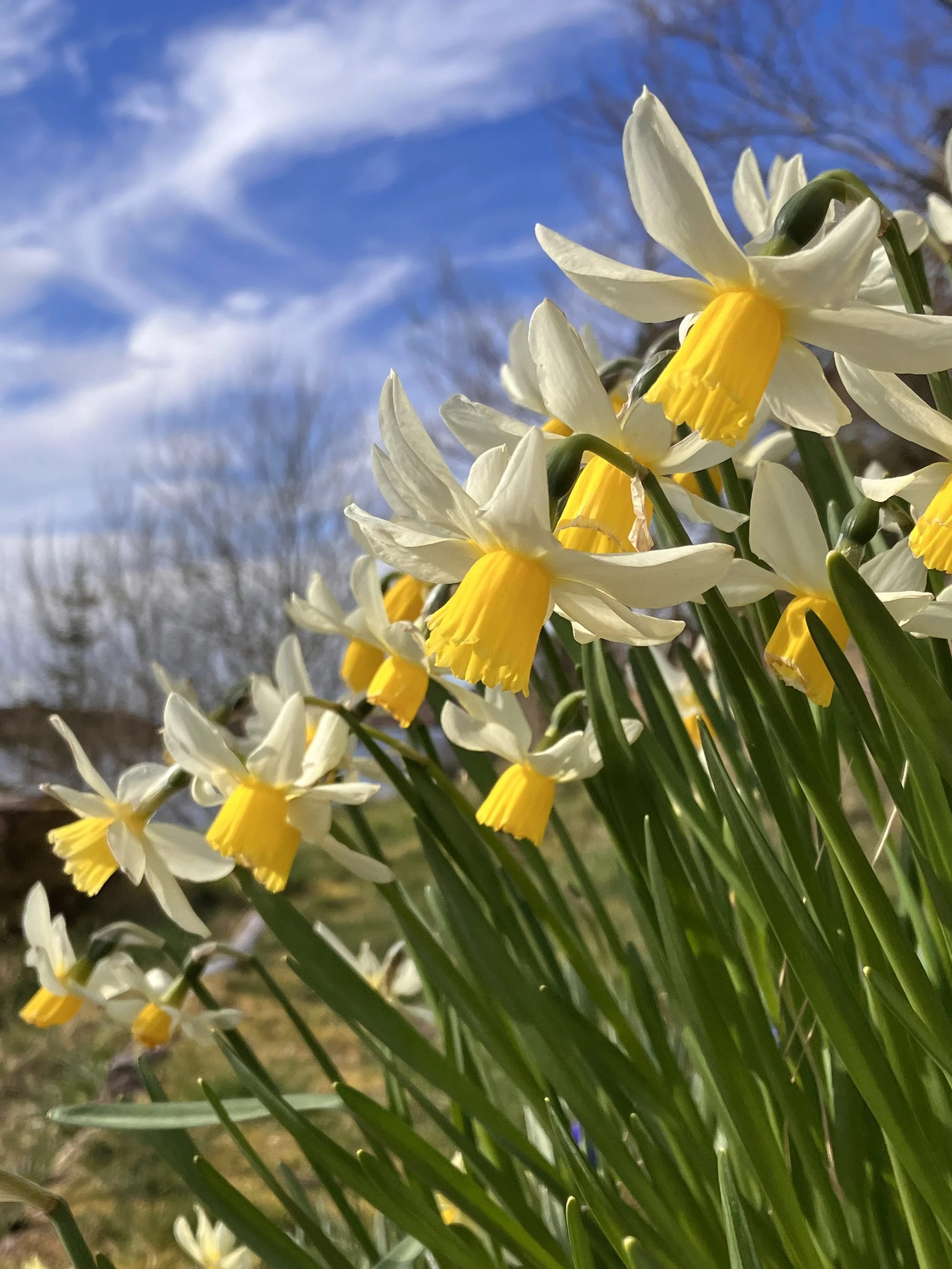
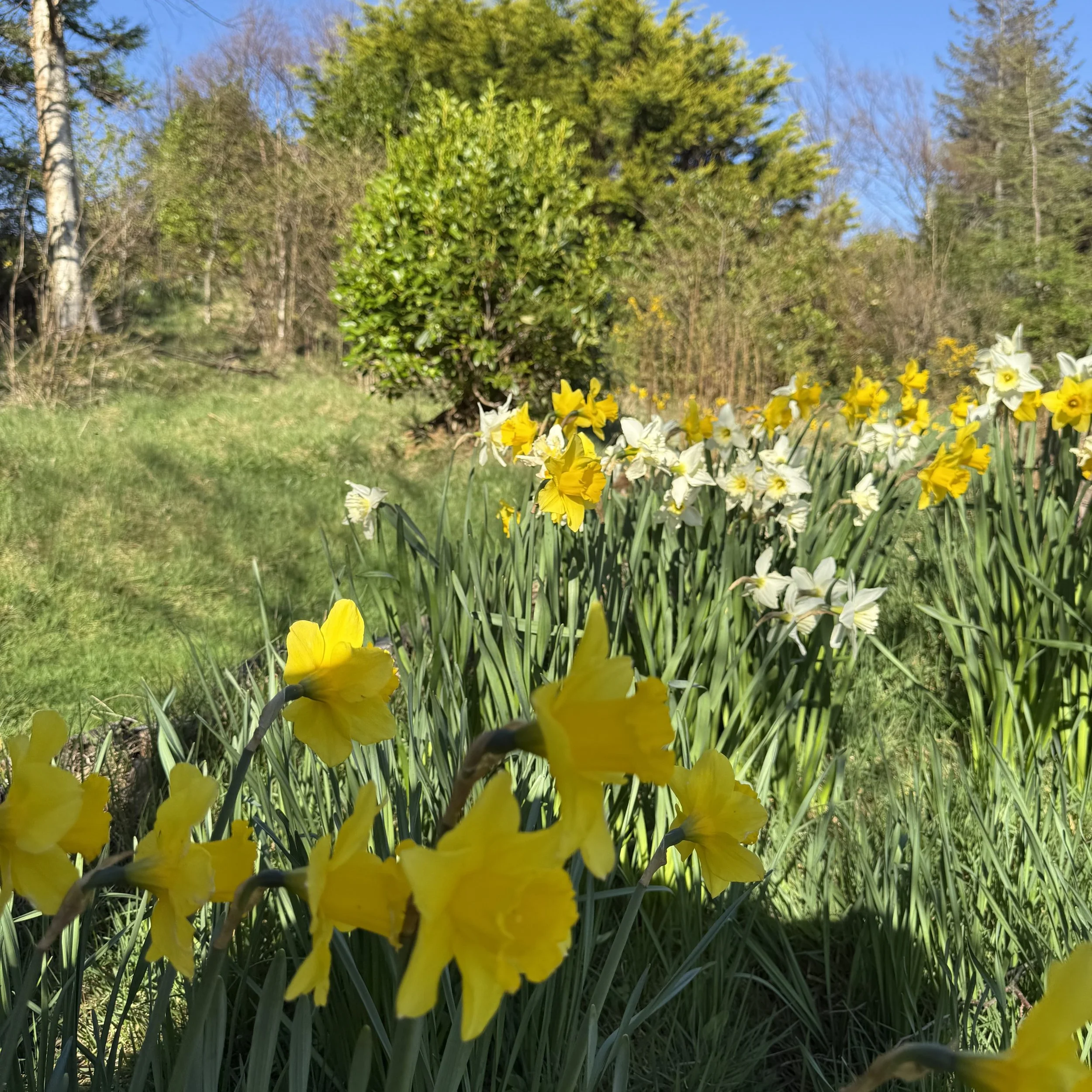
The early daffodils, planted by previous generations of Eddrachilles stewards, came up bravely and on schedule, and were promptly flattened. Not bent. Flattened. The minatureTete-a-Tetes and Jetfires, cowered in the (Geopark generated) rockeries,.. The crocuses were fleeting. I bemoaned again the allocation of the Victorian walled garden to another property when the hotel was sold in the early 2000’s.
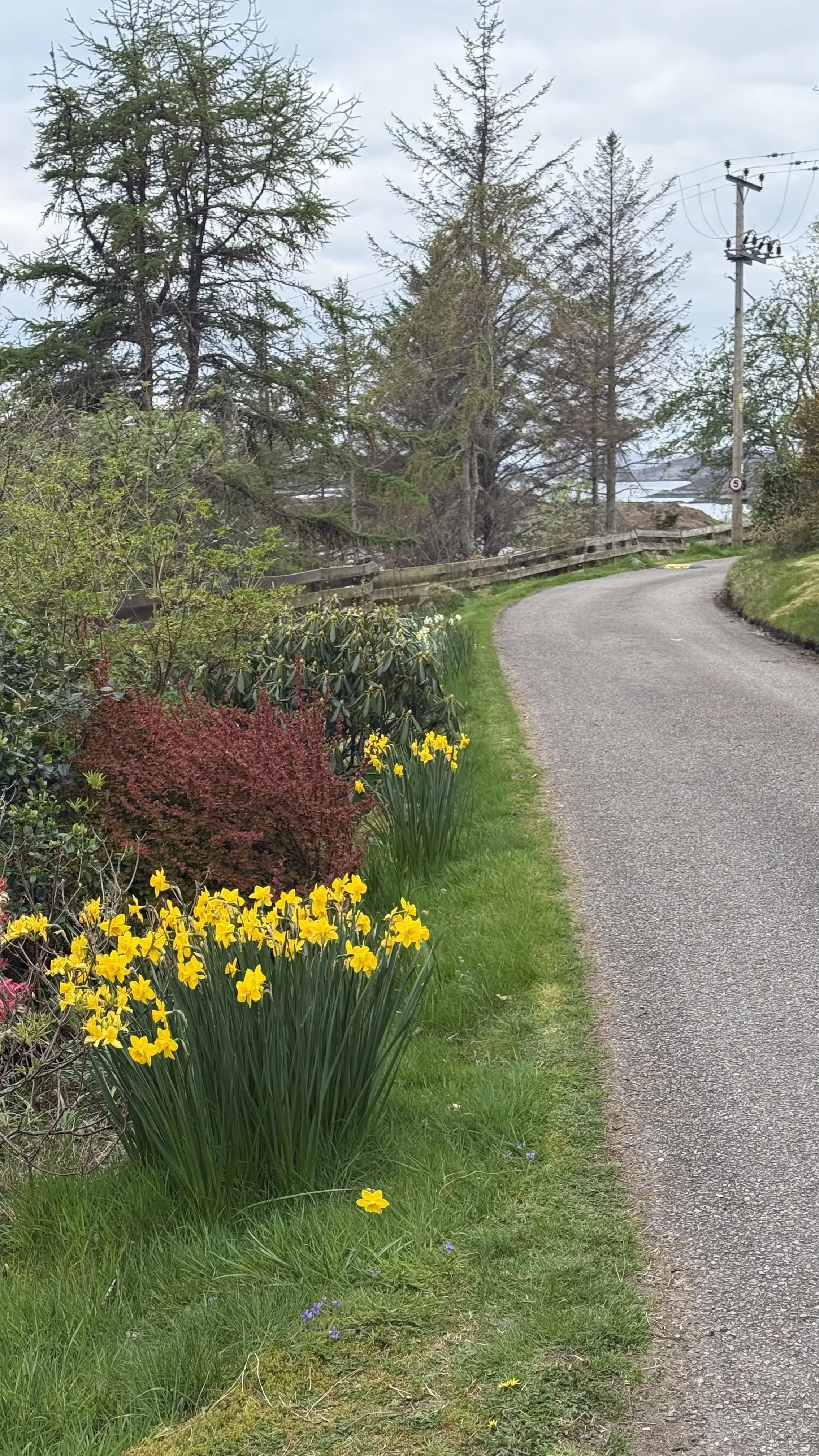
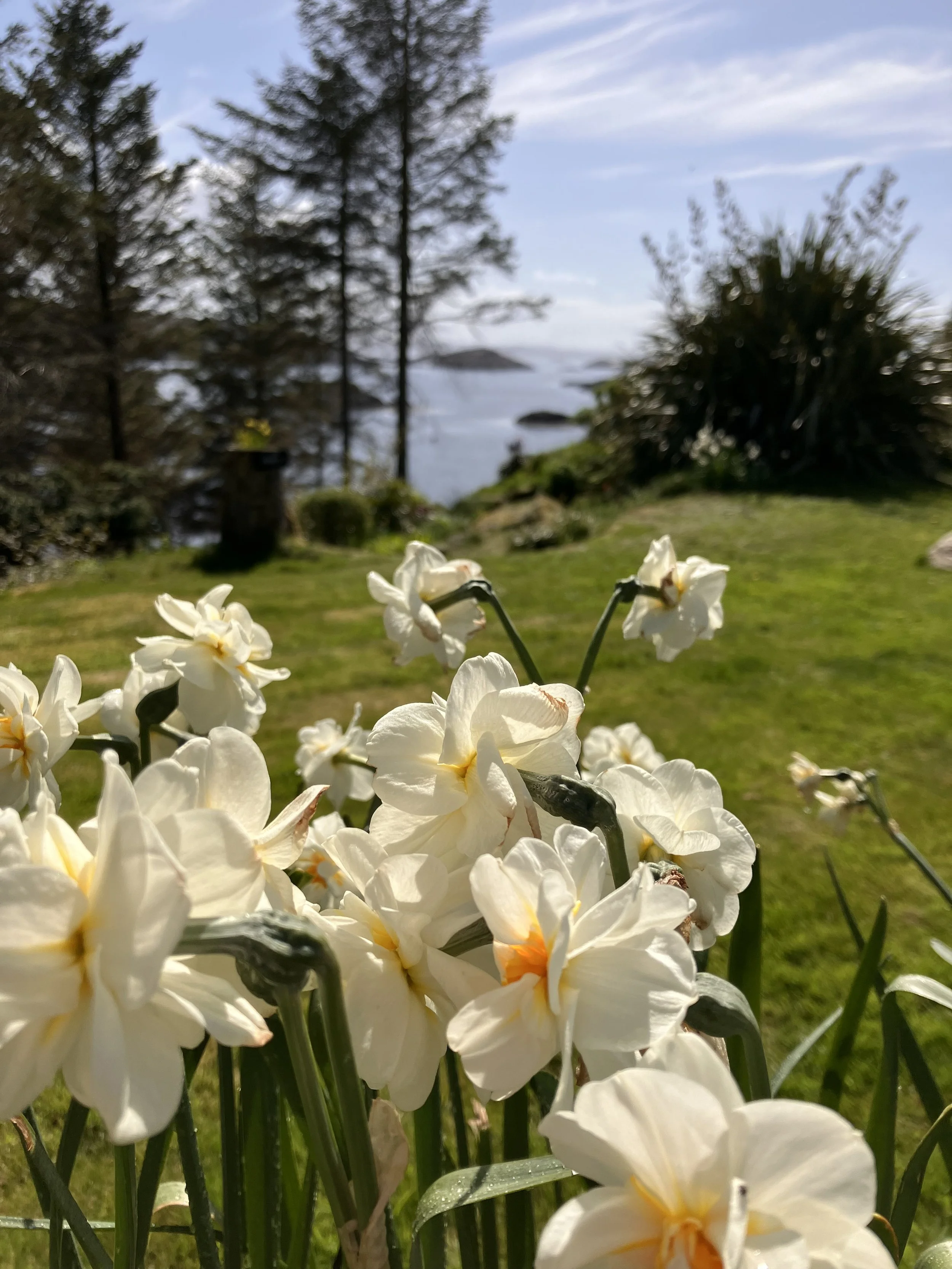
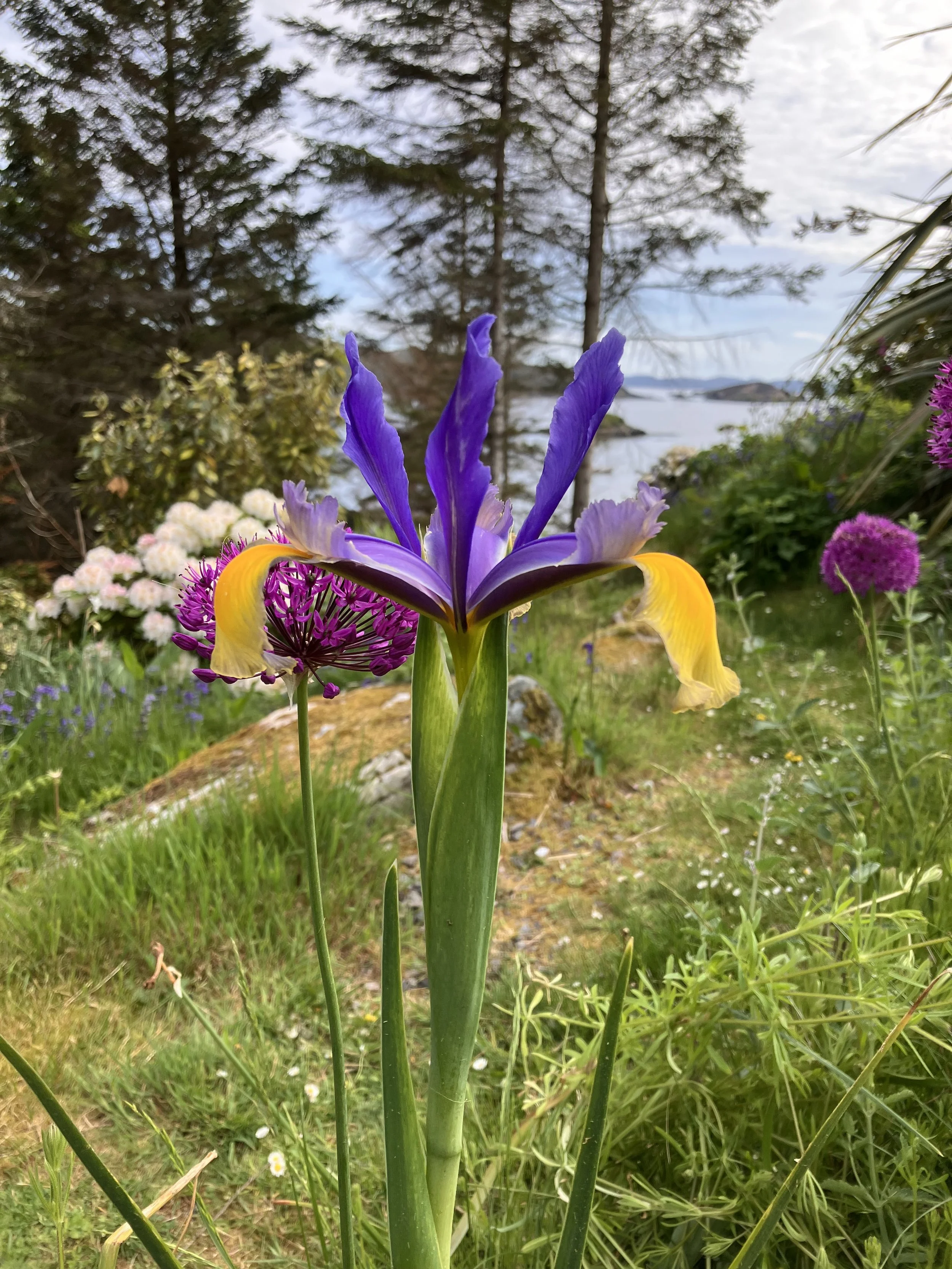
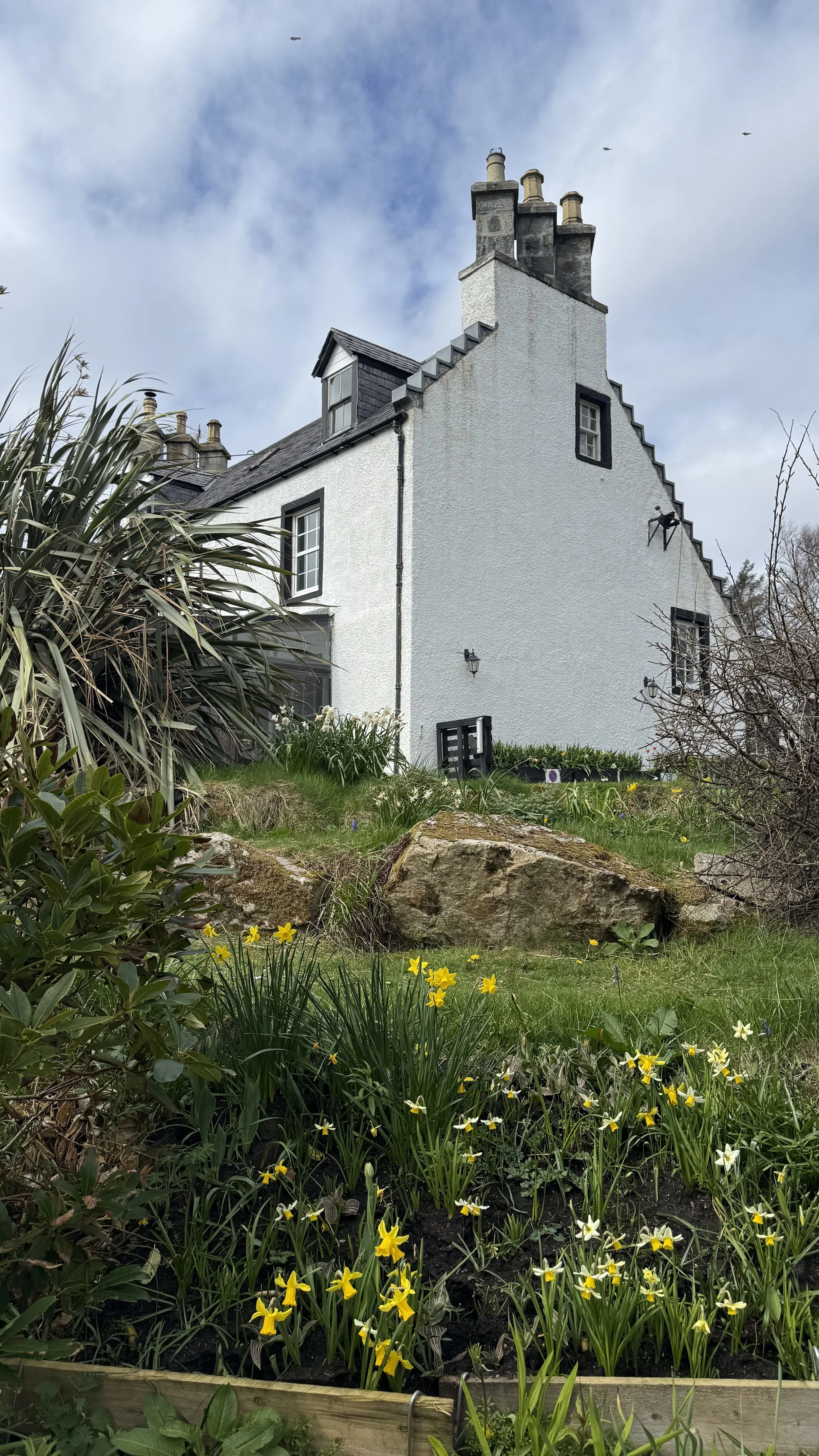
The later varieties, however — the Winston Churchills, King Alfreds, and Peach Cobblers, which would normally peak in late April — had already been showing in early March when the worst of the weather arrived. They stalled. They held their buds, waited, and when conditions finally relented, delivered a display that was better for the delay: concentrated, extended, and entirely unplanned. There is a lesson in this. I’m not sure what it is, but it feels like one.
This is, I find, a reasonable summary of NW Highland gardening more generally.

James and the Giant Peach Gorse
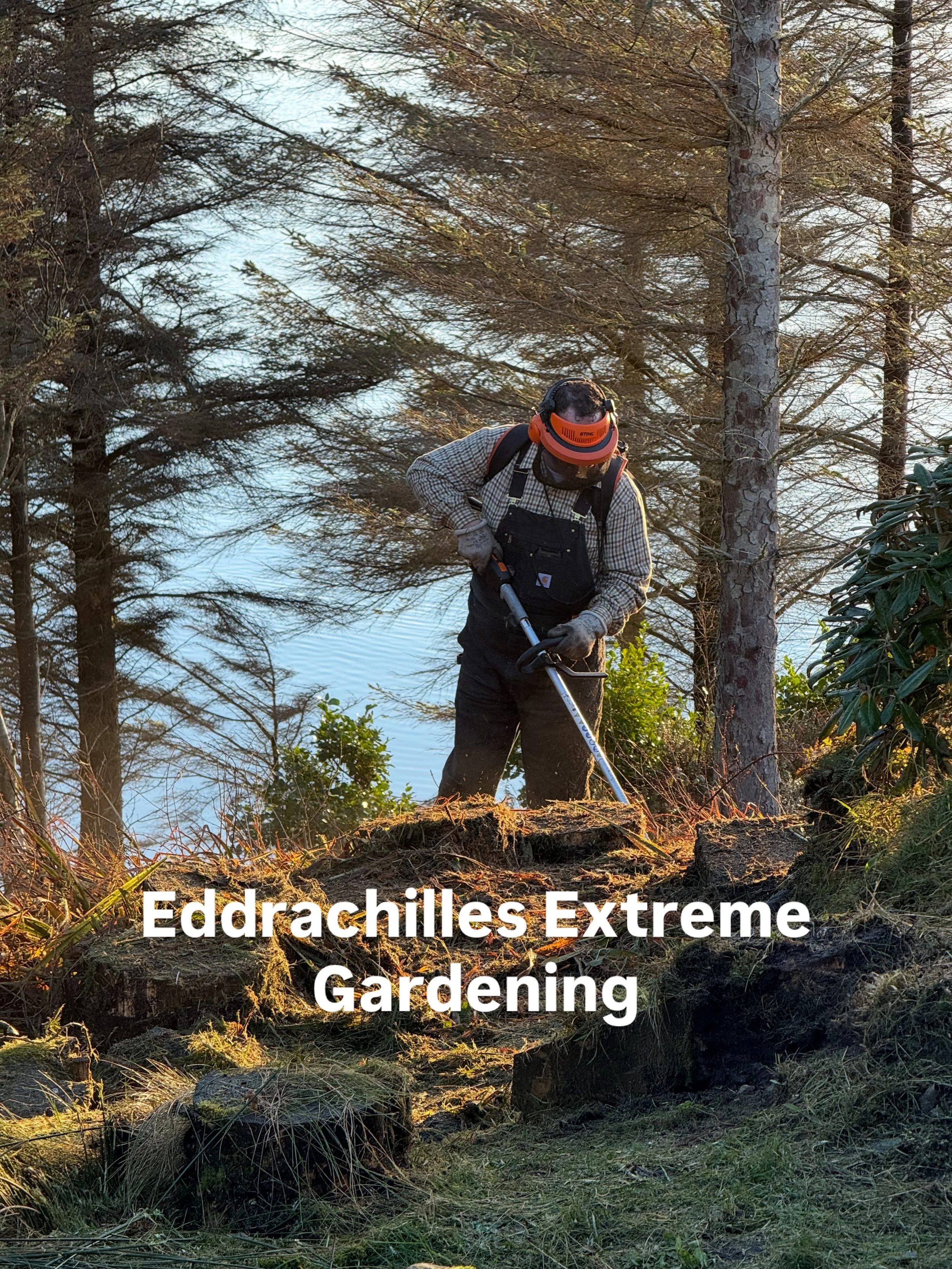
James joined us back in 2025 as a hospitality General Assistant, which is to say he came expecting to serve breakfasts, dinners and work alongside housekeeping. What emerged, rather quickly, was that he had previously run his own garden maintenance company. We took advantage of this with what I can only describe as shameless enthusiasm.
Last season, James conducted an epic personal campaign against the encroaching gorse on the slopes and lower garden — every square metre of ground recovered representing real, sustained, physical discomfort. He is returning for a second season in 2026. The gorse, I am cautiously optimistic, knows this.
The brambles, however, appear not to have received the memo. The mild winter — warm enough to keep the gales blowing but not cold enough to check most things properly — has suited the brambles enormously. They have surged. James is currently fighting on the new front while simultaneously managing everything else. We are grateful in a way that words do not quite capture.
The gorse and bramble eradication, it will not surprise you to learn, was not complete by the end of winter. Piles of brash from free felling were laid over the cut gorse with the intention of controlled bonfires. These too were delayed by the storms and were finally completed in April; you will see the burn marks if visiting in May. This is fine. This is normal. This is what October lists are for — to be revised, gracefully, by reality.
The Polycrub
For those unfamiliar with the term: a Polycrub is a Shetland-designed growing structure, better environmental credentials than a conventional polytunnel, built to withstand conditions that would make a standard polytunnel seriously question its choices. Ours has been in service for several years.
Its particular characteristic — and this matters for what we can and cannot grow — is that it runs considerably warmer than a conventional polytunnel in summer. This rules out salad crops, which bolt spectacularly, and rules in tomatoes, courgettes, and aubergines, all of which are currently represented in seed trays awaiting germination. Last year’s rhubarb, which performed very well in there, has been transplanted out to free up the space.
The seed trays have, as is traditional, somehow migrated to the south-facing sun lounge in the weeks before the team arrived for the hotel start up…. Some things are beyond my control.
The Hedges
Were mostly not all trimmed by mid-March, although some were. The remainder are on the list for as bird nesting allows and pending conditions. I have no further comment on this matter.
I do, however, point to the successful felling of 4 sitka spruces, each over 50 ft tall and 50 years plus in age. Simple life expectancy exceeded and in a coastal location you have to act once decline sets in….waiting creates a potential hazard in our inevitable gales. We took out 123 trees in our first winter to open up the view. Now we are managing the remainder and planting more native alternatives to return biodiversity to the grounds.
What Is Actually Happening Right Now
Step outside and look along the drive or turn towards the bay and walk down the paths (or should I say new steps completed over the winter, see earlier journal entry) to the south and Badcall Bay. The name Badcall derives from the Gaelic for hazel, grove and the original title deeds describe this ground as woodland, albeit probably natural scrub. . We are, it turns out, not so much making a garden as remembering what nature intended. .
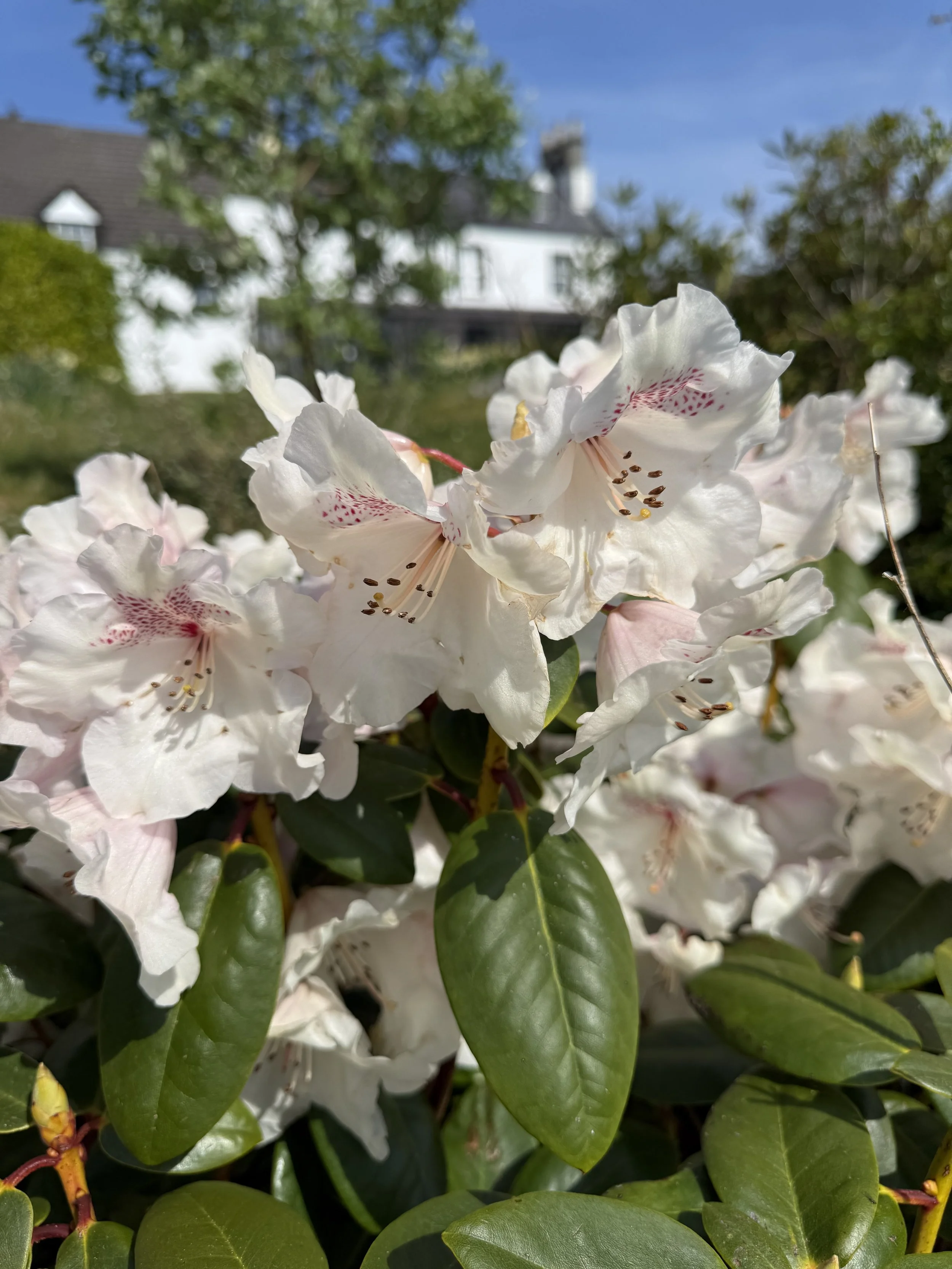
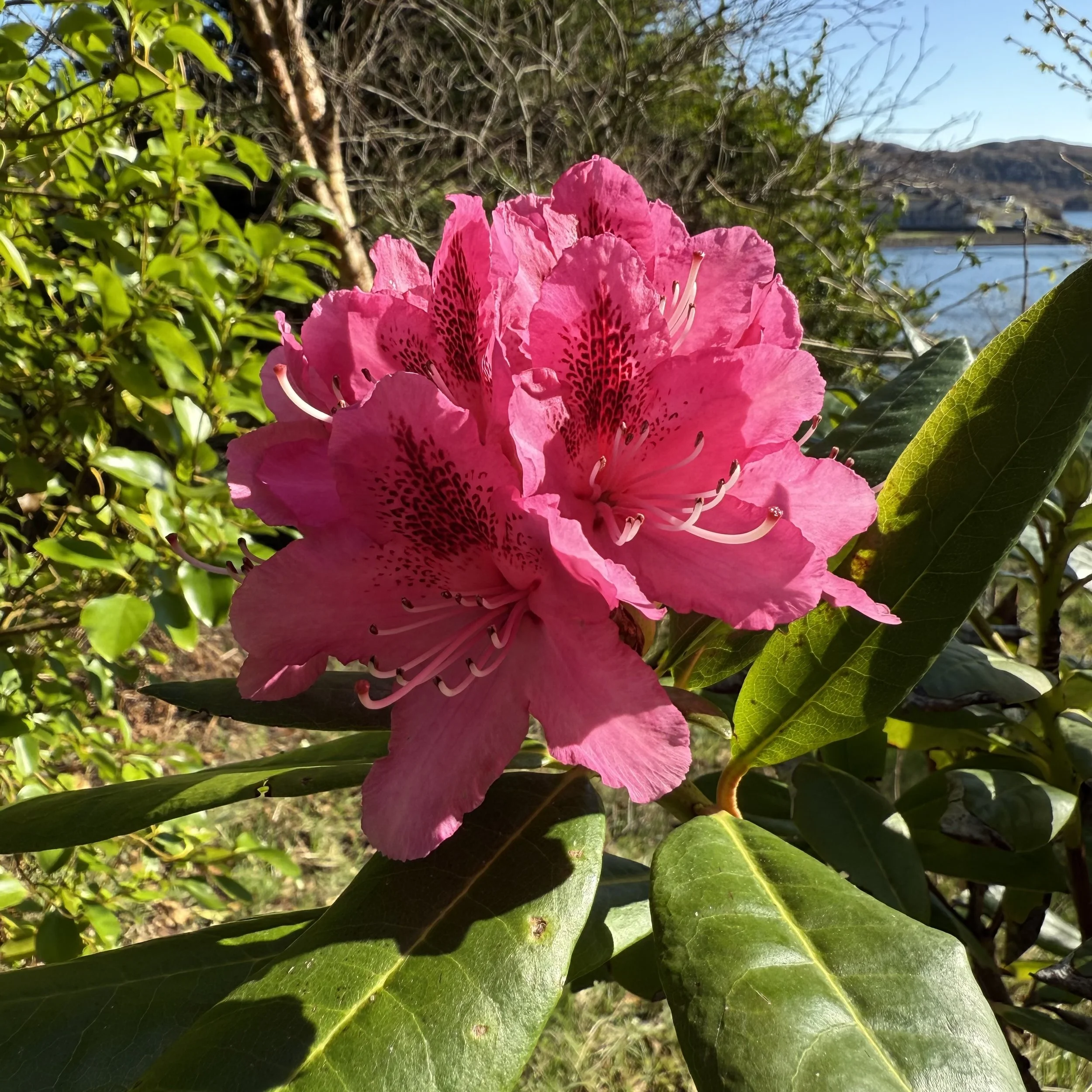
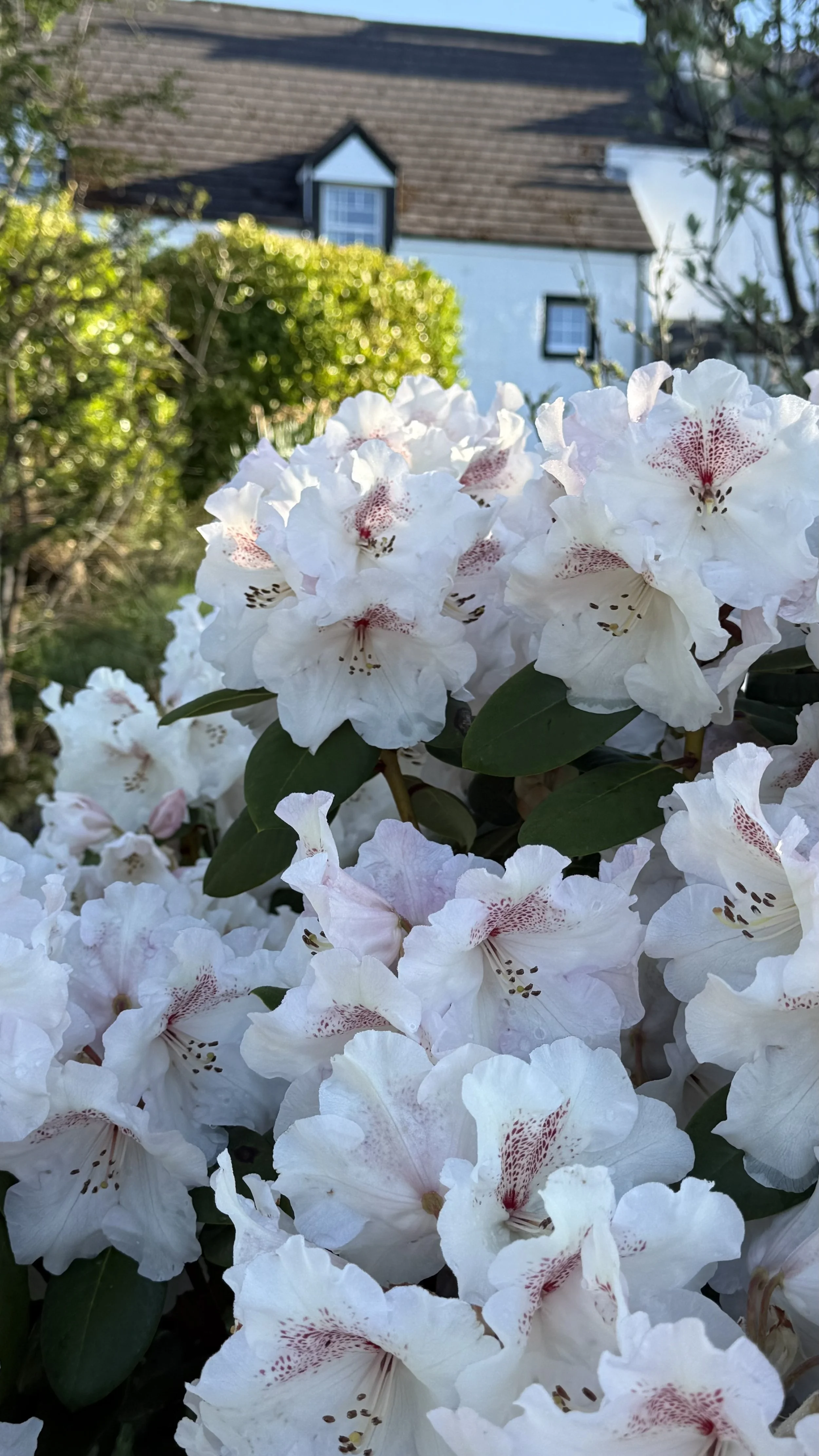
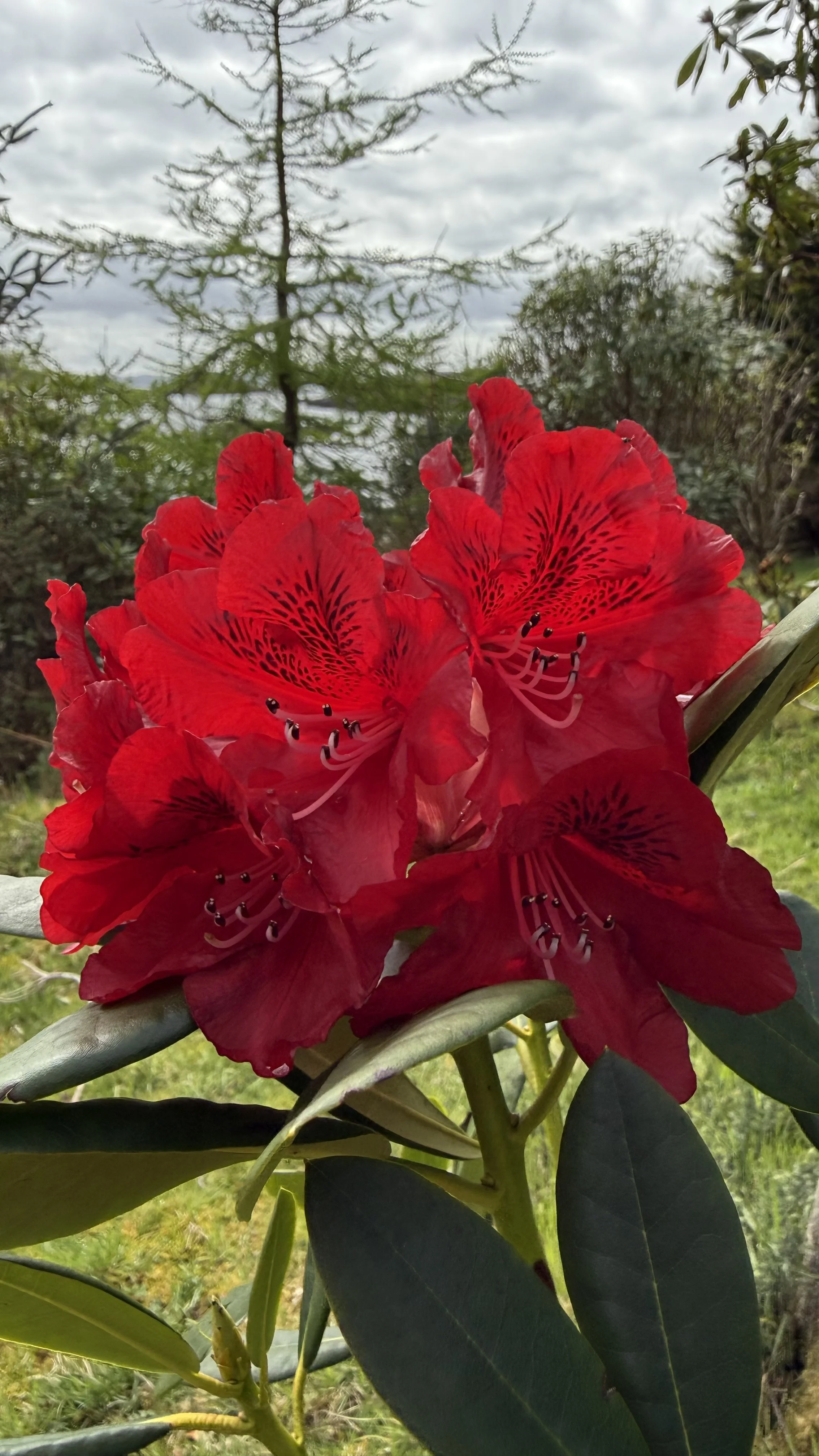
The rhododendrons in the woodlands and along the drive are opening. Our stock came from Glendoick in Perthshire — run by the Cox family, who are, without exaggeration, legends of Scottish horticulture and, thanks to the efforts of on generations of plant hunters among their forefathers, are now one of the foremost rhododendron specialists in the country. The plants put in during our first winters here, 2016 and 2017 as we opened up the are approaching full maturity now; those planted during the pandemic closure, are growing nicely. A decade in the ground at this latitude, in this coastal exposure, is not nothing. They are smaller perhaps but vigorous in the main. . The azaleas will follow, and that succession — rhododendron into azalea into the long Highland summer light — is one of the very best things this garden does.
One rhododendron on the drive did not have an easy winter. The gales pulled it clean from the ground by its roots — which is as dramatic as it sounds. It has been replanted. It is looking, at time of writing, rather stressed. We are holding on to hope thatl it may win through. This feels, also, like a metaphor for something.
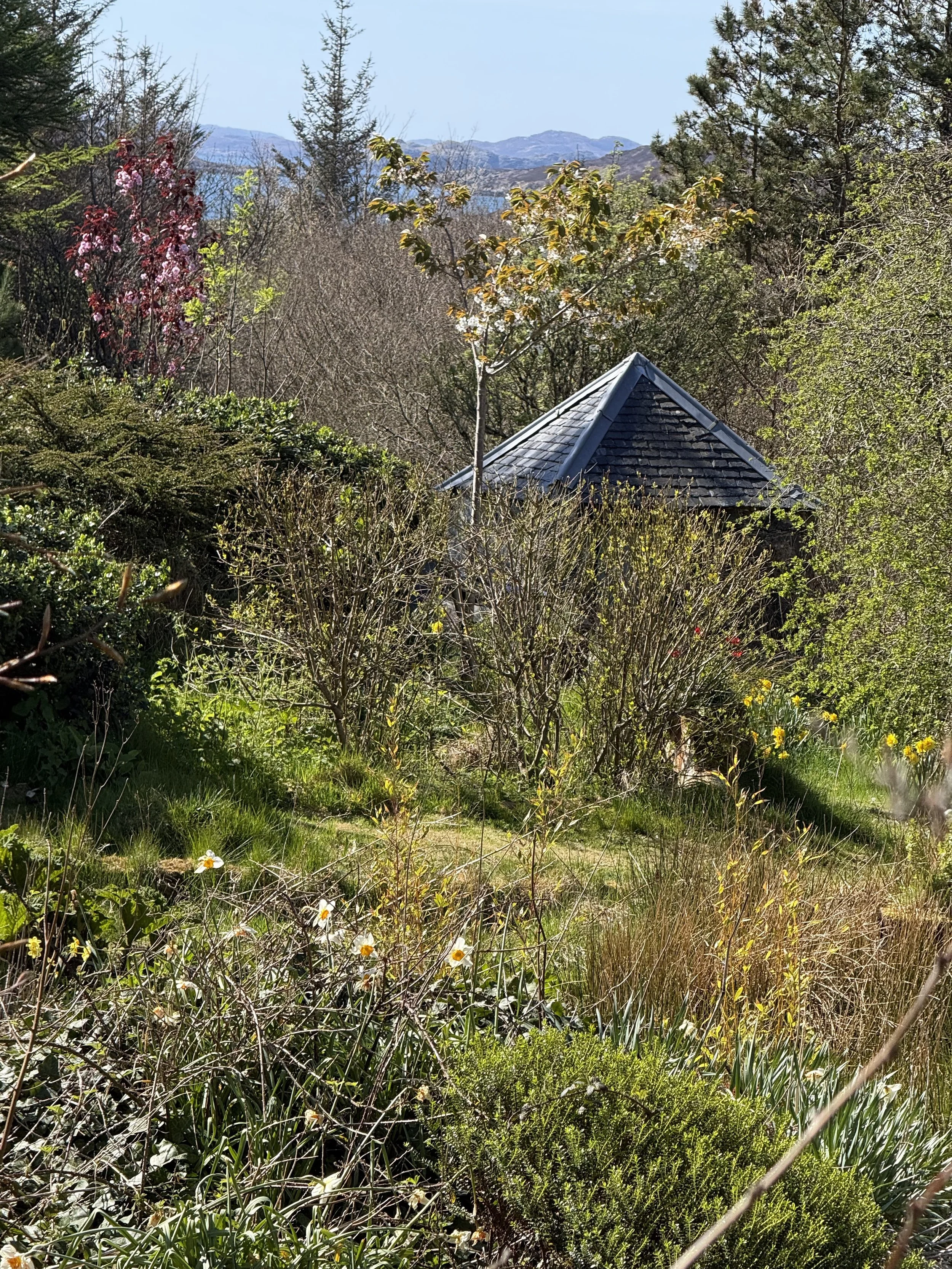
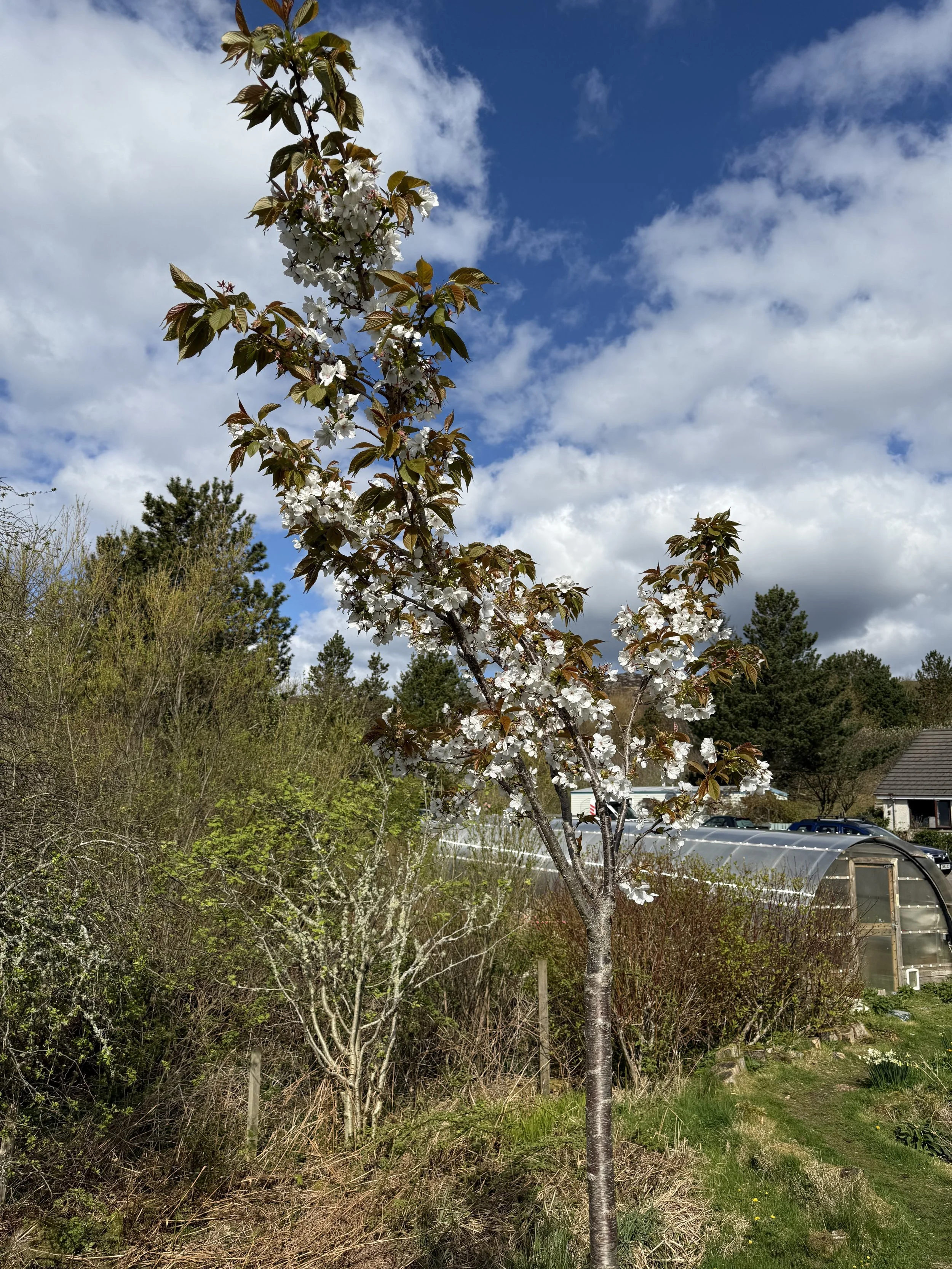
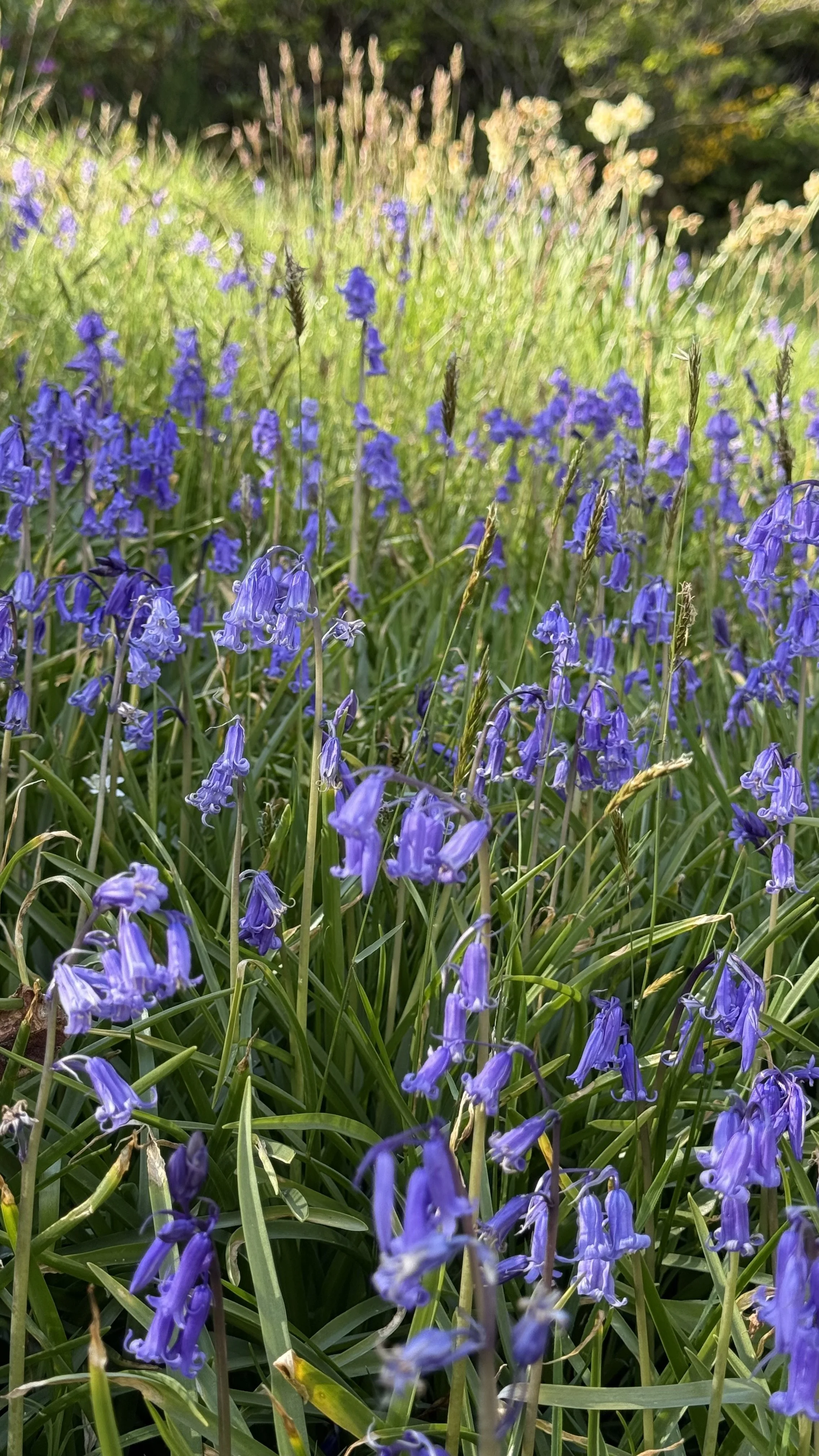
Bluebells are out in profusion, an invasion, in May. We let them have their moment. Almost as soon as they are over the wild orchids will start to appear. Including on the lawn outside the sun lounge, No mow May happens a few weeks later here, as do most gardening activities until June. Then the very long days of mid summer project us ahead of southern timetables,
If you spot me or James in the grounds we will be clearing frantically. Not just to catch up but to complete as much work as possible before the promised return of the midges. Sea breezes keep the very worst away here during the late May-mid September midge season but we will still have to work in nets and sprayed with repellents.. Especially when strimming..
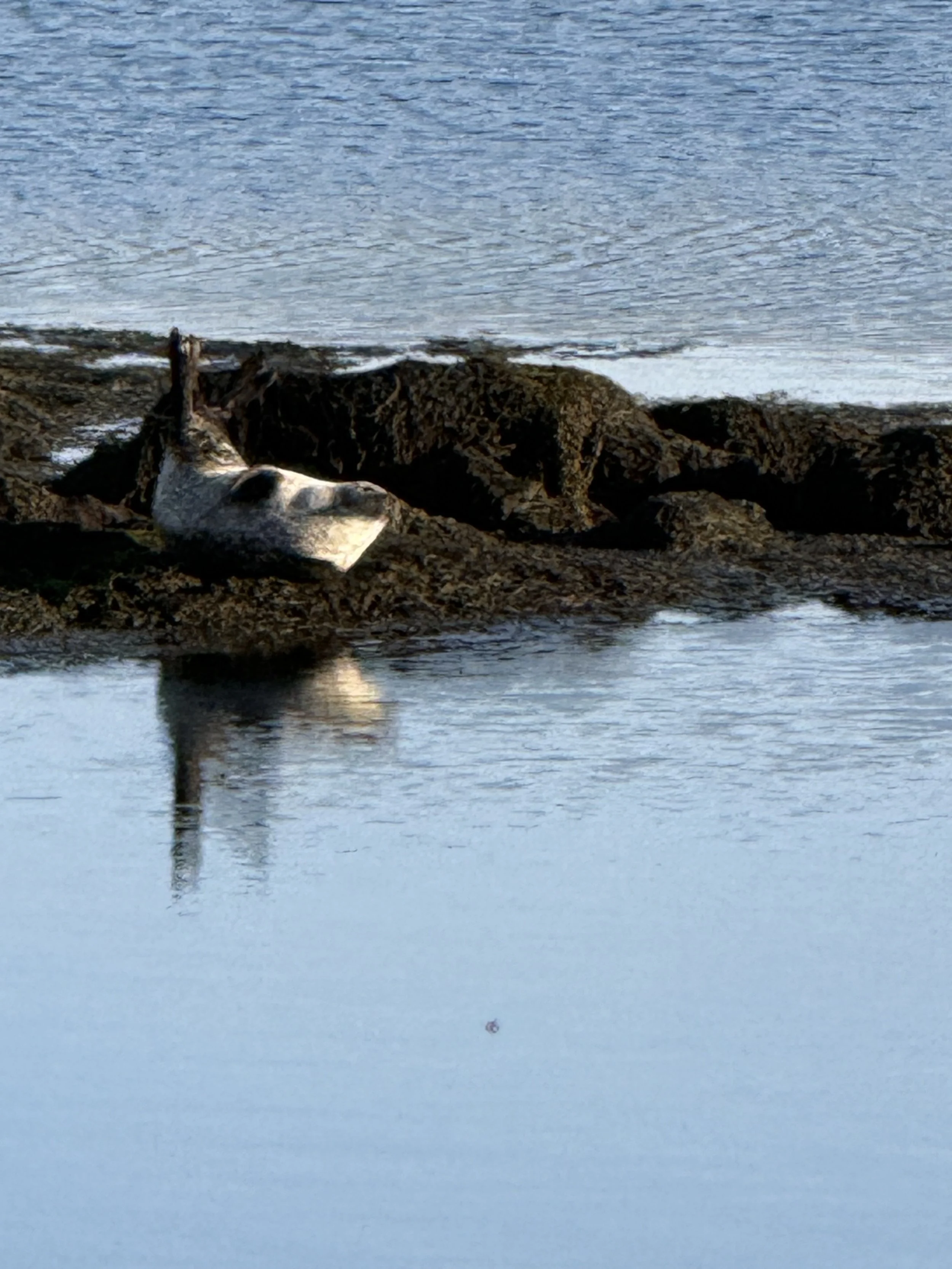
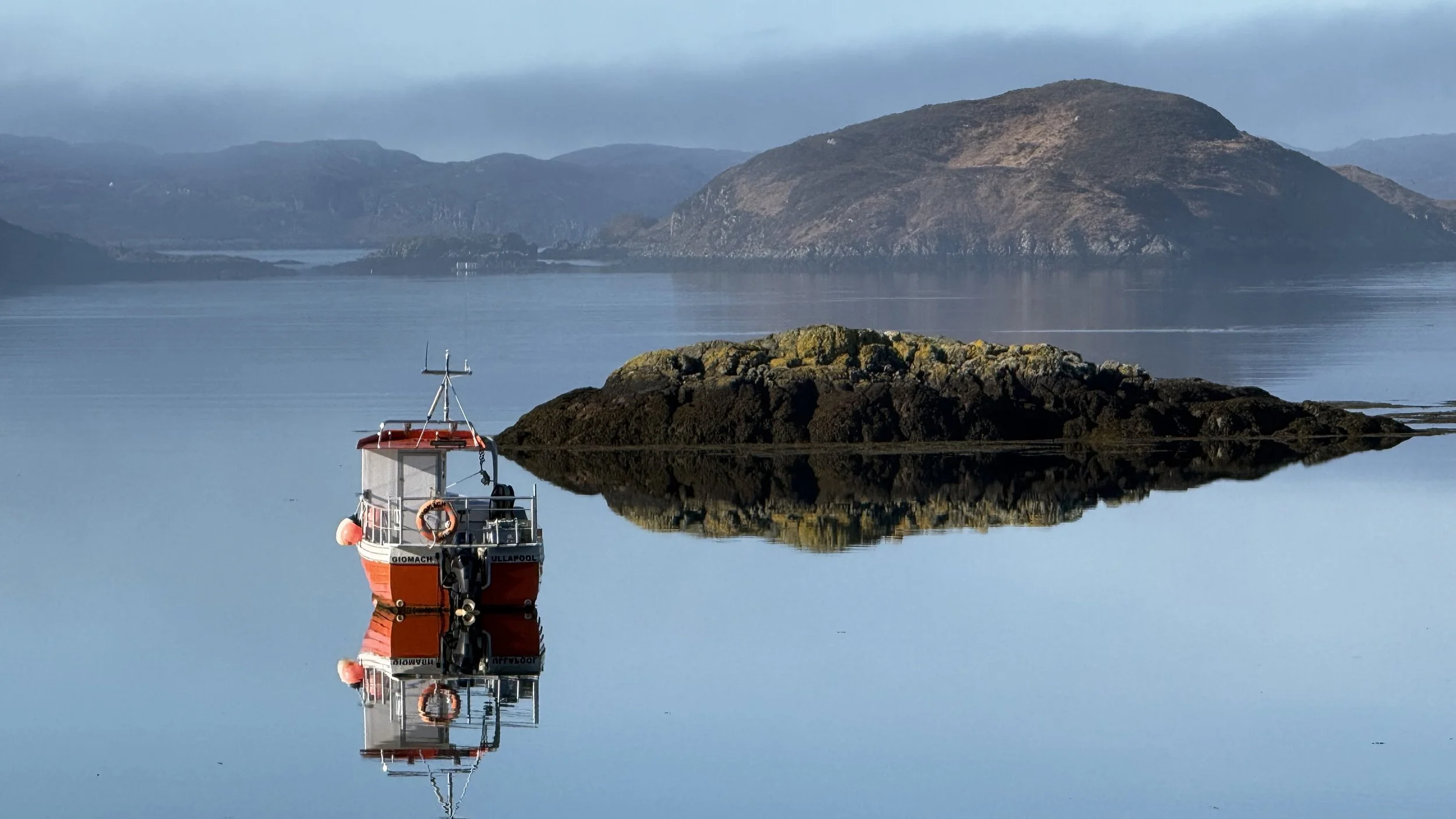
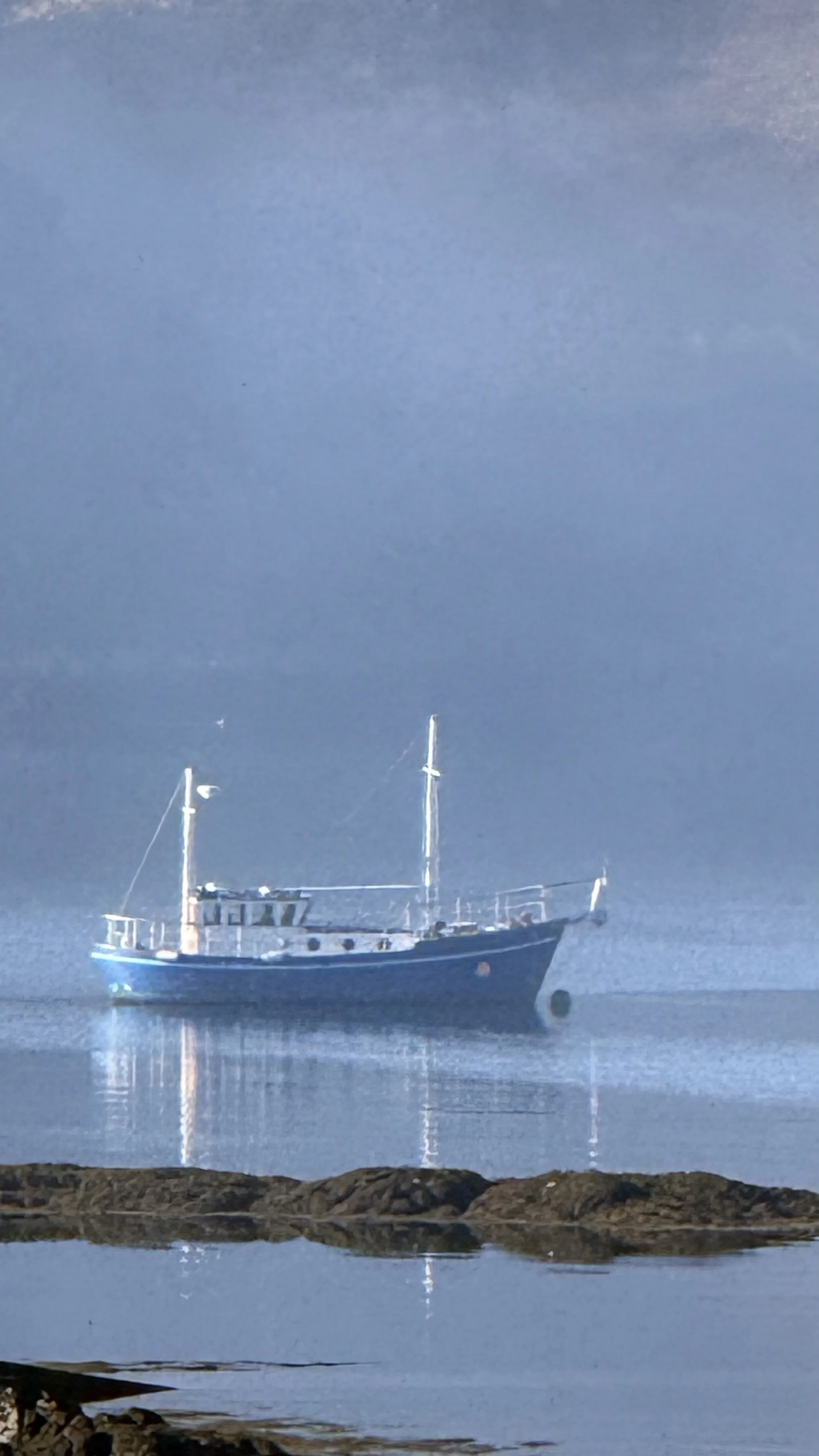
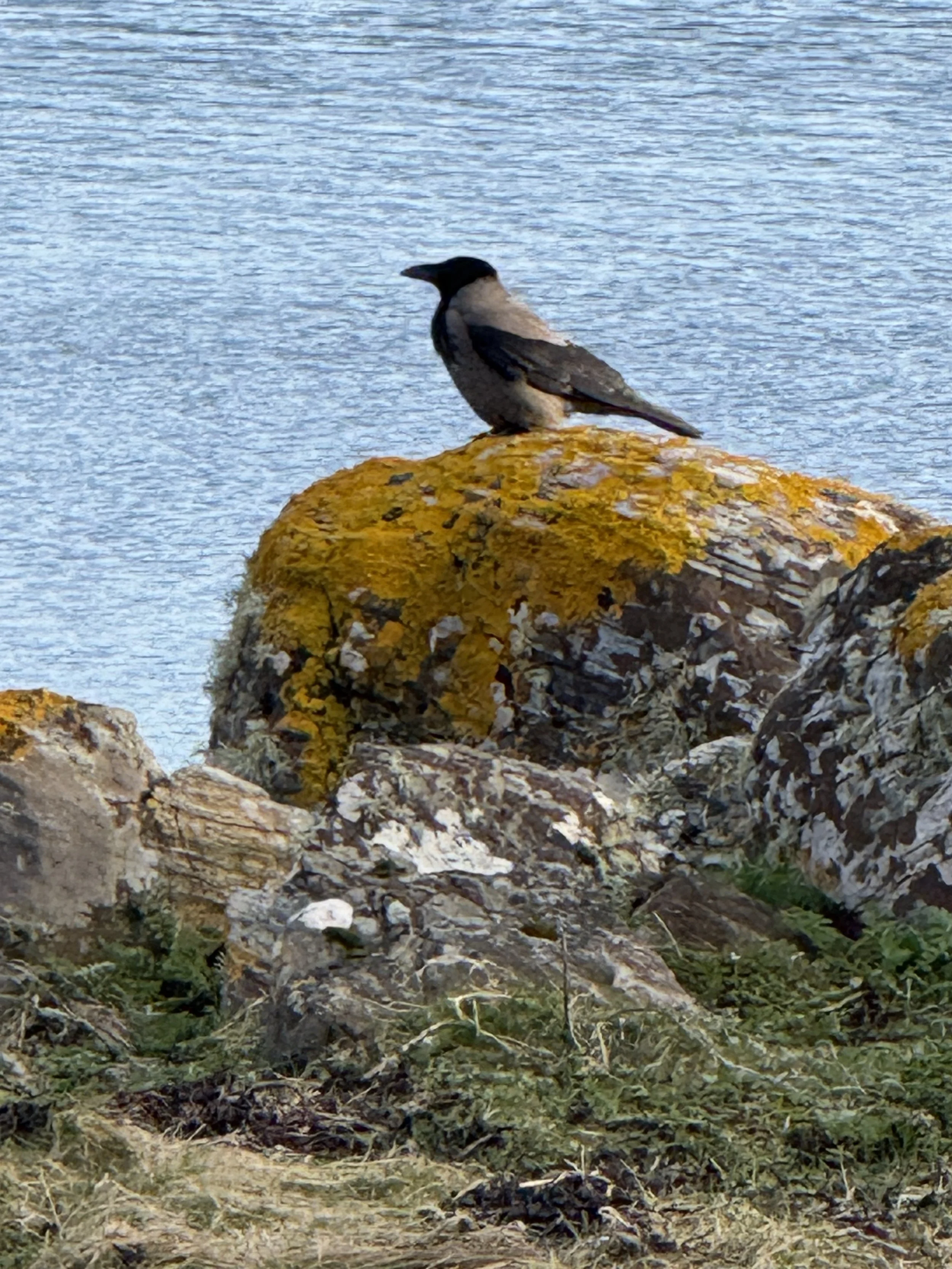
If you are here in the early morning,, on a still morning in Spring there may be a blanket of the haar gently burning off in the first hours of daylight. Low mist lifting off the water, the scent of woodsmoke from the brash burning in the lower garden, the smell of salt and wet stone and something that is very difficult to name but unmistakably Highland. The new steps will take you to the shore in under two minutes. Go before breakfast. As you move through the grounds you will hear different layers of birdsong. Goldfinches, Chaffinches, Robins, Grrenfinches and House Sparrows known to hurl pebbles at anyone attempting exterior painting or maintenance on the building. [Side note: we have had to postpone a crew of painters for the exterior until July due to the March gales - sore point!]. Then in the first of the woodland, different families of tits, blackbirds, song thrush, tree creeper, black cap and sedge/reed/willow warblers in profusion. A cuckoo or two calling over the more conventional nesting birds, the NW Sutherland population is still rather strong.. The family of hooded crows hurling quiet insults. Herons in flight from the nearby lochs, heading to the abundant shore to feed.. Further down Then the shore and seabirds and the most haunting of Highland sounds oystercatchers, and a curlew against the waking gulls, gannets and cormorants. You may be joined by our friendly seals. as you walk close to the shore (they appreciate a song if you are so inclined).
Load up an app like Merlin which identifies birds from their songs, then, stand in a spot with a 4G signal and the list will just fill up. You will not regret it.
Eagles….those tend to wait until mid-day through 3pm to perform their fly pasts… but you may just be lucky….
The Tulips
Now. About the tulips.
Gardeners in more populated parts of the country have their own version of neighbourly pest management. The suburban snail, relocated quietly over the fence in the small hours rather than despatched, is a well-understood and largely unspoken convention. In the Highlands, it seems, we operate a similar arrangement with deer.
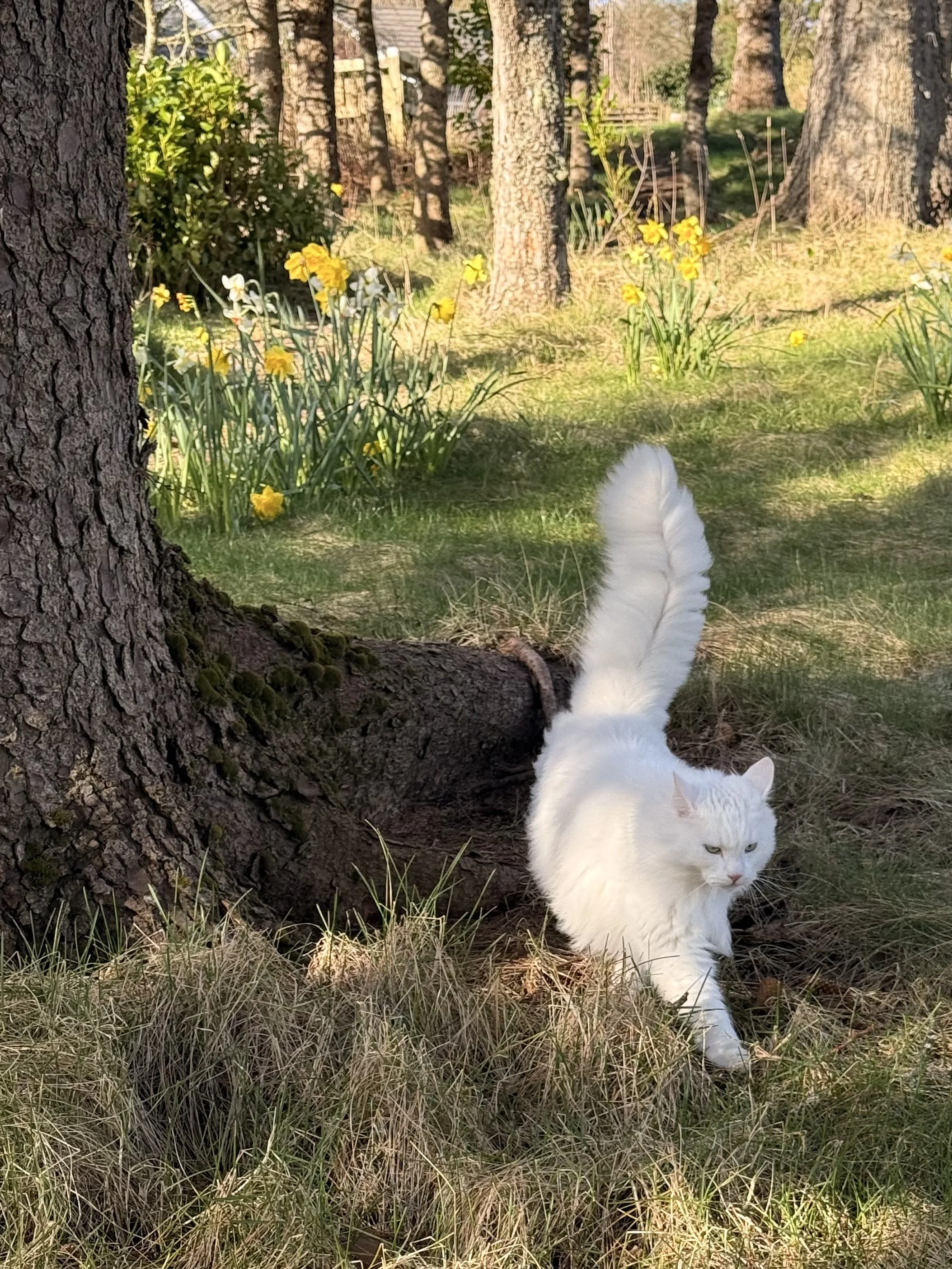
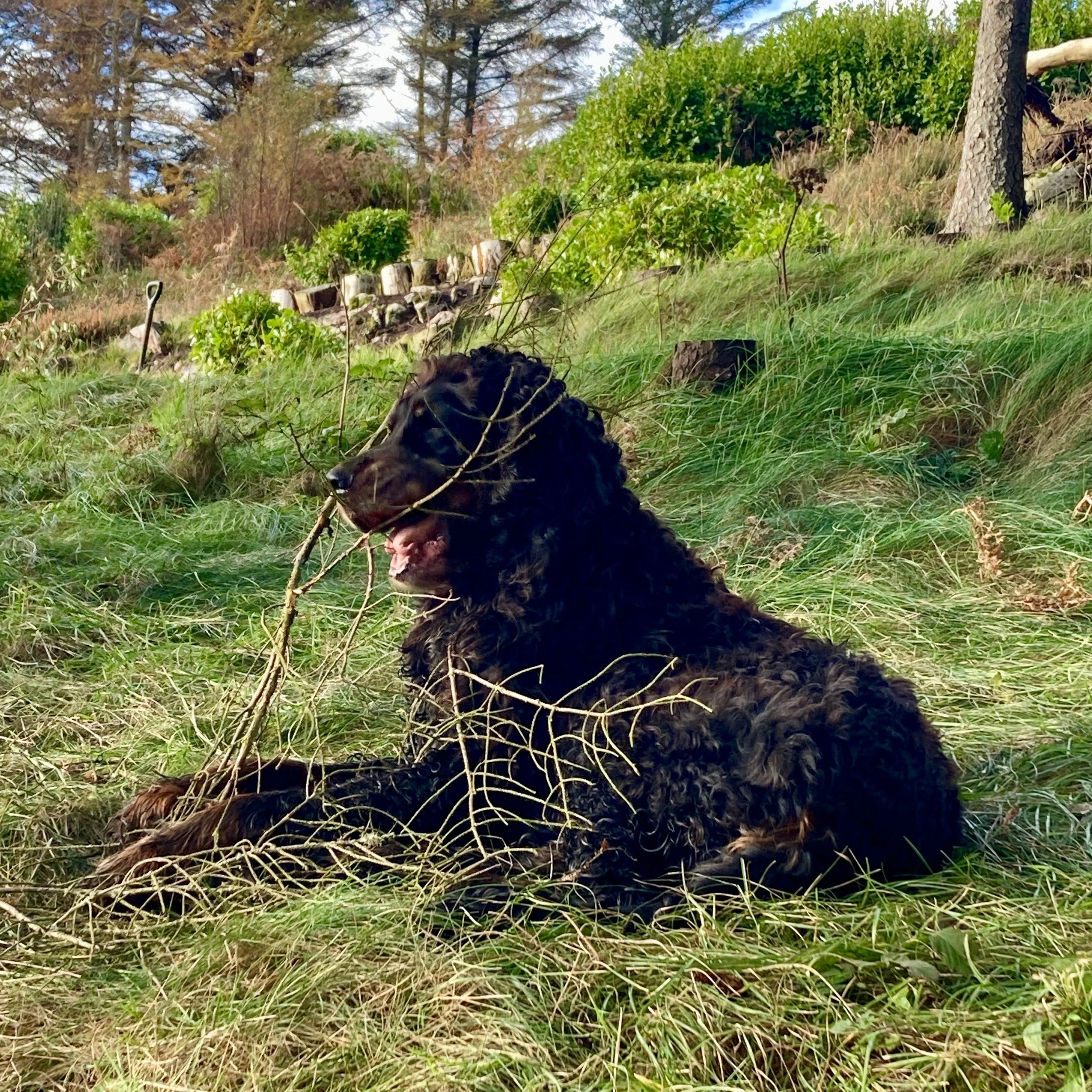
Eddrachilles has been effectively deer-free since 2017. The credit belongs almost entirely to the late Bydand, our Gordon Setter, whose attitude toward visiting wildlife was unambiguous, energetically expressed, and deeply effective. Bydand was, it should be said, the naughtiest Gordon Setter in recorded history — the full account of his activities is preserved at the Colonel’s Bar and available on request — but on the question of deer, he was magnificently single-minded. They shall no pass.
Next door, things have been rather different. Several hinds have been camping on the neighbouring grounds of a splendid holiday home and cut flowers business. In recent years, they have been treating the garden there as a reliable and apparently excellent buffet. This winter, our neighbours brought in a local stalker to address the situation. The shot missed. The impression of a hostile environment, however, did not — and the hinds, being pragmatic creatures with an excellent grasp of risk management, simply reassessed their options.
Their new overnight routine involves our grounds. Accessed via the shore.
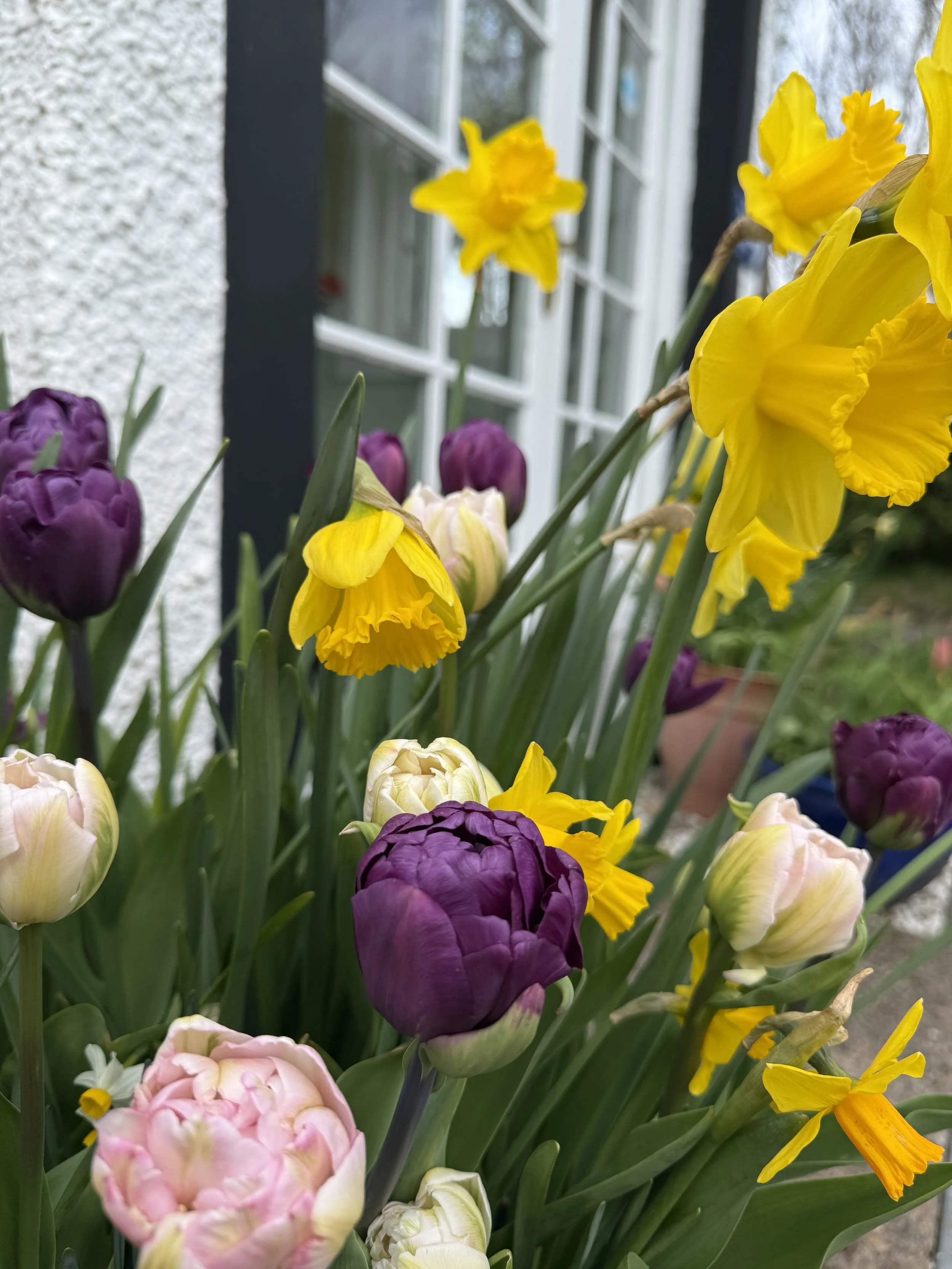
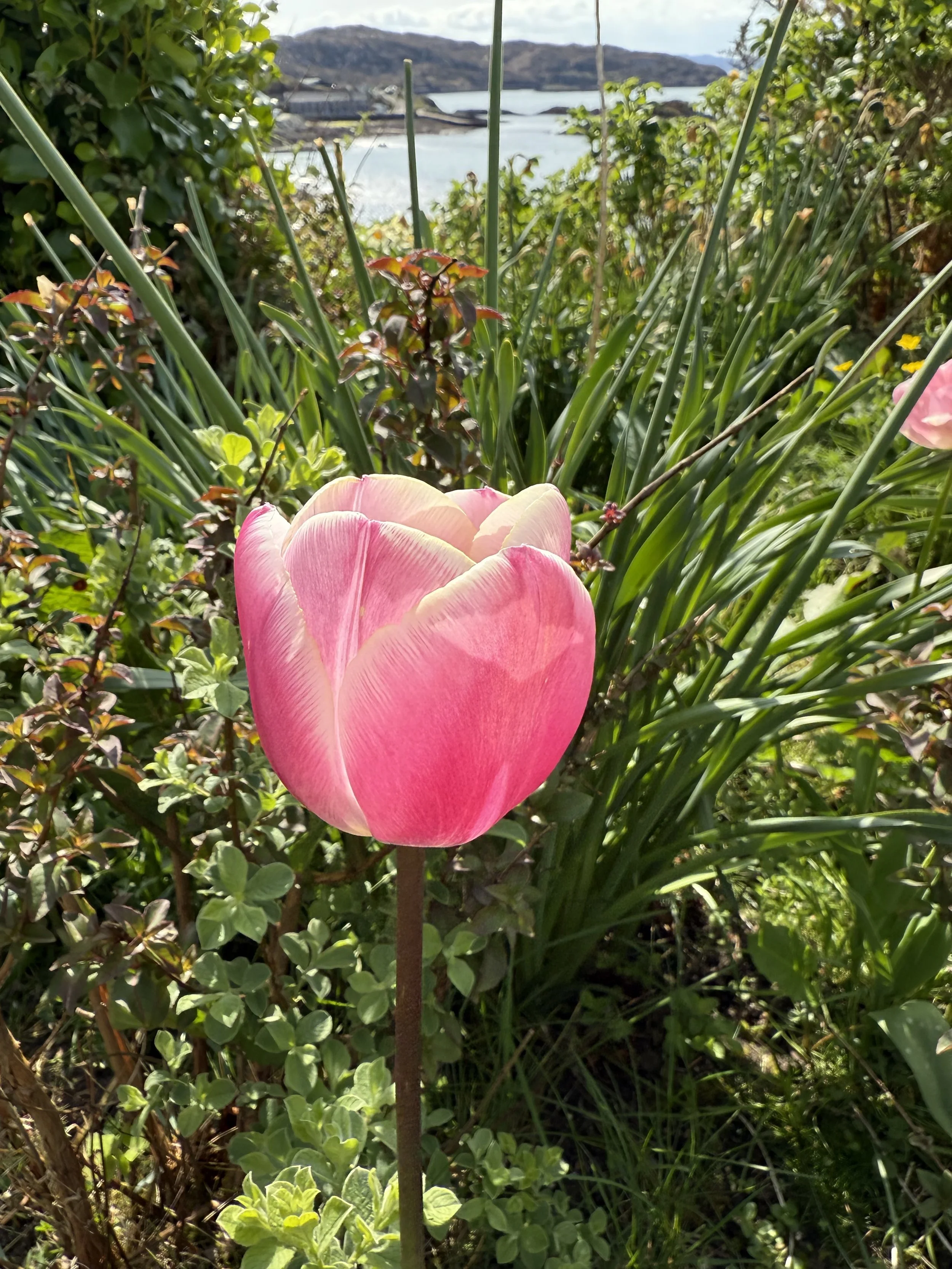
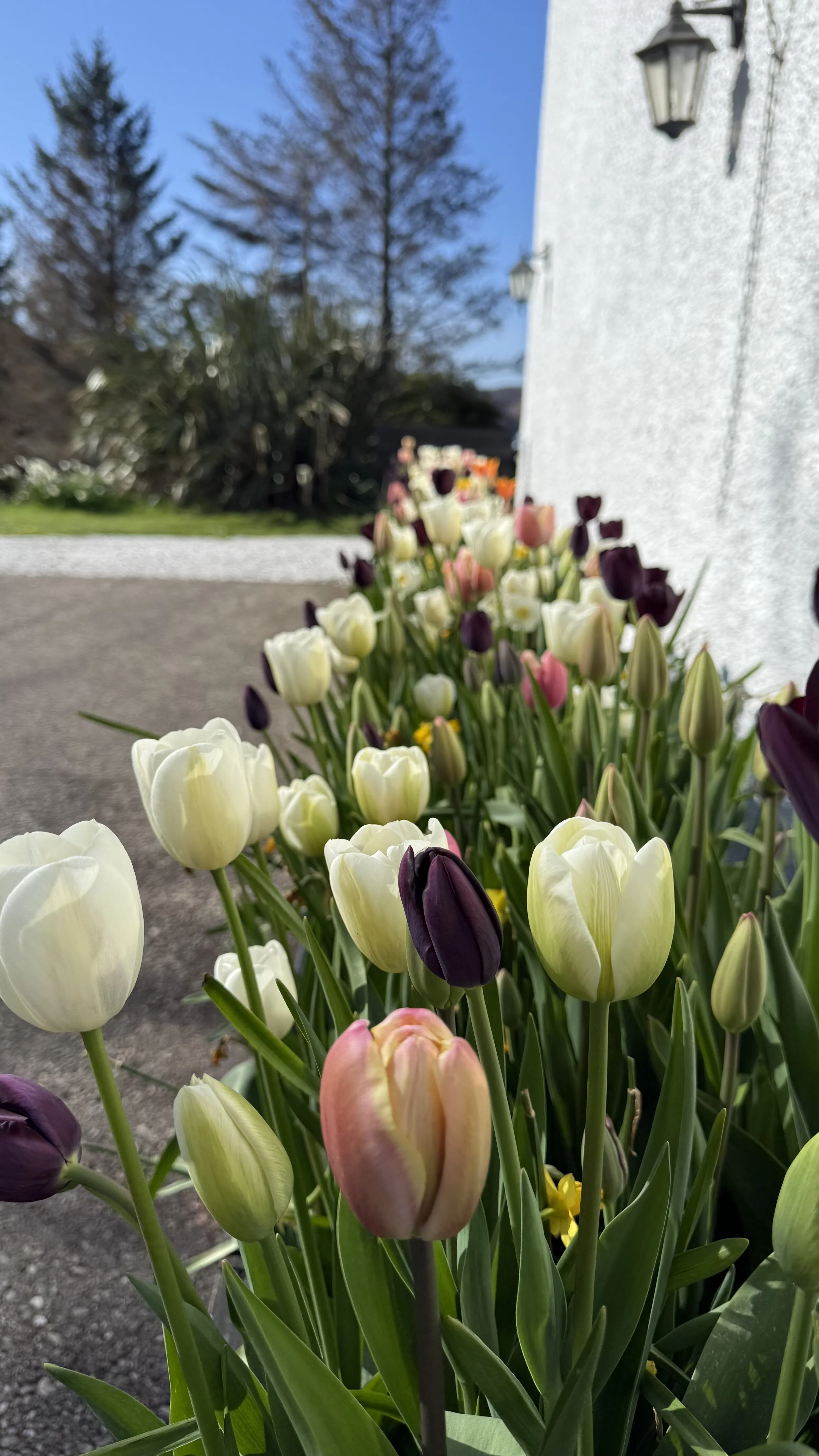
The tulips planted across the lower garden — hundreds of them, the centrepiece of this year’s October list, my pride and joy — have borne the full cost of this reassessment. The front planters, being close to the house, have survived and are currently delivering the tulip display I had planned for the slopes. The slopes themselves are a different story.
Bydand has left us — unexpectedly, as dogs tend to do, stoically coping with pain, gardening with me until the last. . His name, the Gordon Highlander regimental motto, means “stand fast”. His memory remains, very much, in this garden and n our hearts.
My current strategy for deer management involves crepuscular circuits of the grounds with a torch, offering words of discouragement to any hind unwise enough to still be present at that hour. This is not, if I’m honest, how I imagined spending the early weeks of the 2026 season. It is not the view that a guest peaking out at the incoming light in the east expects to see. But this is a Highland garden. The wildlife has its own October list, and it is considerably better organised than mine.
A young Gordon Setter successor arrives at the end of May. We have very considerable confidence in the deer deterrent value of a puppy who has not yet learned where the boundaries are.
Watch this space. The deer certainly are.
Fiona gardens — and loses Hori Horis — at Eddrachilles Hotel, Badcall Bay, Sutherland. On the coastal NW edge of the British mainland. The hotel opens April to October. The garden is always work in progress.