
What We Do in the Winter
A winter story of sea-faring boats, weather and judgement — and of the quiet skills that keep life moving in the far northwest Highlands when the hotel is closed.
A winter story of Scottish heritage boats, weather and judgement — and of the quiet skills that keep life moving in the far northwest Highlands when the hotel is closed.
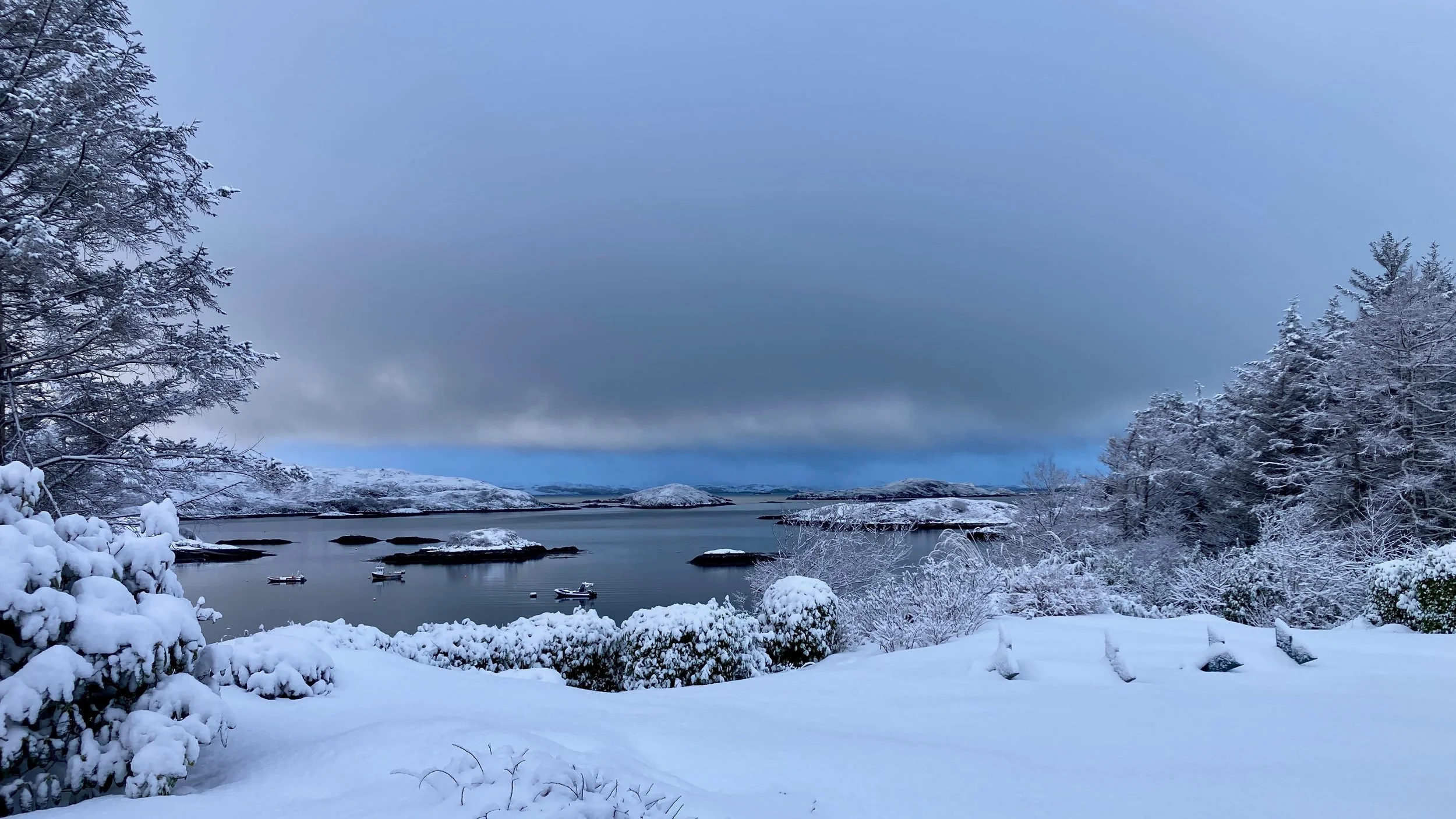
Snow at Eddrachilles Hotel, January 2026
Guests sometimes ask us what we do in the winter.
It’s a fair question. When the hotel is quiet, the nights are long, and Badcall Bay lies grey and reflective beneath low cloud, it’s easy to imagine the far northwest of Scotland simply pauses — that life here goes into hibernation until the first crocuses push through and the road traffic picks up again.
The truth is less romantic, and far more interesting.
Winter is when things are mended. Rebuilt. Renewed.
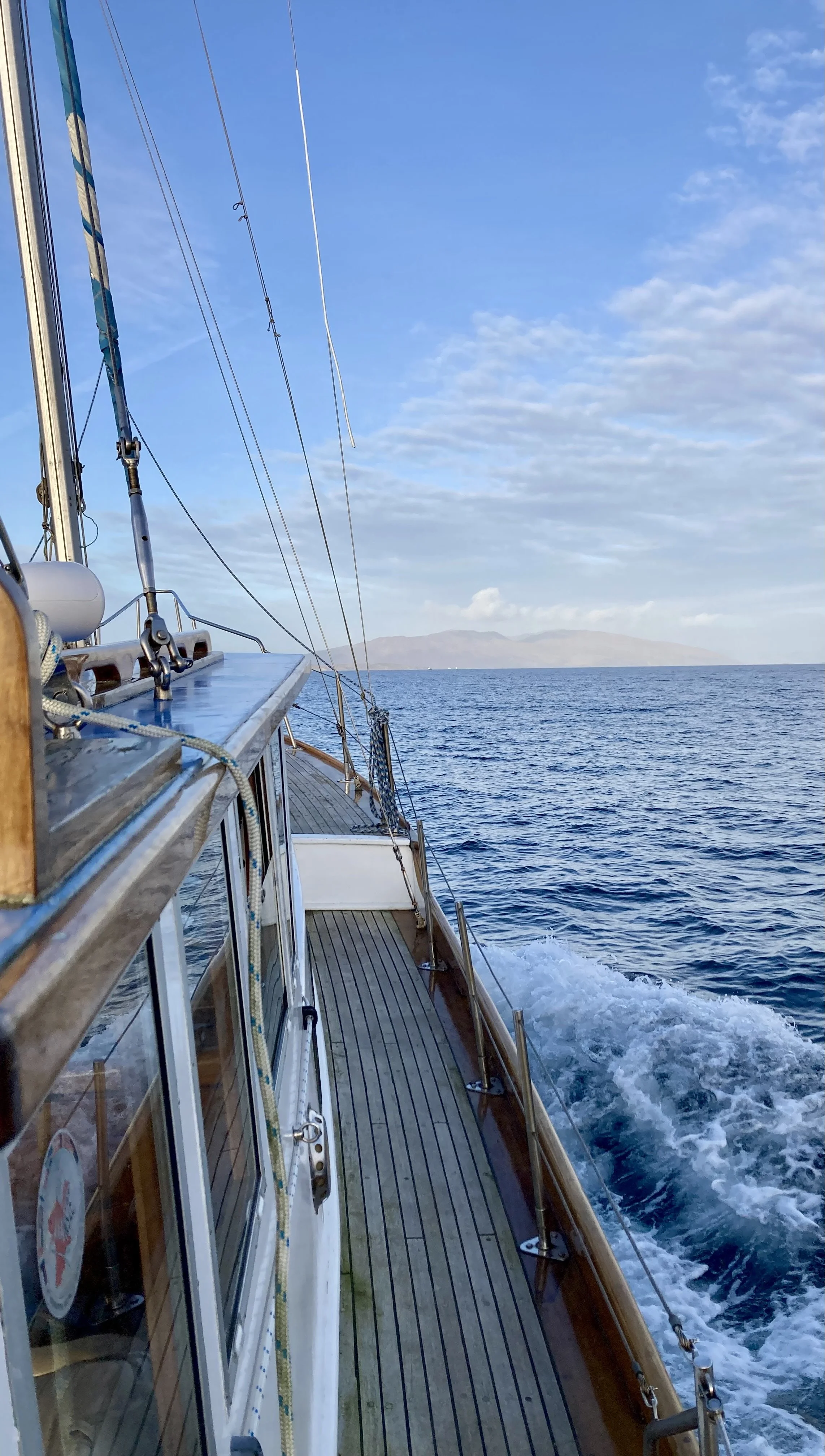
Bimbling!
On 9 September, with Richard at the helm, Tricia Mairi, our wooden motor yacht, left her summer mooring in Badcall Bay and set off for Cory just past Ullapool on Loch Broom. We assumed she would be away for six to eight weeks — long enough for a planned remasting, the fitting of new solid rails, and a marine ladder at a small traditional boatyard. Then we would get would get some sailing in before Christmas, exploring our coastline on the better weather days. A chance to switch off from the VAT returns, accounts, garden projects, website rebuilds, recruitment, marketing and planning for the next season that shape our closed season days (ironically referred to as Holidays by others).
The planned changes to Tricia Mairi were not really an upgrade, but would be visible and definitive, marking a new chapter in her story. This chapter that began with our purchase in 2024 as we entered our sixties and her move from Argyll to northwest Sutherland. Being older - and in Fiona’s case with entirely novice sailing skills - we wanted a solid boat for “bimbling”, a leisurely progression in our beautiful northwest coastal waters rather than full sails and speed. Especially if most of our sailing would initially be in the winter season. Alongside the main project, we also planned some routine maintenance — just the sort of attention that a wooden boat, built in another era and still very much alive to the weather, occasionally requires.
As it turned out, she was away for rather longer.
East Coast Heritage
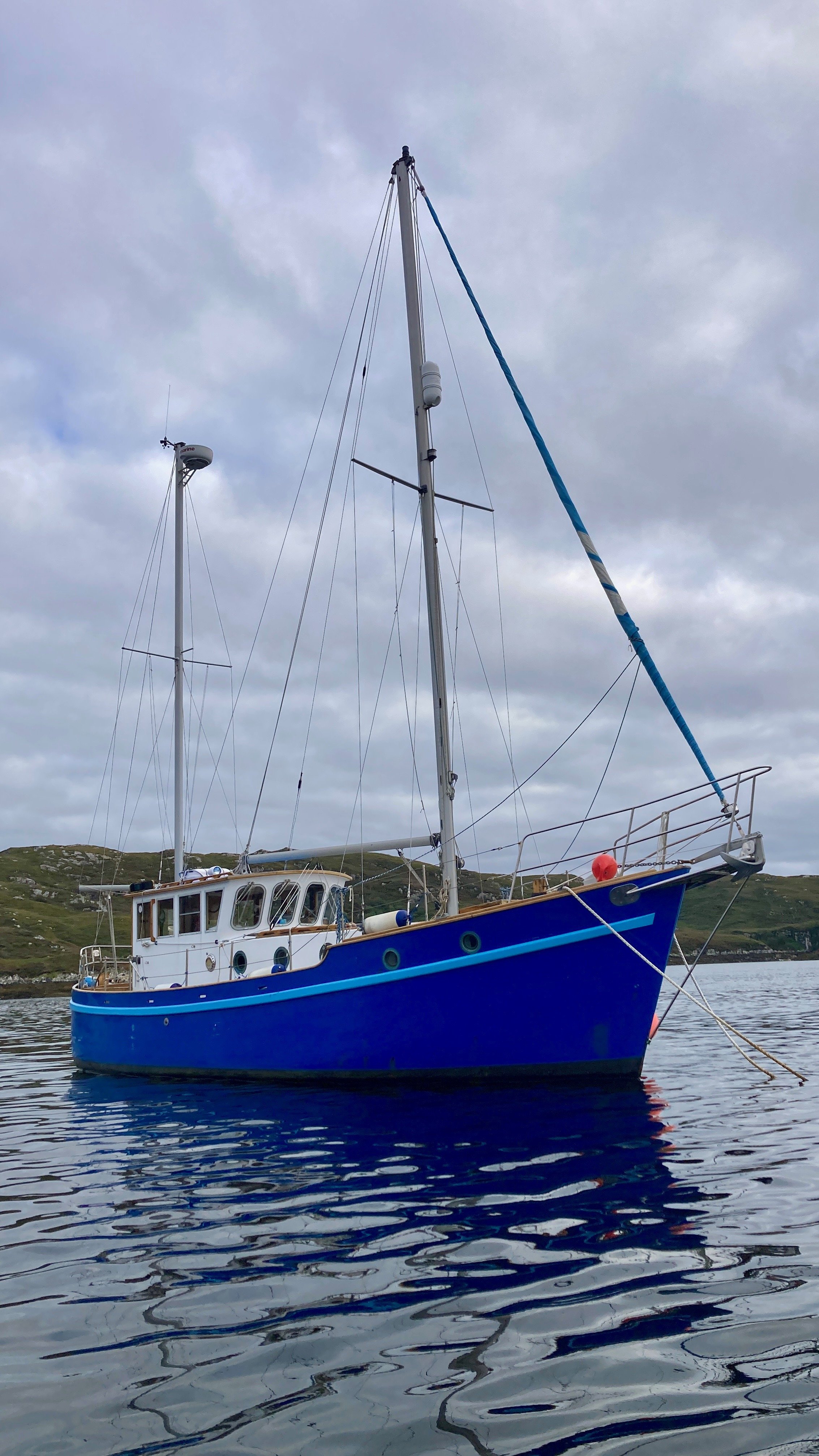
Tricia Mairi, tall masts and rigging August 2025
Tricia Mairi is a Miller Fifer — instantly identifiable to maritime Scots as coming from the once-busy James Miller boatyard at St Monance in Fife on Scotland’s east coast, touching the North Sea. She hails from a time when traditional boatbuilders were forced to diversify as fishing practices abruptly changed. Their boats, like those from each of the Fifer boat builders, were solid, handsome, unshowy, and capable of looking after themselves if treated with respect. Originally designed to get you — and your catch — home, the Miller Fifer hull form adapted remarkably well to cabinetry below, creating a comfortable saloon and a civilised leisure cruising experience.
Our boat was purpose-built in 1971 for leisure rather than the fishing fleet, but she carries the same sea-kindly DNA of her fishing heritage. Along the way, a previous owner invested heavily in full sailing masts and rigging. These were still in excellent condition and fully functional, even if the agent admitted to us that the result was not particularly graceful to handle. After purchase, we debated at length whether they should be retained, while recognising that, in our sixties, we had no great ambition to lean out over the waves and get wet in the process. Ultimately, Richard, as skipper, took the decision this summer to return Tricia Mairi elegantly to her original intent — replacing the sailing masts with shorter wooden ones, improving stability and access around the deck, and making her better suited to our plans for slow motor cruising along this fabulous northwest Highland coast and some gentle island hopping.
West Coast Skills
That work brought her to Johnson & Loftus, the traditional boatyard tucked into the side of Loch Broom by Ullapool.
“Boatyards like this sit at the intersection of Scotland’s industrial past and its present-day working life.”

9 Sept arrival, fishing boat under repair, Tricia Mairi waiting her turn and the tide at Johnson Loftus
Dan and Tim, who run the yard, are not people who seek attention. They work to tides rather than clocks, and to weather forecasts rather than schedules. Storms such as Floris and Amy, which punished our coast in late summer and autumn, simply rewrite their work programme. Consequently, TM lost her place in the queue for several weeks as emergency/urgent works were undertaken on damaged boats. This is just part of life in the Far North.
What Dan and Tim do not compromise on is skill or craft and they have quietly been growing their reputation in recent years. During the weeks Tricia Mairi sat in their care, they were also preparing a bid to remast the Waverley — the world’s last sea-going paddle steamer. A grand old lady whose name alone brings misty eyes to those with memories of the traditional Glasgow Fair, the two-week closure of factories and shipyards, and families heading “doon the watter” for their annual holiday.
Johnson & Loftus won that bid. We were delighted for them.
Boatyards like this sit at the intersection of Scotland’s industrial past and its present-day working life. They support fishing boats, leisure craft, iconic youth training ships such as the Swan, and the people who depend on all of them. Their skills have been passed down to them through watching, listening, and doing. Even as Tricia Mairi arrived on 9 September, all hands were busy steaming and bending a replacement plank for a local fishing boat, temporarily beached on the rocky shore — work that had to be completed before the next high tide refloated the vessel. The same tide that would later be used to bring Tricia Mairi ashore so she could be lifted into the cradle.
Waiting, watching, and changing plans
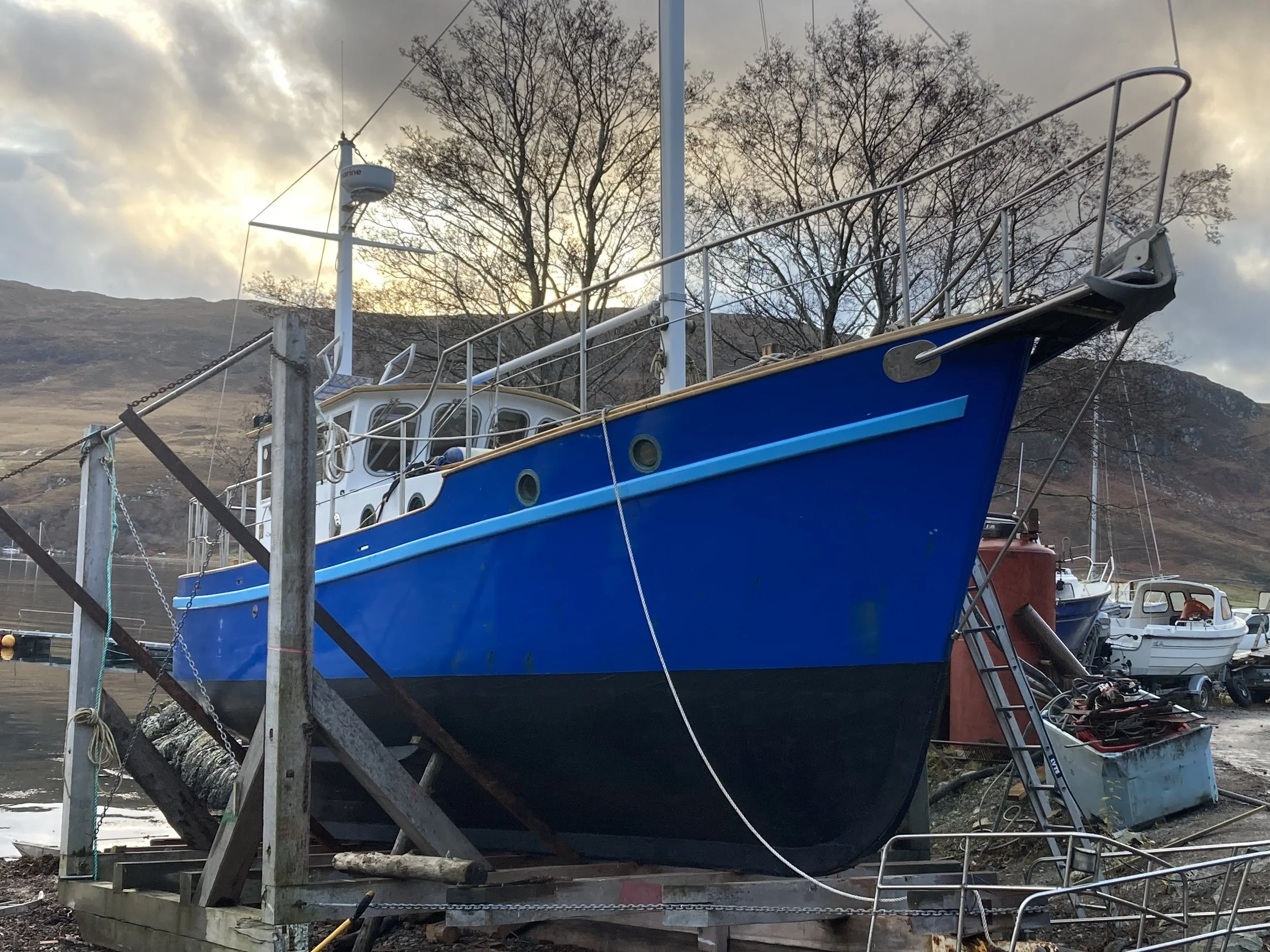
Winter work underway, new solid railings welded, wooden masts already in place.
By December, the remasting was complete. Tricia Mairi was afloat again in Ullapool, to our eyes looking more herself — calmer, balanced, and robust. The now redundant masts, rigging and sails were offered on Facebook Marketplace, free to collect, because in this remote location transportation is always an expensive issue. Ironically, the first and successful enquiry was someone with his boat wintering at the Johnson & Loftus yard. So they are being repurposed locally, the very best outcome, and we wish them “fair winds” in all future voyages.
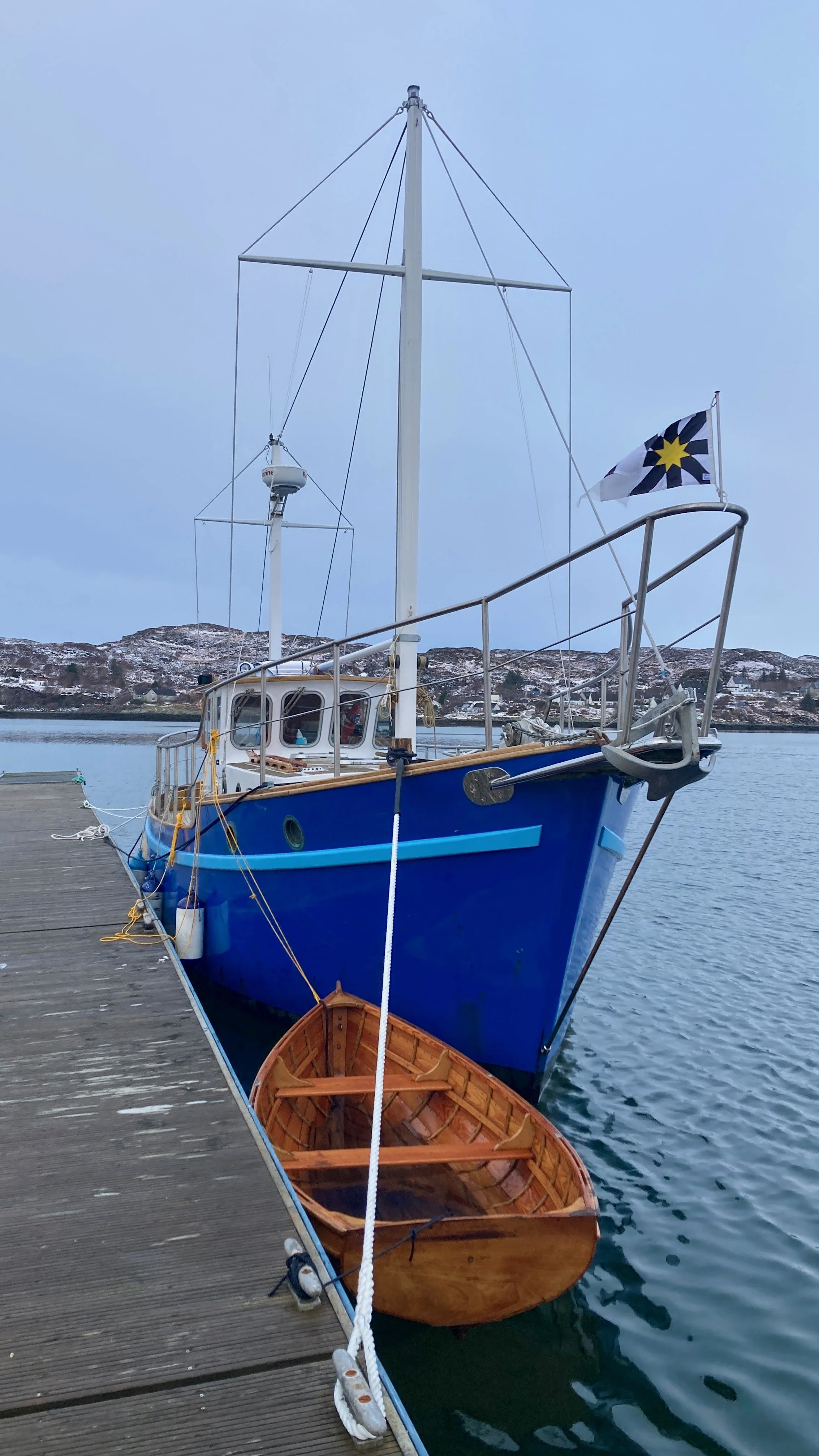
The team also resolved a leaking cooling system, likely the culprit behind some recent issues. The flagstaff, absent during the period of sailing rigging, was re-established and the Red Ensign prepared for its first voyage. At the bow, the Sutherland flag fluttered — the only one in this Wester Ross haven.
Then came the regulator.
A regulator is not a glamorous component, but it is an important one. In plain terms, it ensures that the boat’s electrical system receives power at the correct level. When it fails, the risk is rapid and severe - serious damage to the electrics.
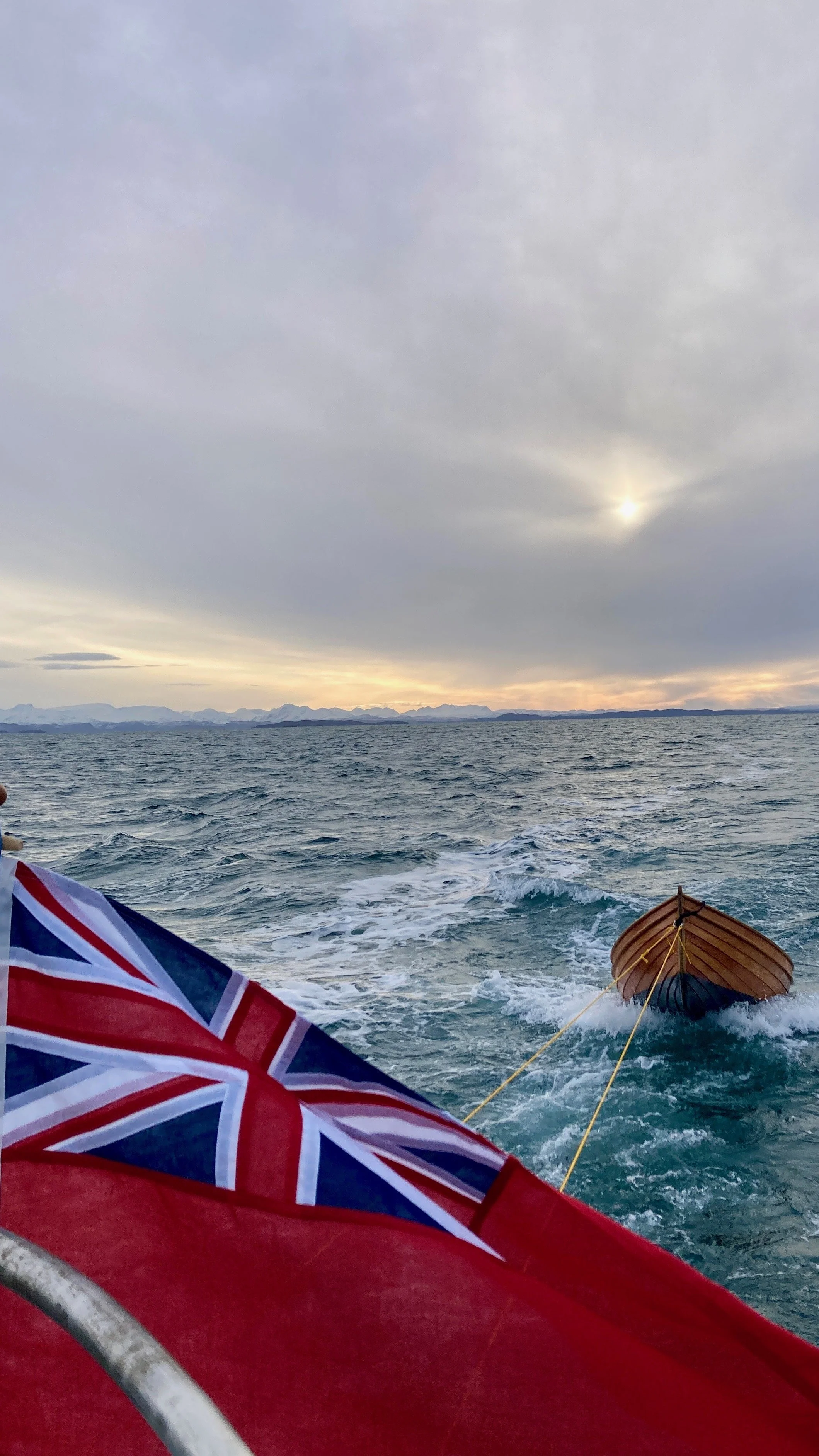
Red Ensign flying, Tender in tow, finally homeward bound from Wester Ross.
The fault revealed itself quickly, a needle on a dial stuck in a zone where it did not belong. The response was equally measured and definitive. The attempt to depart for Sutherland (Lochinver) just before Christmas on 23 December was abandoned within minutes just at the point where the skipper had been hoping for a sighting of the Humped Back Whale that had been feeding for weeks in Loch Broom. No heroics, no frustration, no “we’ll see how it goes”. With heritage boats (or any under a good skipper) a plan B is always waiting. A quick confer with Dan by phone and a turn back to first available berth on the pontoon, slipping in to Ullapool Harbour just ahead of the Stornoway ferry’s departure. After brief inspection, there was nothing for it but a patient wait for a replacement part — delayed, as so many things are, by the festive break.
“Winter does not reward determination so much as judgement.”
It’s worth noting that Fiona’s 89-years old father played his part. Driving to Eddrachilles from Aberdeenshire on that day for the family Christmas, he diverted his route to collect the stranded skipper in the already dark afternoon at Ullapool. A long retired fisheries research officer, he doesn’t need many excuses to visit a harbour. Salty tales were exchanged on the drive north.
Christmas passed. Family plans were adjusted. The skipper found regular excuses to be in Ullapool to check on his boat. The harbourmaster’s office was sympathetic, helpfully advising when Tricia Mairi should move to a more sheltered mooring.
This is perhaps the least understood aspect of life here. Winter does not reward determination so much as judgement. Richard watched weather windows close, reopen and close repeatedly, knowing that disappointment is a far smaller price than haste. Those who live on this coast learn early that patience is not passivity; it is a skill.
A small window, taken carefully
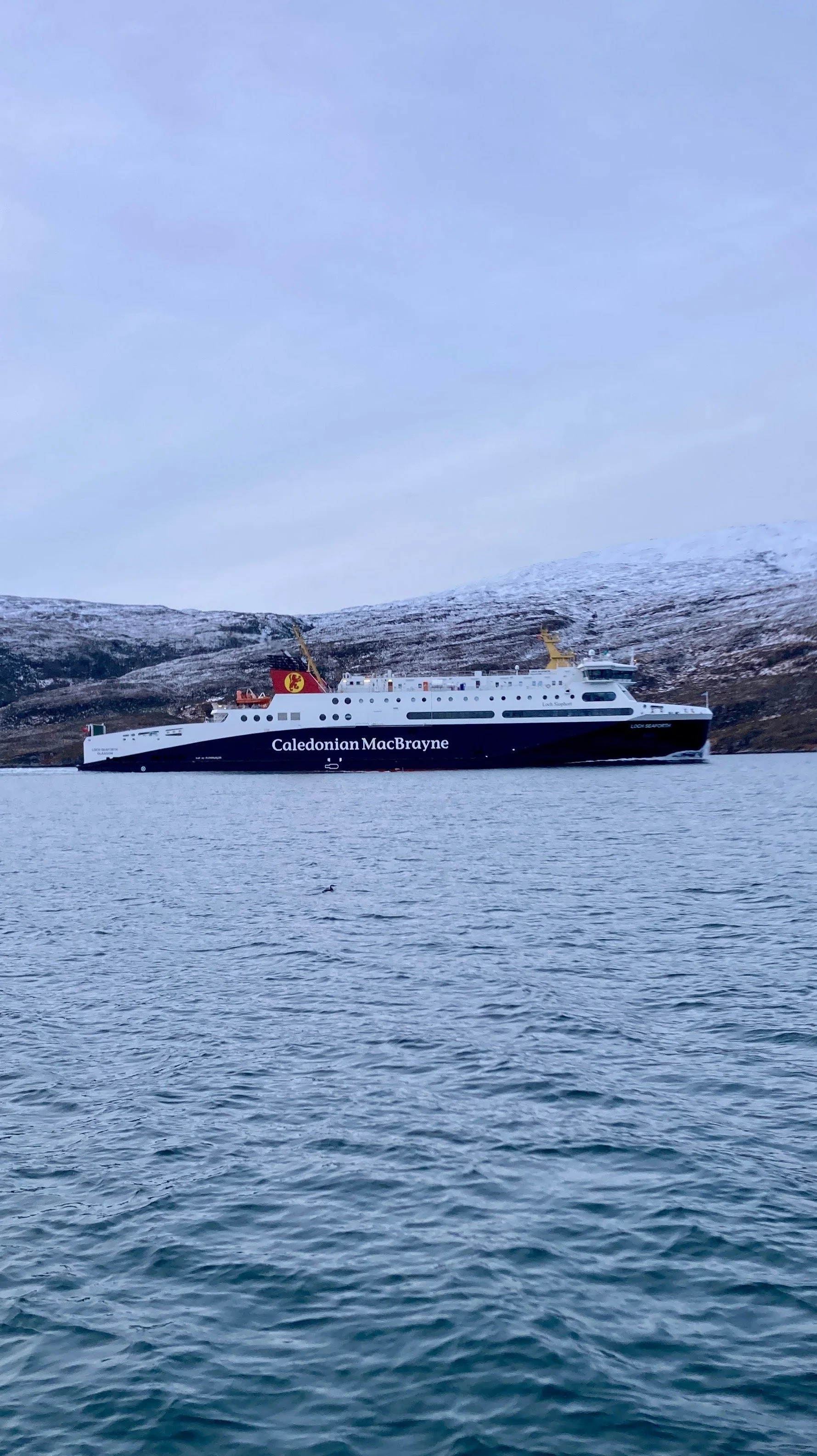
Ullapool-Stornoway ferry, rather faster than a wee Miller Fifer
In the final days of December, the replacement regulator arrived. On a cold, blustery Hogmanay morning, Dan — accompanied by his father — appeared on the pontoon with good humour and soon numb fingers. The replacement was fitted, tested, and tested again. The system held.
Still, the weather did not cooperate. Heavy snow fell right down to the coast. When the wind dropped, the swell remained too high.
Finally, on Friday 10 January, a narrow window appeared. Nothing showy. Nothing generous. Just enough.
Tricia Mairi slipped out of Ullapool just ahead of the Stornoway ferry — which soon overtook her — and set off out of Wester Ross, bound north for Lochinver. She took her time. Those on land checked her progress regularly via the Marine app. On board, the engine was listened to. Decisions were made and remade as conditions shifted. Silent thanks to Tim and Dan were offered many times.
By the end of the day, she was moored safely in Lochinver.
Home, at last. Plans for some of our winter sailings revived.
Why this matters — even if you never sail
“Winter is not an absence. It is a season of care, maintenance, and attention.”
Lochinver, with the Sutherland flag!
For some of our regular guests, this will read like a (long newsy) letter from old friends. A glimpse into what happens here when you are not with us. Something to ask about over a dram when you next stay. Fuel for affectionate teasing at the bar.
For others, it may stir older memories: wooden boats, working harbours post World War II on the Scottish coast, childhood holidays when the Scottish boat building industry - like the famous ship-building on the Clyde - was part of the landscape rather than an old chapter of our industrial heritage.
For a few it is a connection with their own passion for boats, whether that’s glamorous fair weather sailing from Largs or the restoration of the Waverley (we know who you are!).
For us, it is a reminder that winter is not an absence. It is a season of care, maintenance, and attention. Of people quietly practising their craft in the Far North, keeping things working as they should. and renewing the old to serve once more, when the time is right to do so.
This, too, is what we in our closed hotel do in the winter.