
A Morning Walk by Badcall Bay in May
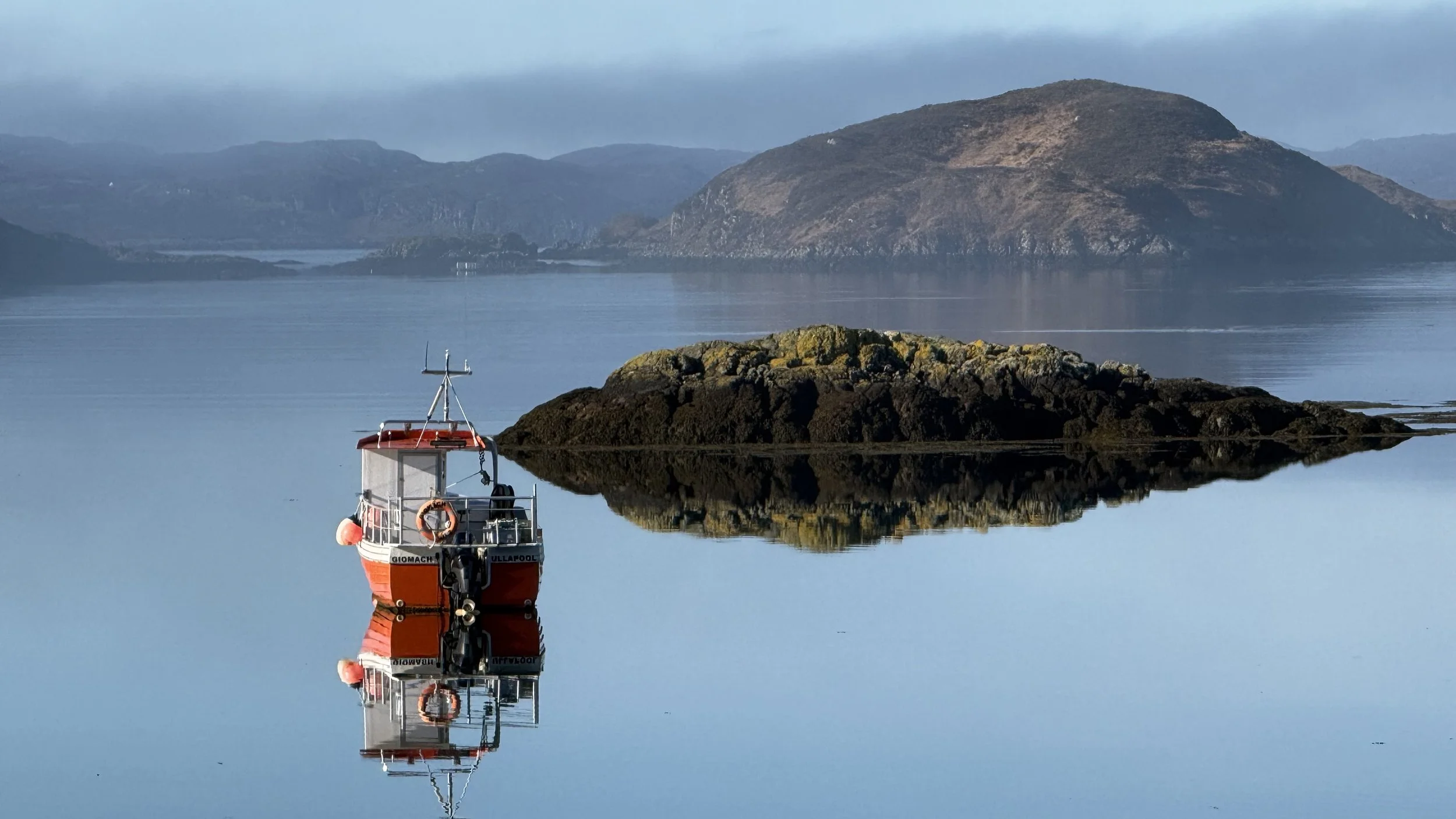
A May morning at Eddrachilles Hotel; mist lifting from Badcall Bay, birdsong in the woodlands, seals on the skerries, and the change of rhythm of the shore as the North Highlands wake for the day.
There is a point in the spring morning—somewhere between eight and ten—when the day gathers itself.
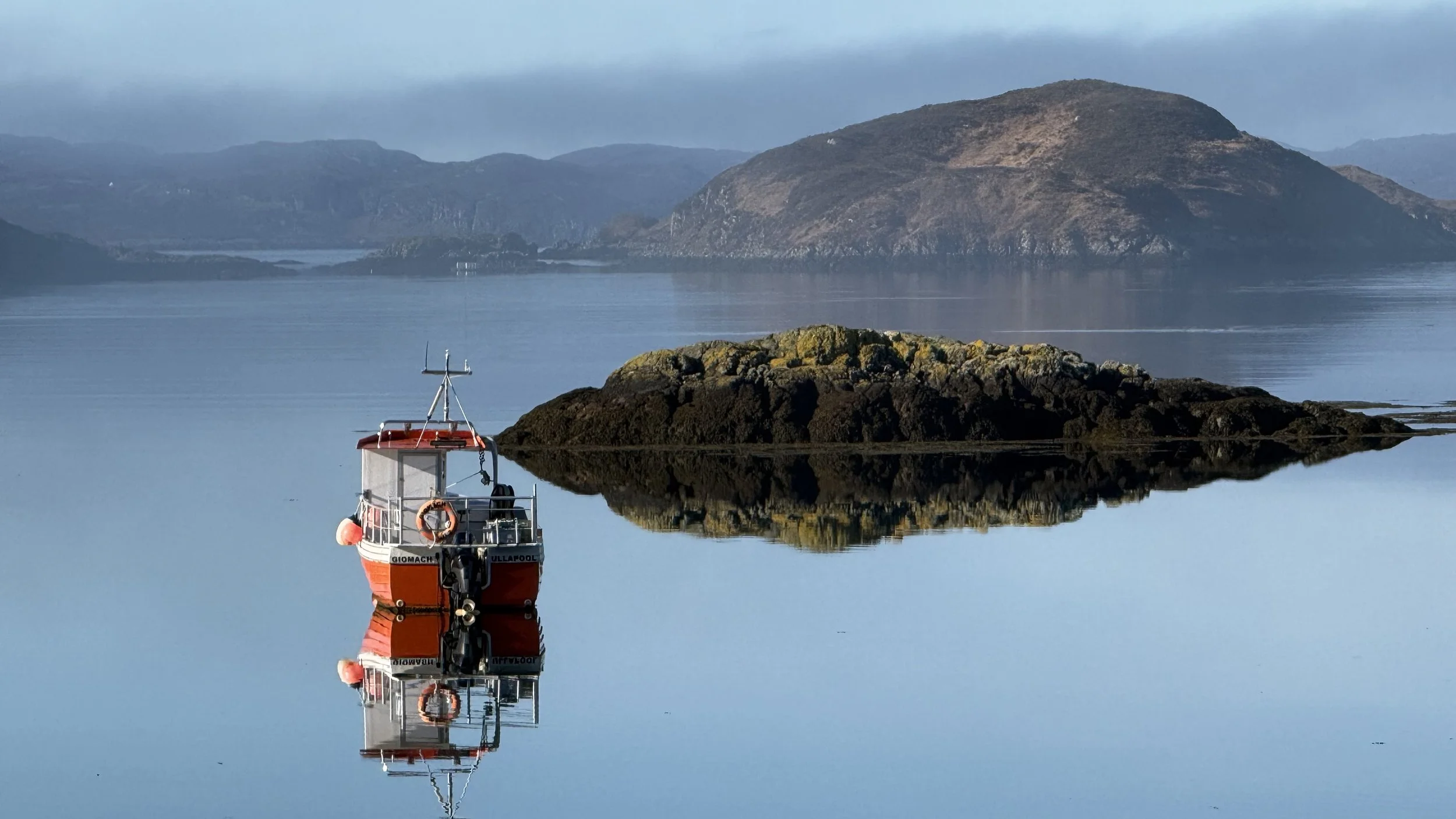
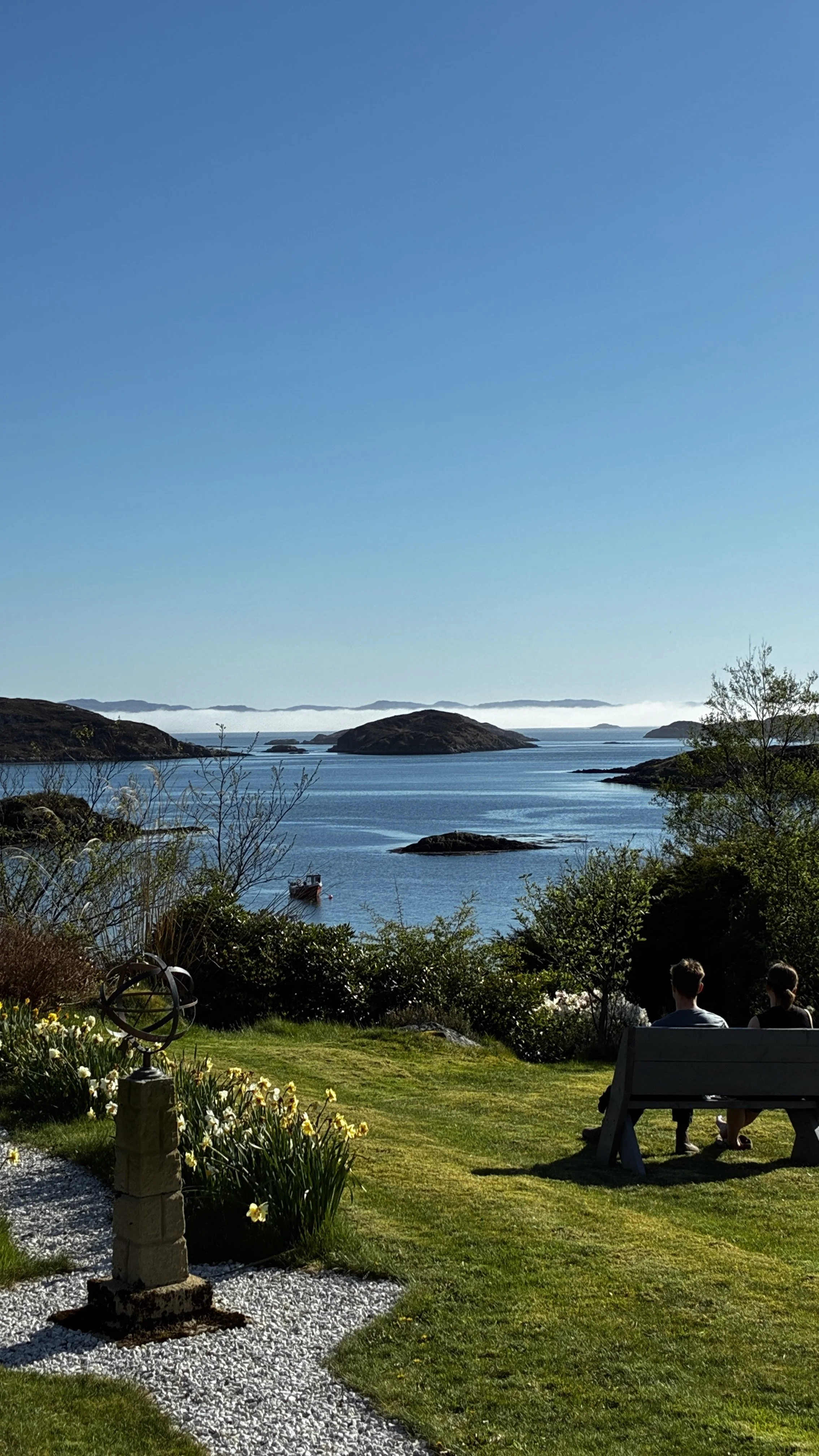
In late April and May, it often begins with clarity in the view across the bay. The light has a quality photographers recognise immediately: edges defined, distances held in sharp relief, the hills across the water fully present. It is one of the reasons this month is so well regarded in the North Highlands. Not summer, not yet. The air can still carry a chill, and even here, in a sheltered coastal setting, some trees have yet to break fully from dormancy.
At times, the view shifts entirely. A temperature inversion in the outer bay draws a white cover across the water so that the Assynt peninsula— some six miles distant across Badcall and Eddrachillis Bays—loses its shoreline and becomes something else. Hilltops suspended above cloud, as though the land has lifted clear of the sea.
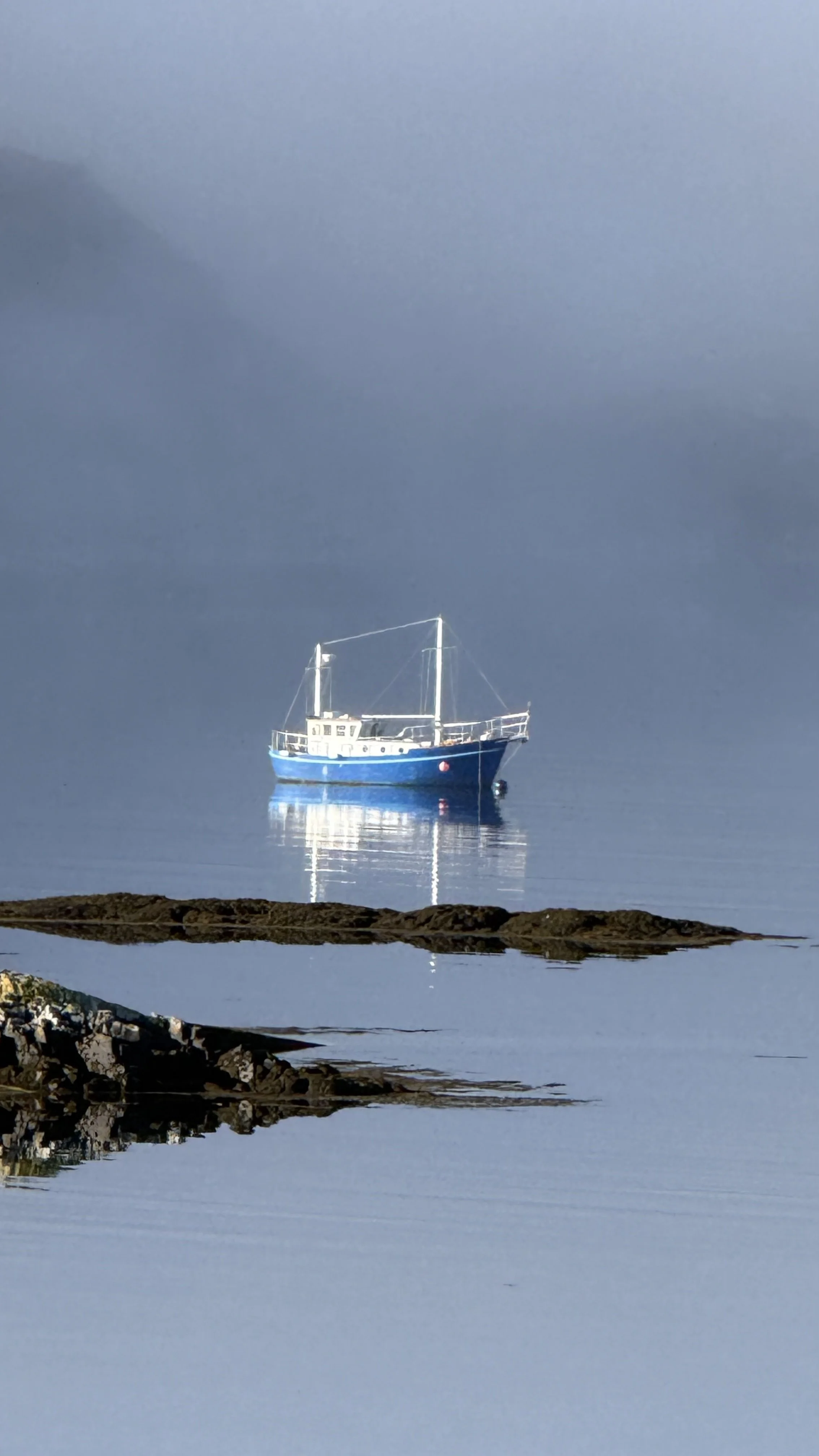
Occasionally on other mornings, a softer veil arrives. Haar—a coastal sea fog —can occasionally slip into the bay. It dulls sound, softens outlines, and settles around boats and skerries. It rarely holds. By mid-morning the sun burns through, and what follows feels like a release.
Birdsong builds. Seals call from the skerries and islands, their voices carrying across the water, welcoming the warmth of the sun. The mist thins into strands—gossamer threads drifting and lifting away. On still days the surface holds it all, reflections so complete they seem to double the world rather than mirror it.
The walk from the hotel to the shore is short, but it changes character as you go. The island studded Badcall Bay is one of the stunning views of the area, and the interplay of light and water means it is constantly changing. And the sounds change too.
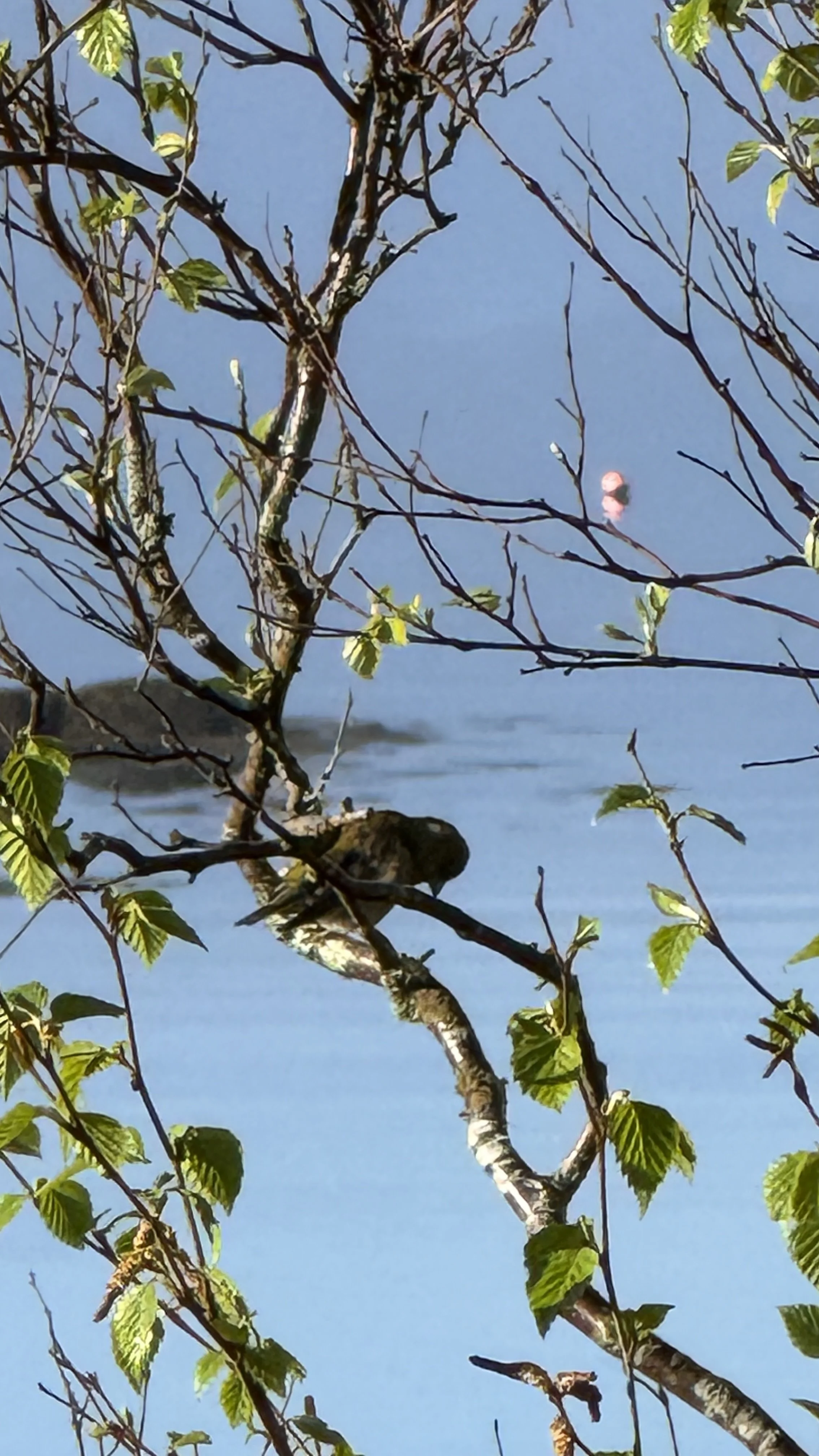
Leaving the hotel buildings, the first voices are familiar: goldfinches, chaffinches, greenfinches, robins, house sparrows. The sparrows, in particular, defend their territory with conviction. Painters and builders have been pelted with small stones for getting too close to a nest.
On the lawn, pied and yellow wagtails move quickly through the grass, taking advantage of slower insects in the cooler air.
A little further on, as the path winds down through the trees—by steps or slope—the sound deepens. This is where a birdsong ID app on your phone such as Merlin comes into its own. You will see some birds, but you will hear many more.
Blackcaps, stonechats, treecreepers. Rock doves (pigeons) circling before settling on the roof. Meadow pipits. Warblers—willow, reed, sedge. Red polls. Cuckoos, when they choose to announce themselves. Blackbirds and song thrushes. Wrens, often more than one, and never understated. Families of tits move through the canopy—coal, blue and great—restless and vocal.
At the shore, the tone shifts again.
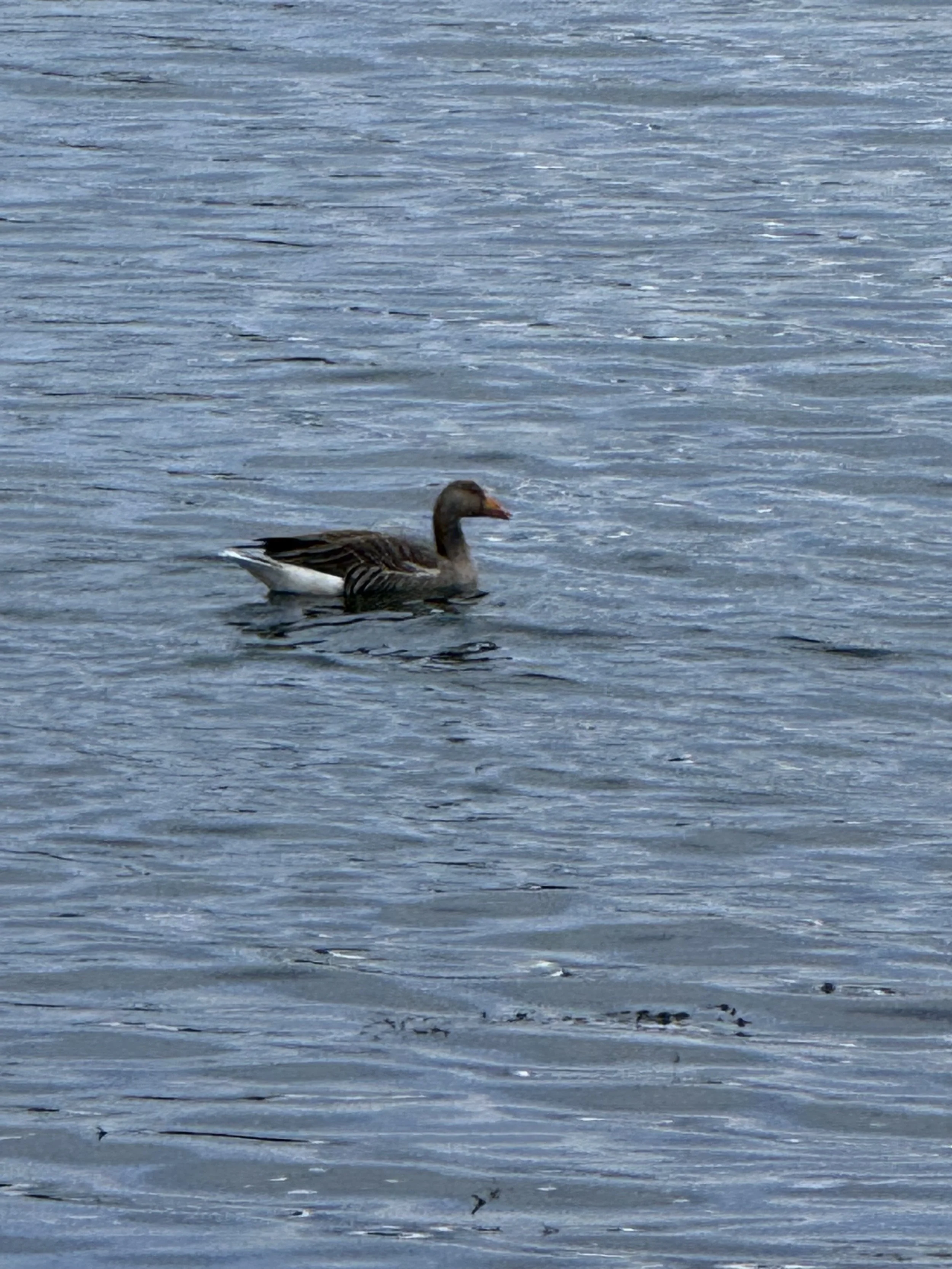
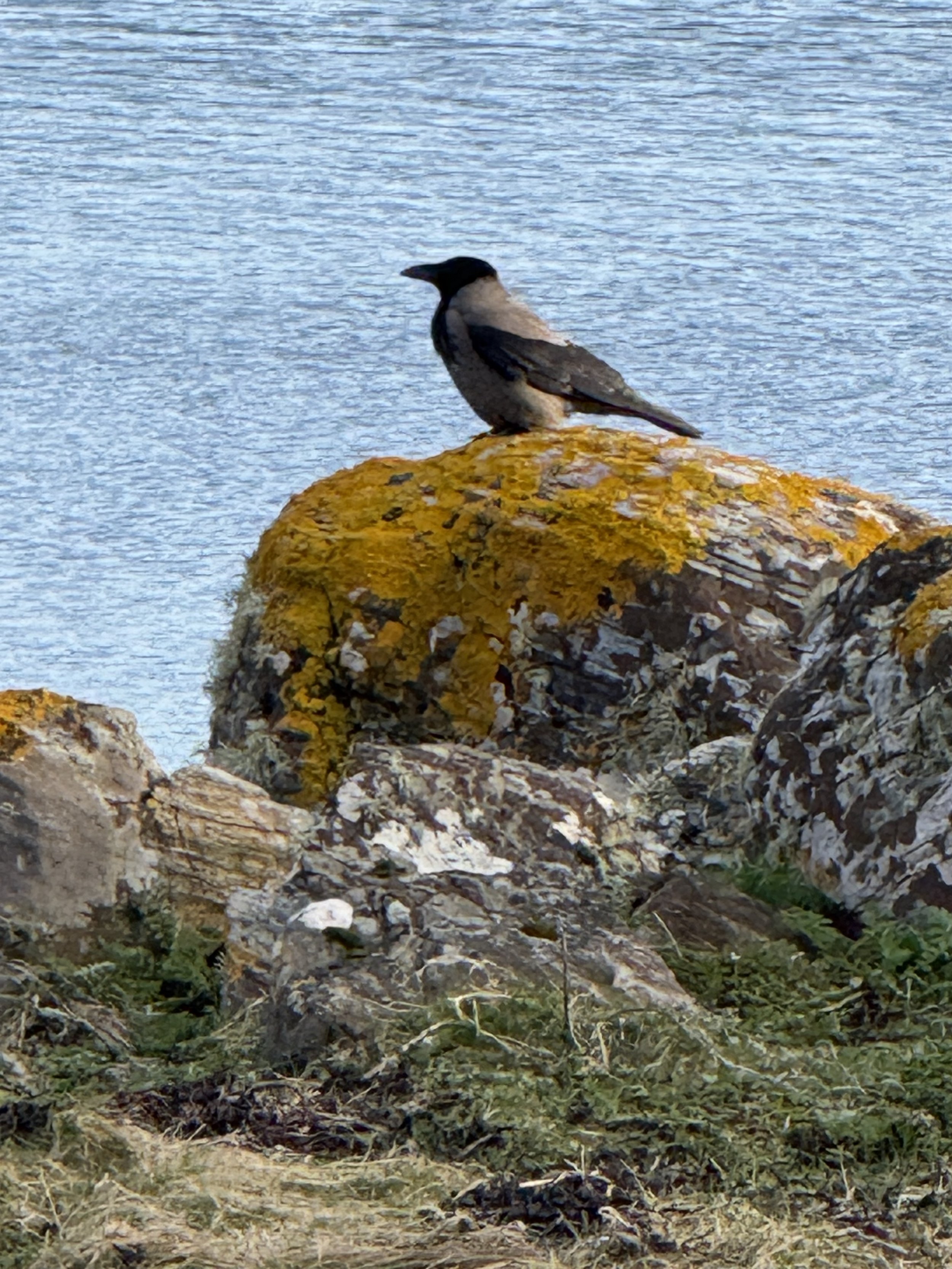
Greylag geese make their bossy presence known, joined by mallard and eider. Hooded crows work methodically across the seaweed, rock to rock. Sandpipers trace the edges, small groups rather than flocks, but constant in their calling.
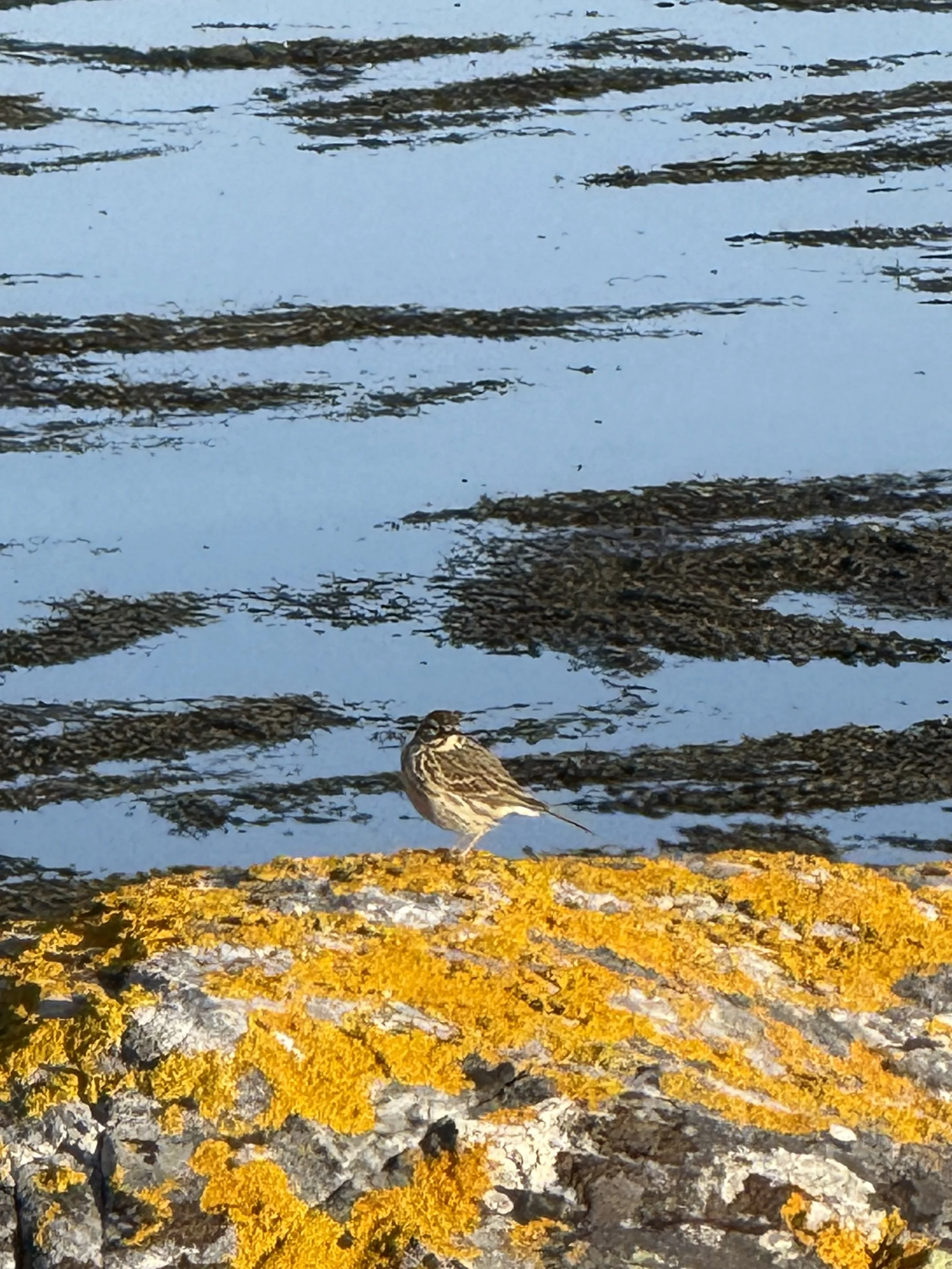
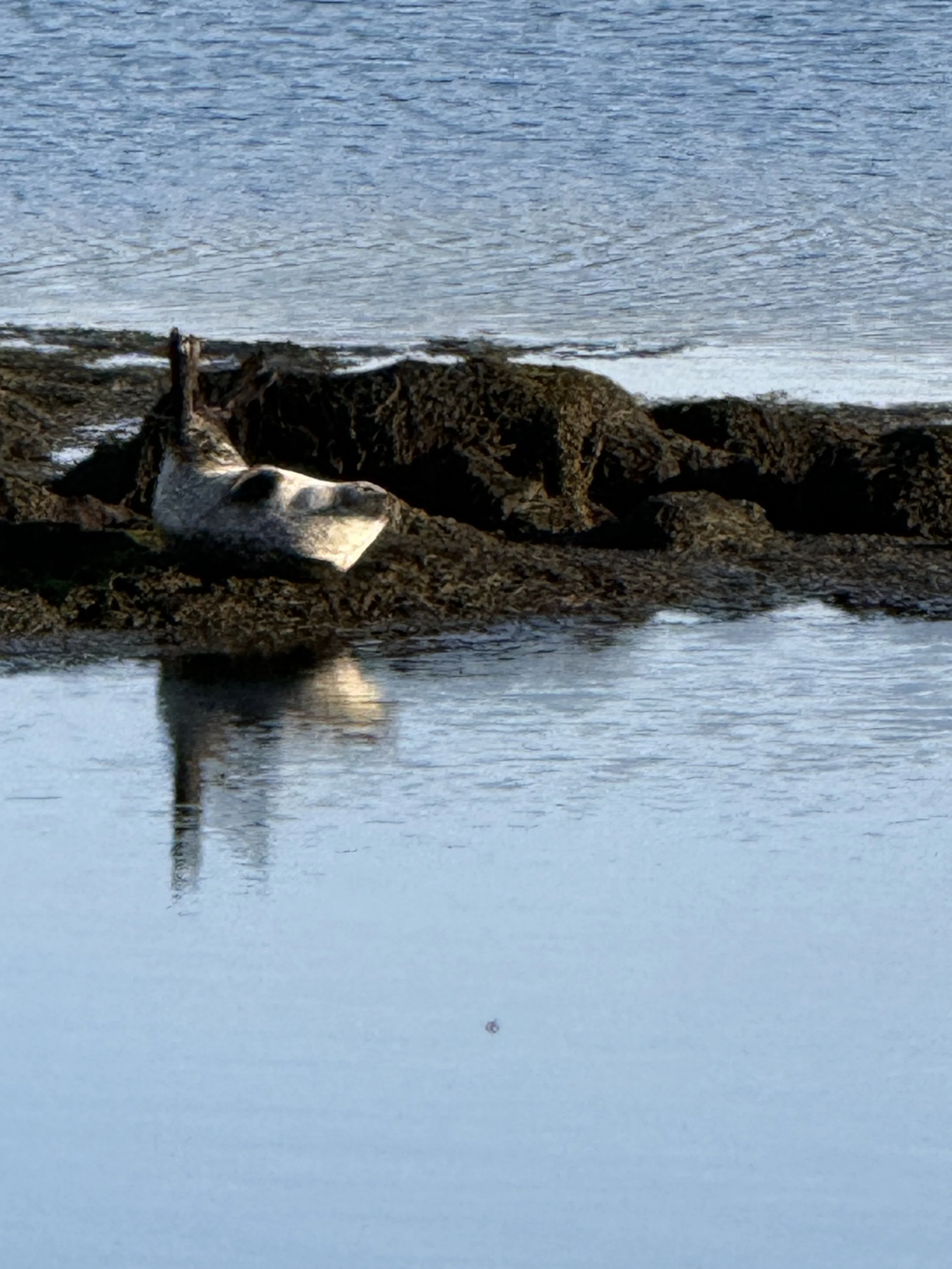
Further out, gulls, shags, and the occasional great skua. Beyond our seeing there are gannets and guillemots. Then the oystercatchers—sharp, insistent, circling low before landing in a scatter of black and white. And, if the moment aligns, a curlew passes low over the water, its call carrying a note that is unmistakably Highland: clear, slightly mournful, and entirely of this place.
Herons arrive without grace, long wings folding as they drop toward a chosen stretch of shore. A ringed plover may be recorded, though not always seen. Eagles are less likely at this hour; they tend to work the thermals later in the day. Buzzards, by contrast, are often overhead, their mewing call drifting down from the hills. Gulls periodically take noisy flight.
By nine, sometimes earlier, the working day at the fish farm (based at the Salmon House by the pier) begins to assert itself. Engines start. Boats move. The rhythm of the bay changes—not dramatically, but enough to register.
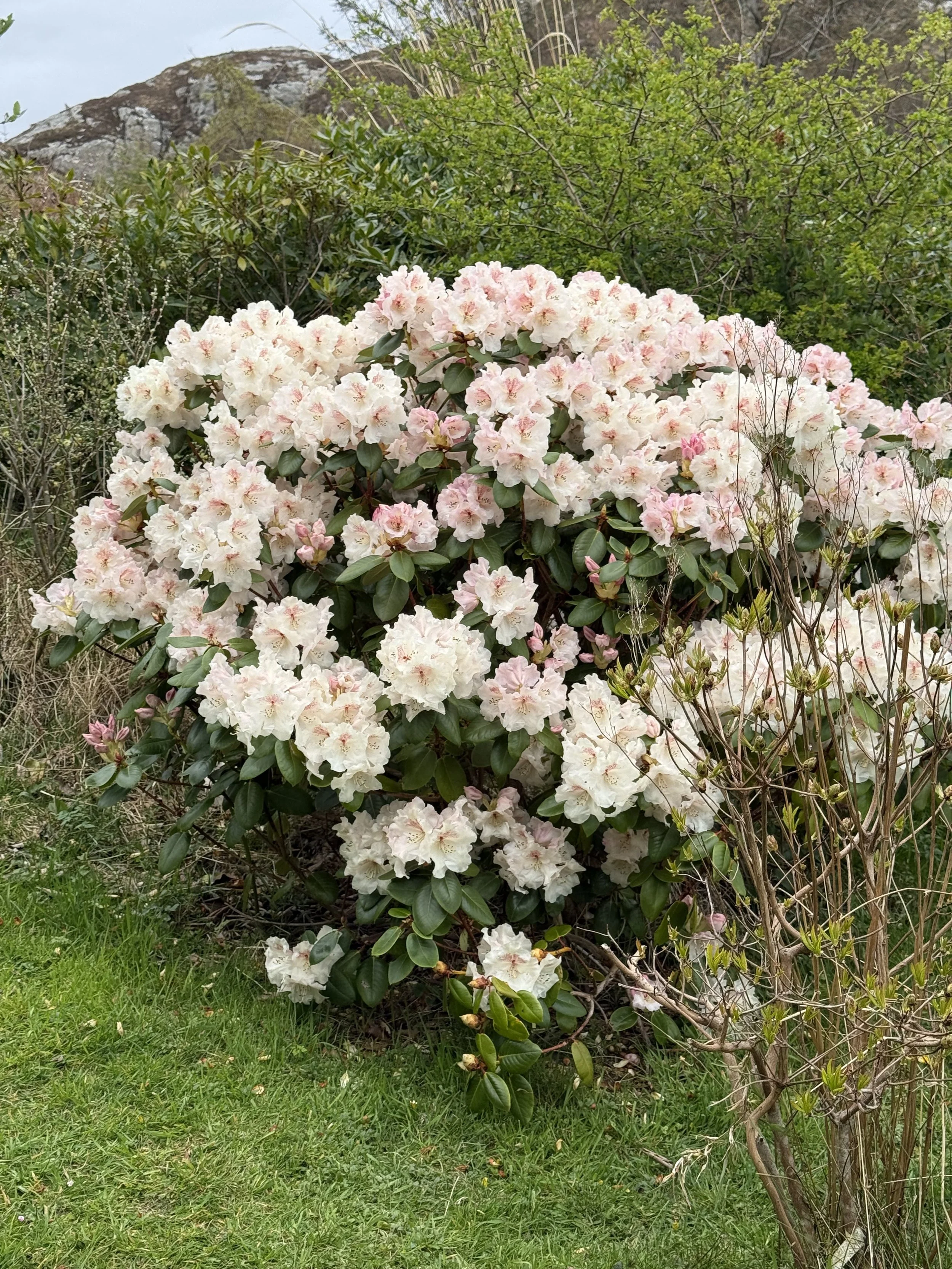
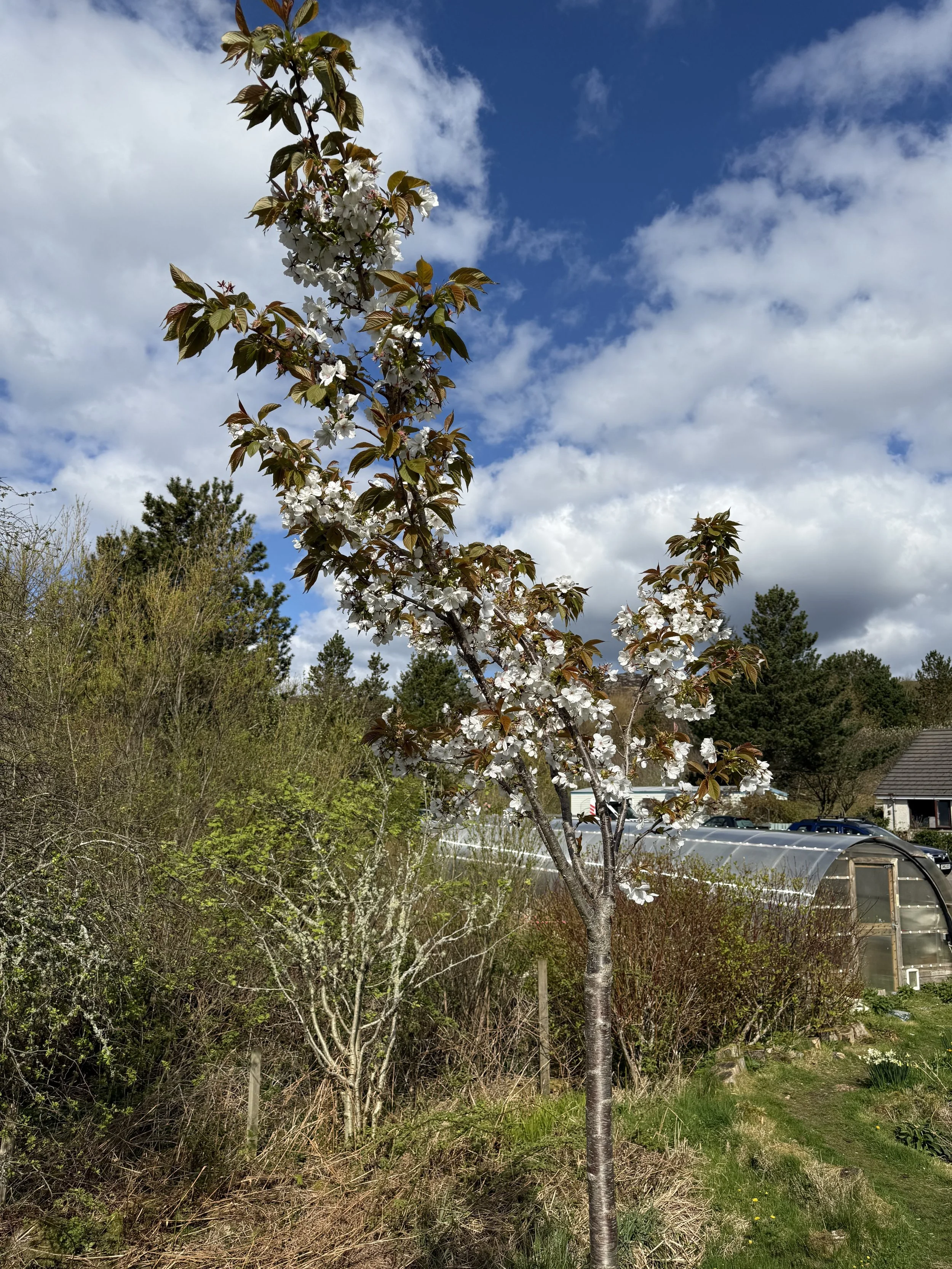
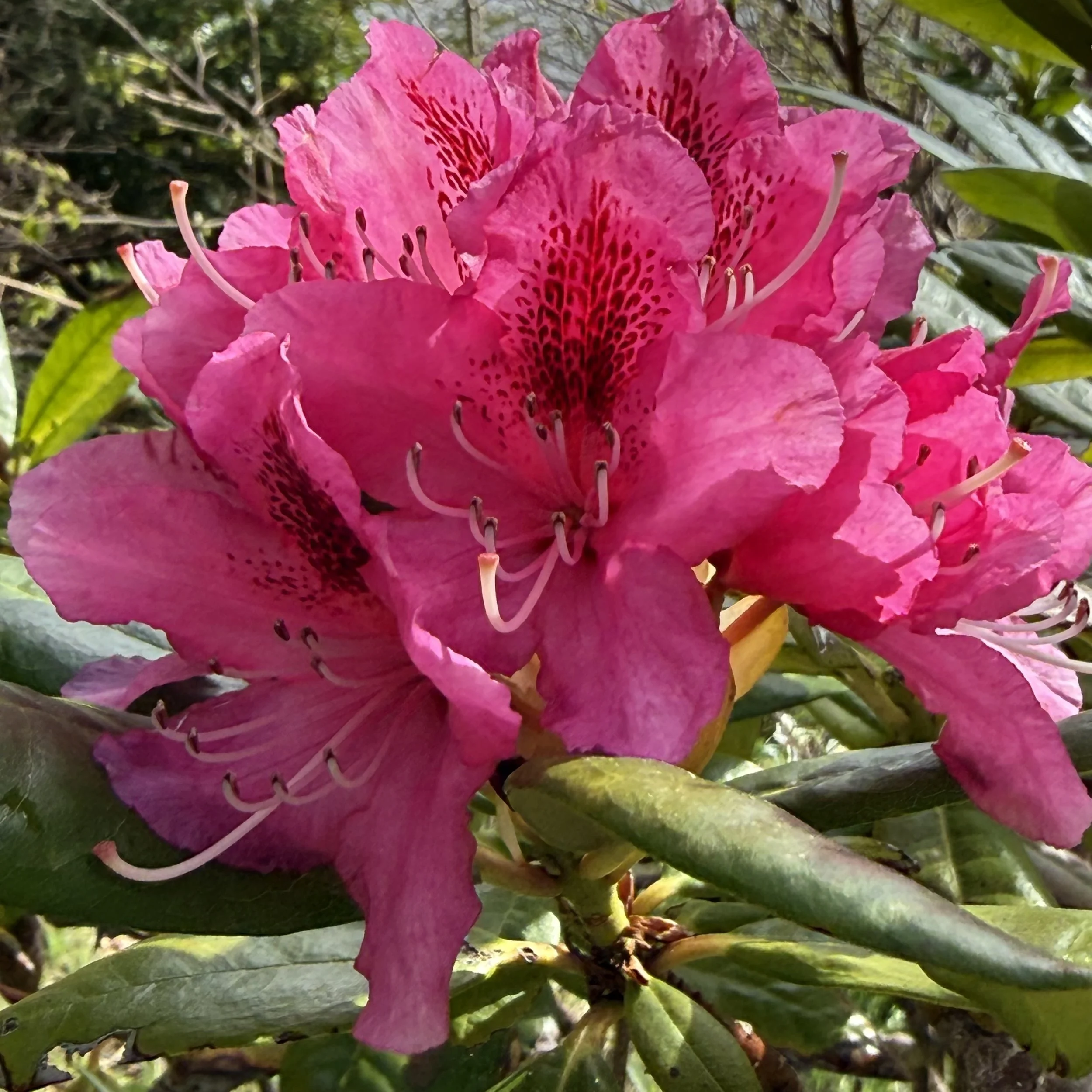
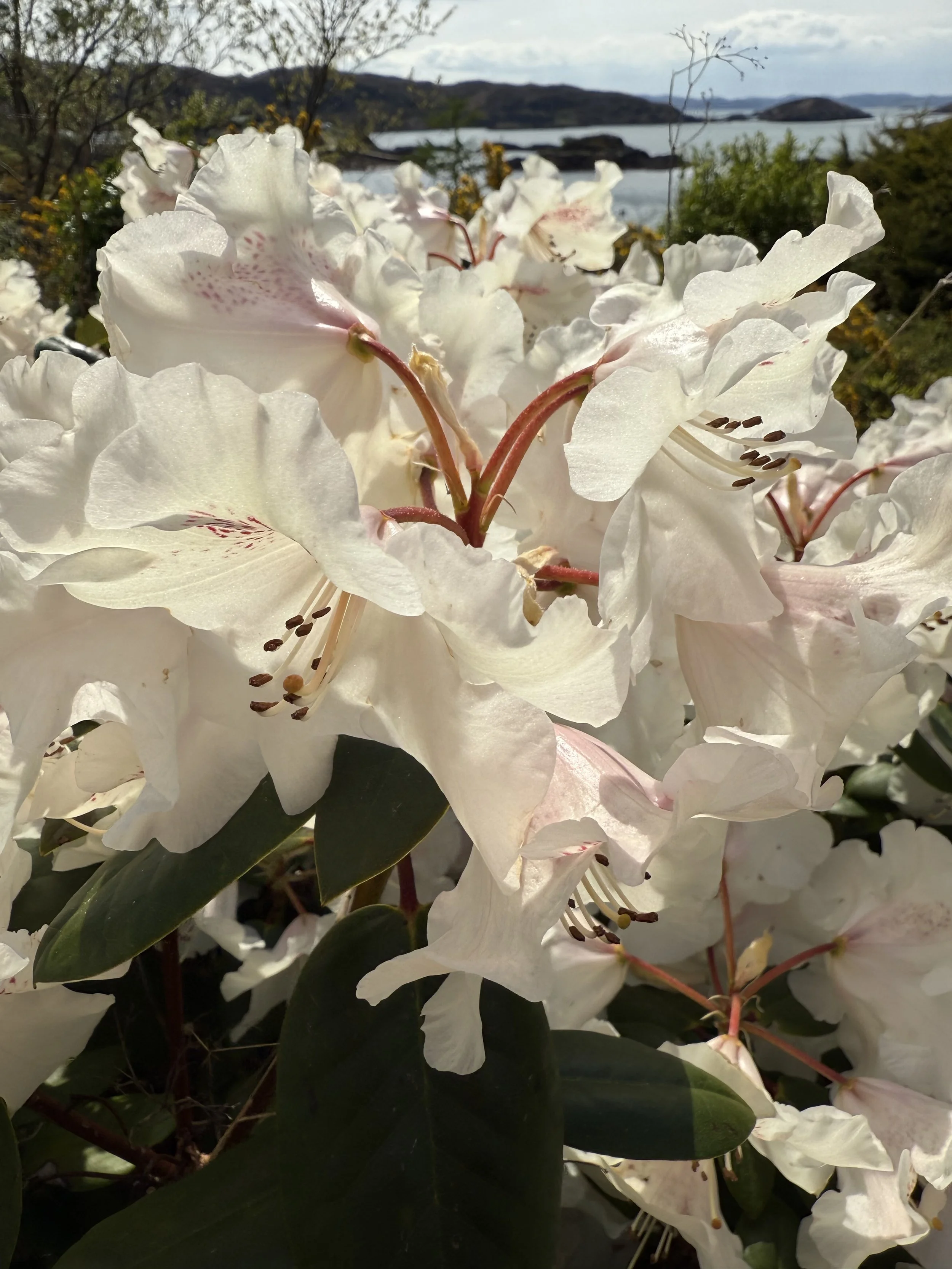
The return path carries its own details. Rhododendrons in flower, the last of the daffodils, bluebells gathering in drifts. Cherry blossom near the house, hawthorn full of buds, waiting its turn. In the Sitka, there are signs of the night just passed—owl pellets on the ground, the neat remains of unseen work. Long-tailed tits move higher in the conifers, often in groups, always in motion.
There are smaller presences too. A lizard taking warmth from a stone. A frog slipping back toward shade by the stream. A stoat amount the rocks below the bog garden. And, more often than not, the sense of being watched—one of the Eddrachilles cats, observing as you pass through what is, after all, their territory.
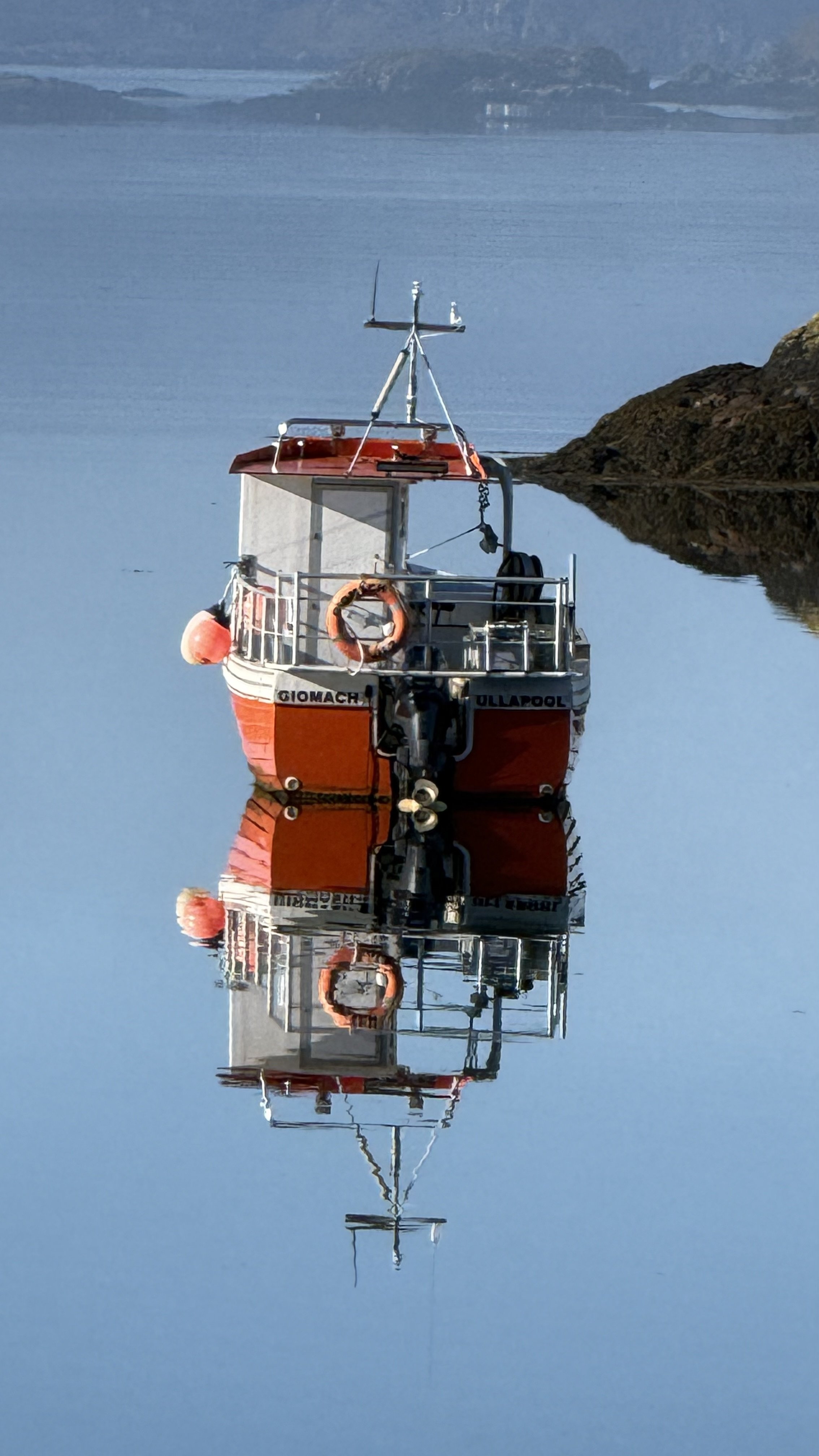
Back at the bay, human activity continues without ceremony. A small boat runs out to the fish pens, ferrying workers across water that, on a day like this, offers little resistance. Supply boats follow at a steadier pace, purposeful rather than hurried. Nature absorbs it all without comment.
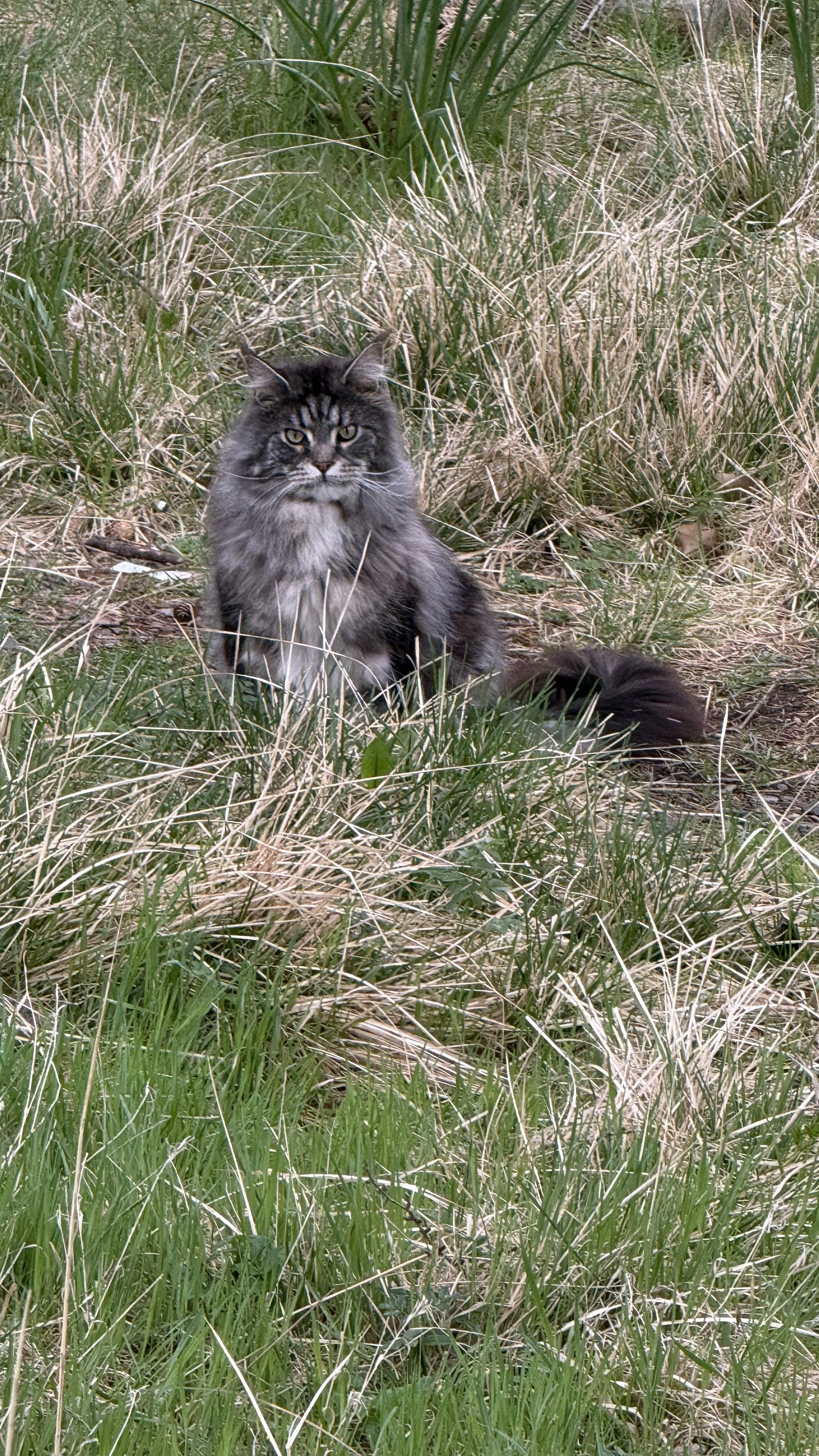
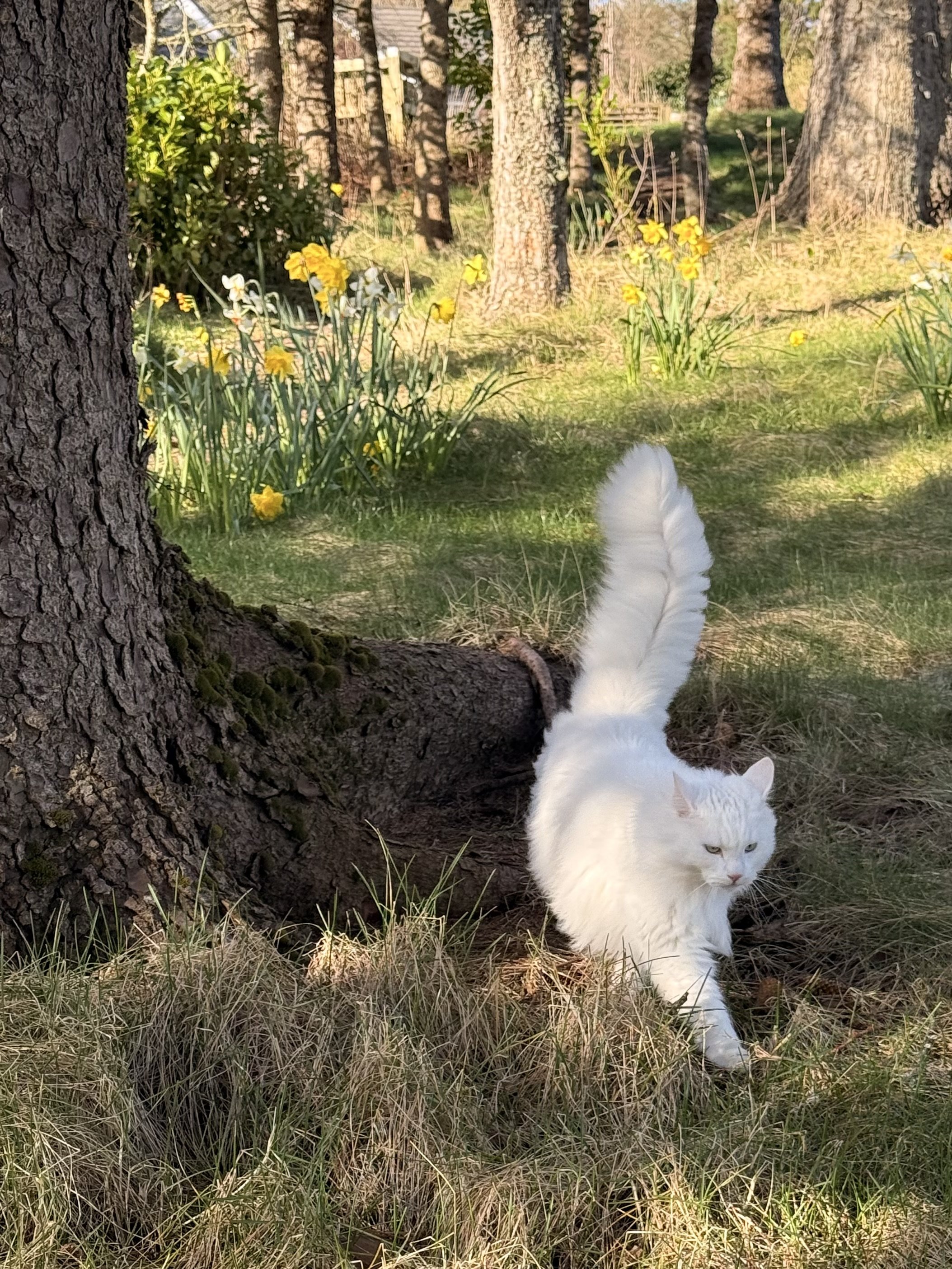
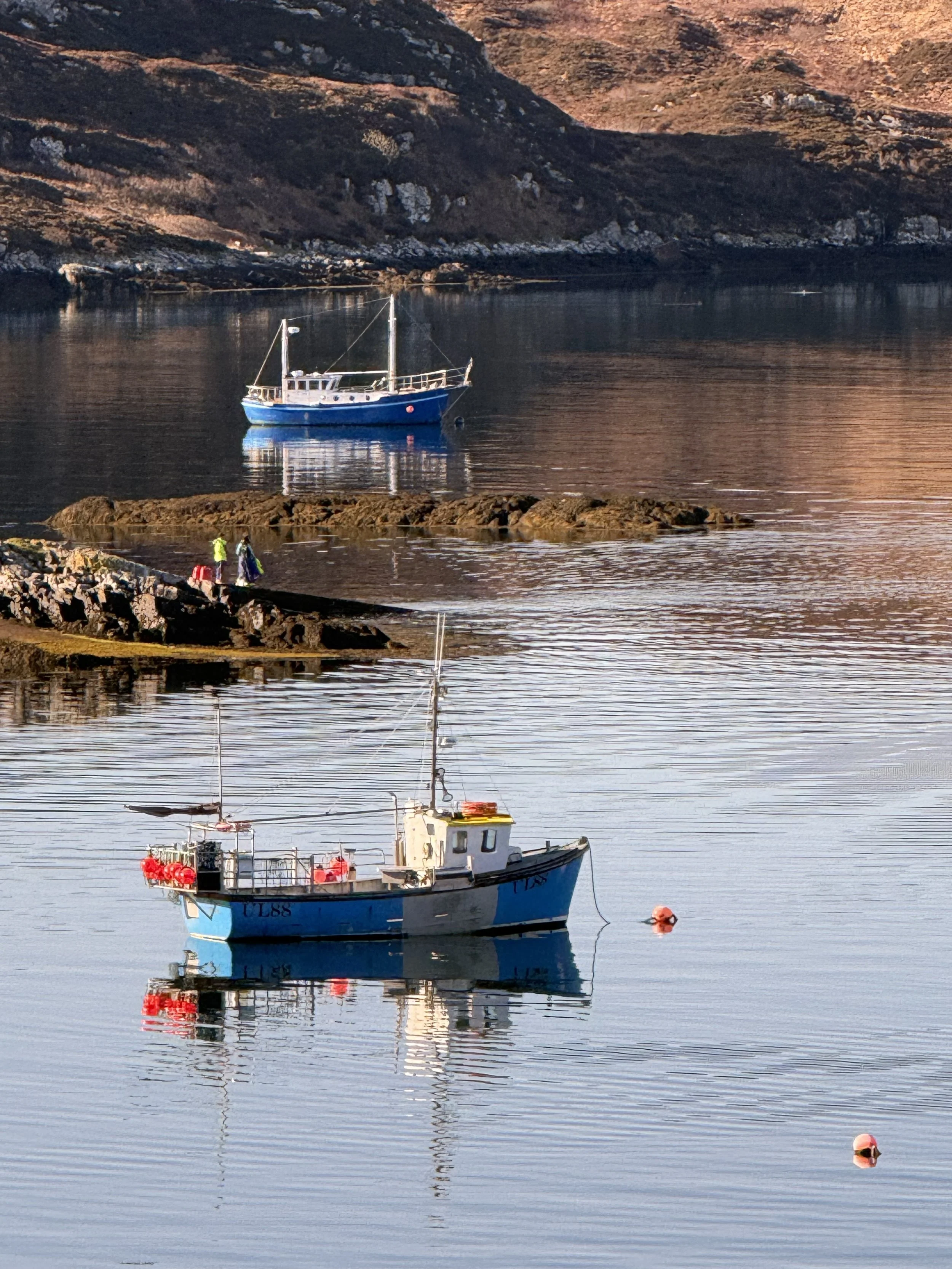
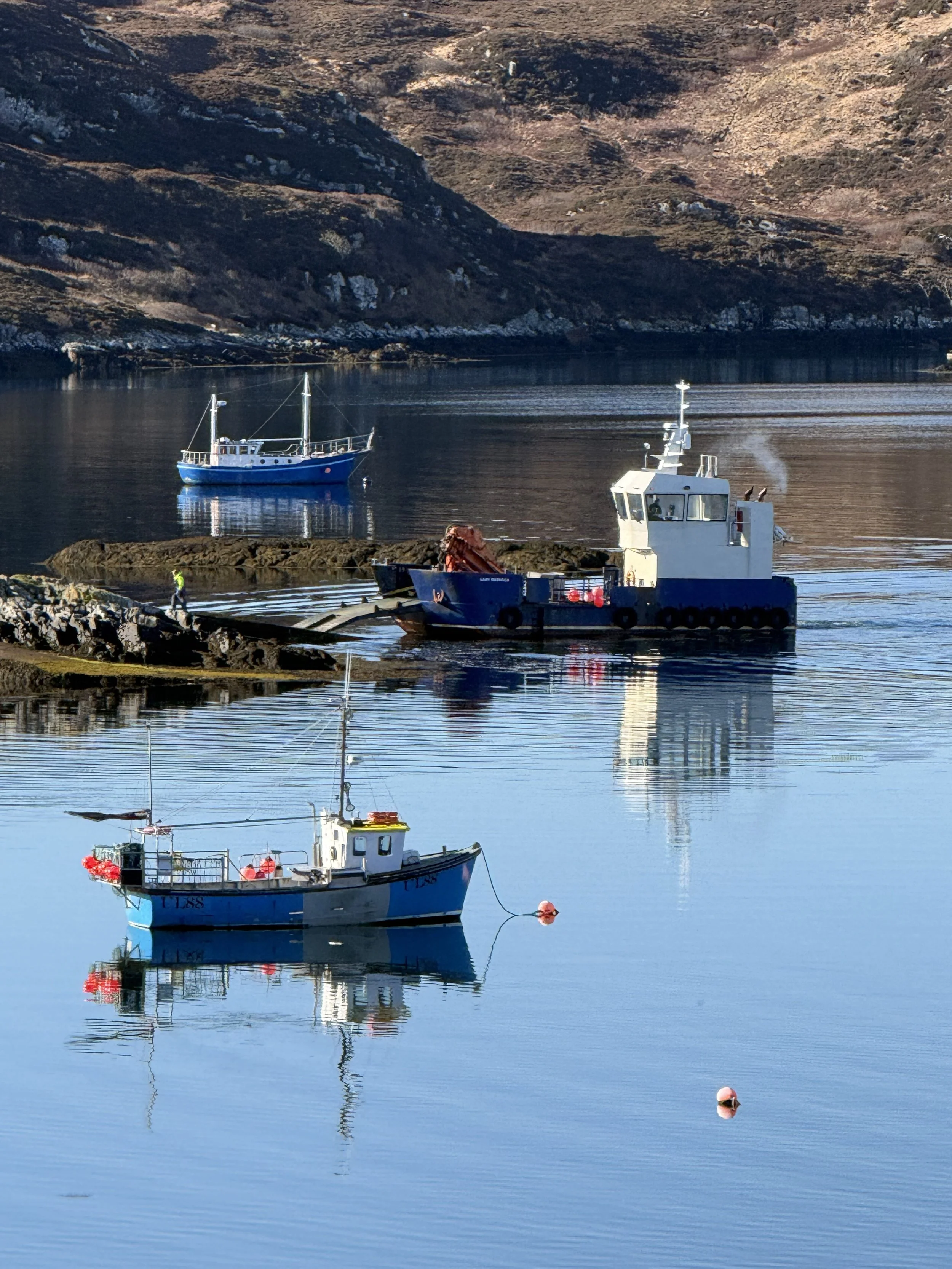
From the sun lounge, with coffee in hand, the view remains unchanged in one respect: it is never static. Seals haul out on the skerries or slip back into the water. Boats shift with the tide. Light moves across the hills.
Breakfast will call in its own time. The bay will continue, as it has for far longer than any of us have been here—always in motion, always offering something new to notice for those inclined to look, or listen.