
Bannock: Old World to the New, and Home Again
Bannock — a Scottish staple once forgotten, rediscovered by a Yukon campfire, and now returned to the breakfast table at Eddrachilles, made with bere meal from Orkney.
There are some foods that carry more than nourishment. They carry journeys.
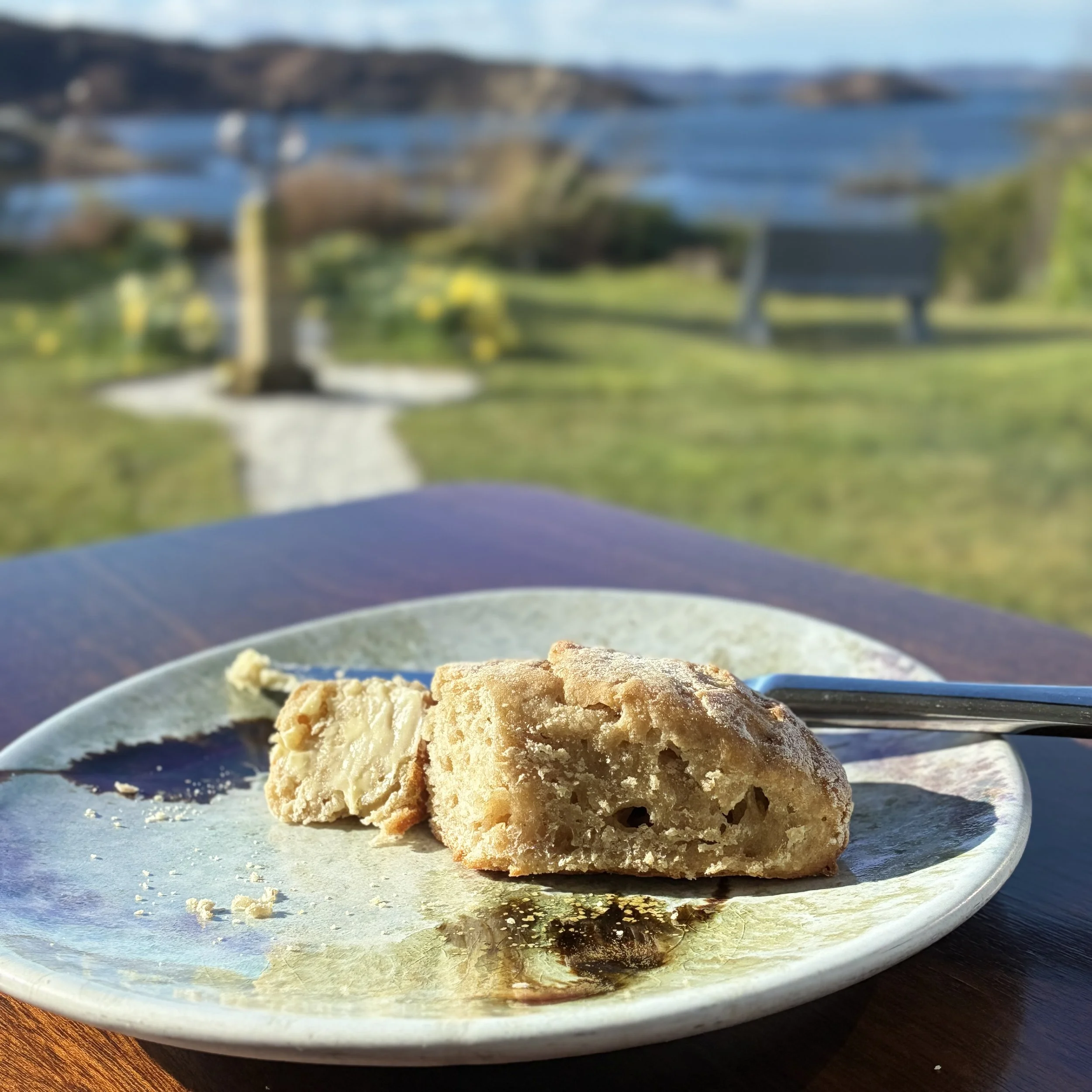
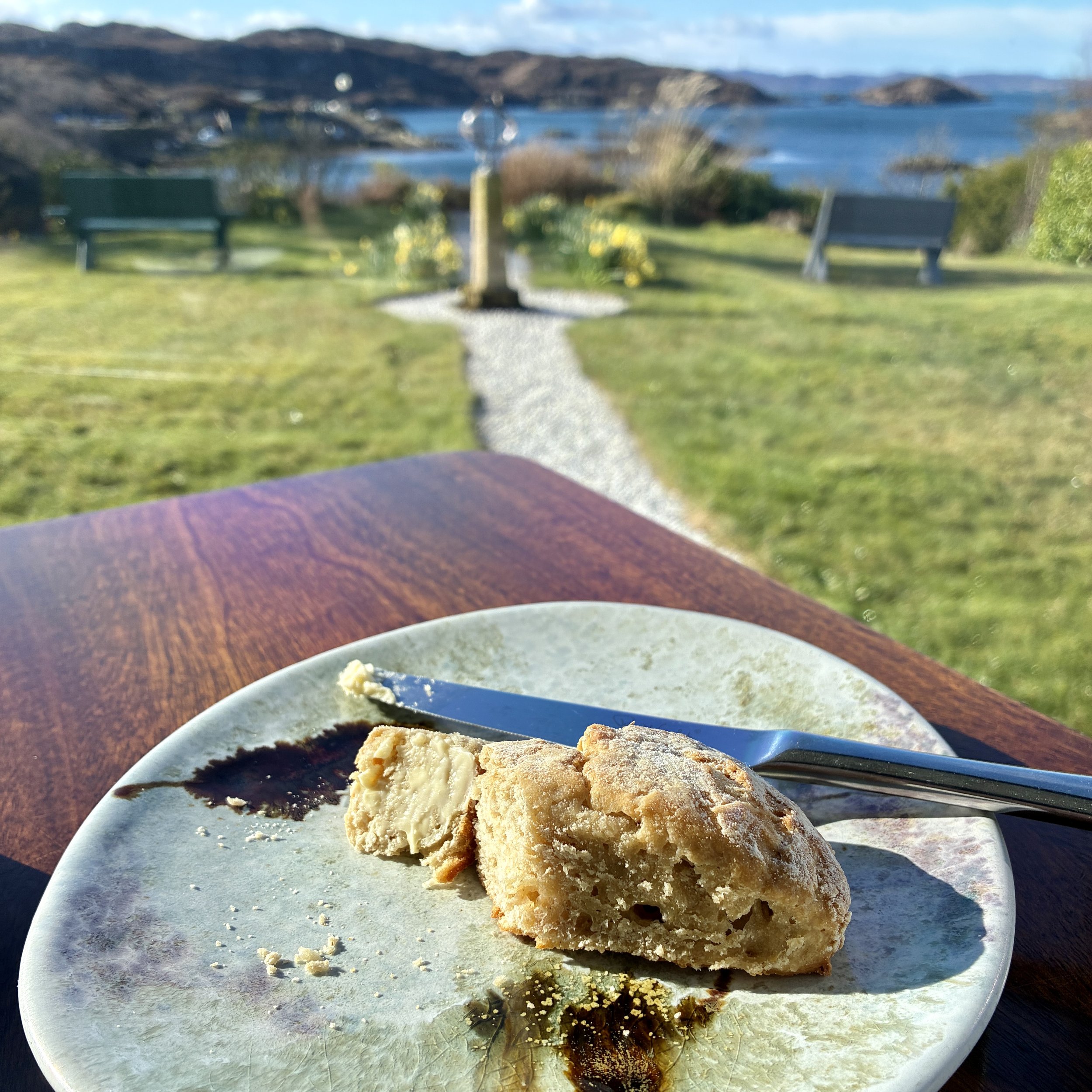
The bannock at breakfast…or enjoyed in the sun lounge with a tea or coffee…and good butter
Bannock is one of them.
I knew it, once — in a quiet, ordinary way. It appeared now and then at breakfast tables in my youth, much as soda bread might. Familiar, unremarkable, part of the background of things. Something quickly russled up without yeast, to a family recipe, the same but different in every kitchen.
And then, like many such things, I forgot it.
Until I found it again far from here.
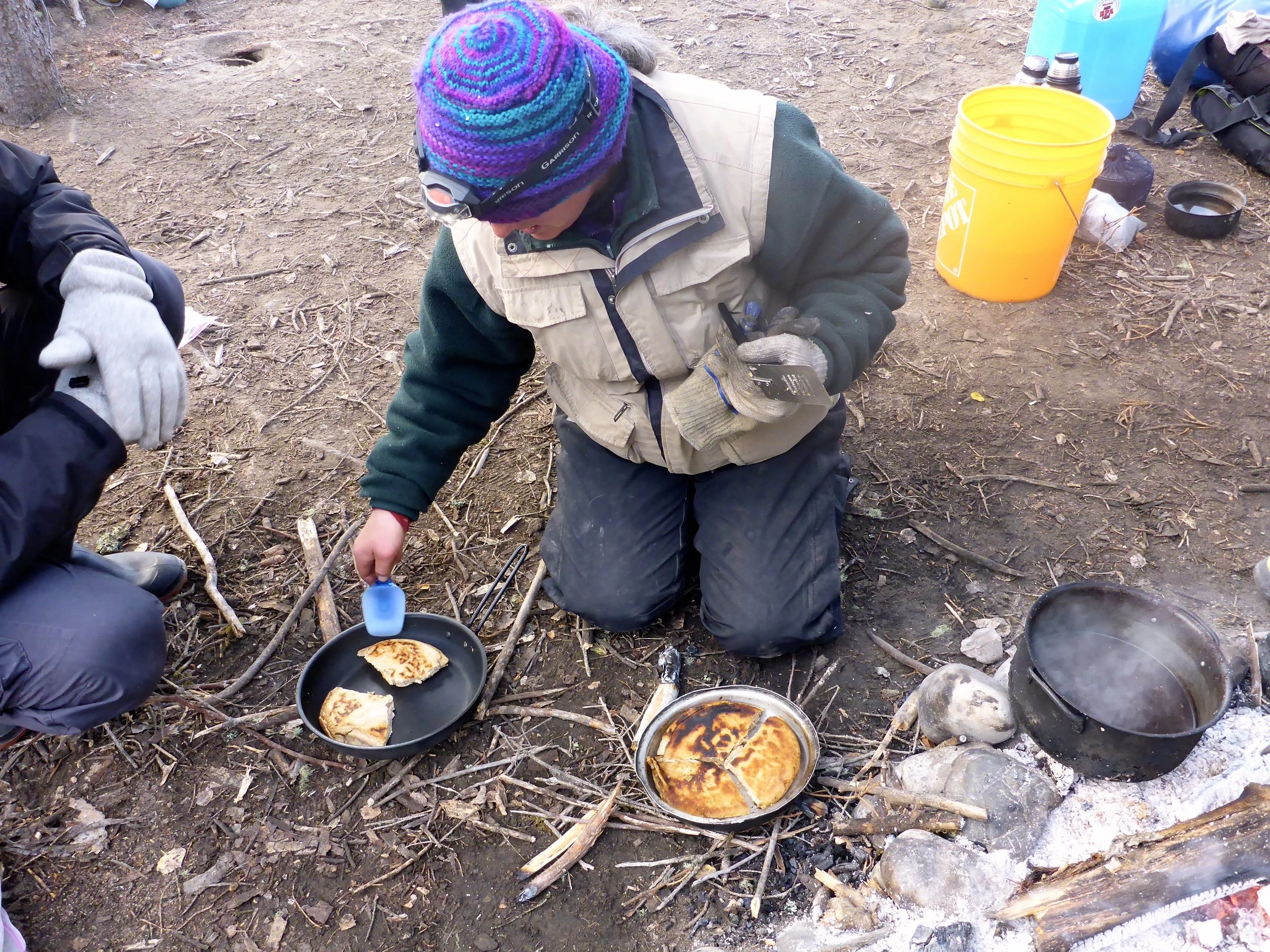
Expertly cooked in the Yukon
The tradition of bannocks crossed the Atlantic with emigrants and fur traders — Scots from across the country, islanders, and men from this very coastline. In the Canadian wilderness it became something else entirely: trail food, camp food, survival food. Something made wherever you found yourself, with whatever you had to hand.
In 2014, on the eve of my fiftieth birthday, I was sitting by a campfire on the banks of Lake Laberge in the Yukon. A combination of trail walking with sled dogs in the late summer and canoeing down the Yukon River. Breakfast was being cooked in a pan over an open flame — a method that has changed very little in two centuries. Wood ash, steady heat, a practised hand… and, these days, a blue spatula.
There was something quietly complete about it. Food that belonged entirely to its place, and yet unmistakably carried from somewhere else.
Perhaps that is why it stayed with me.
Perhaps because it wasn’t entirely new. Perhaps because a childhood version of me recognised it, remembered it and enjoyed it all the more..
It came home with me not in any grand way, but as a quiet rekindling. Recipes found and revisited — particularly from Shetland — and the slow process of working out how something so simple could feel so particular.
The version we make now in The Glebe Kitchen restaurant at Eddrachilles Hotel begins elsewhere again.
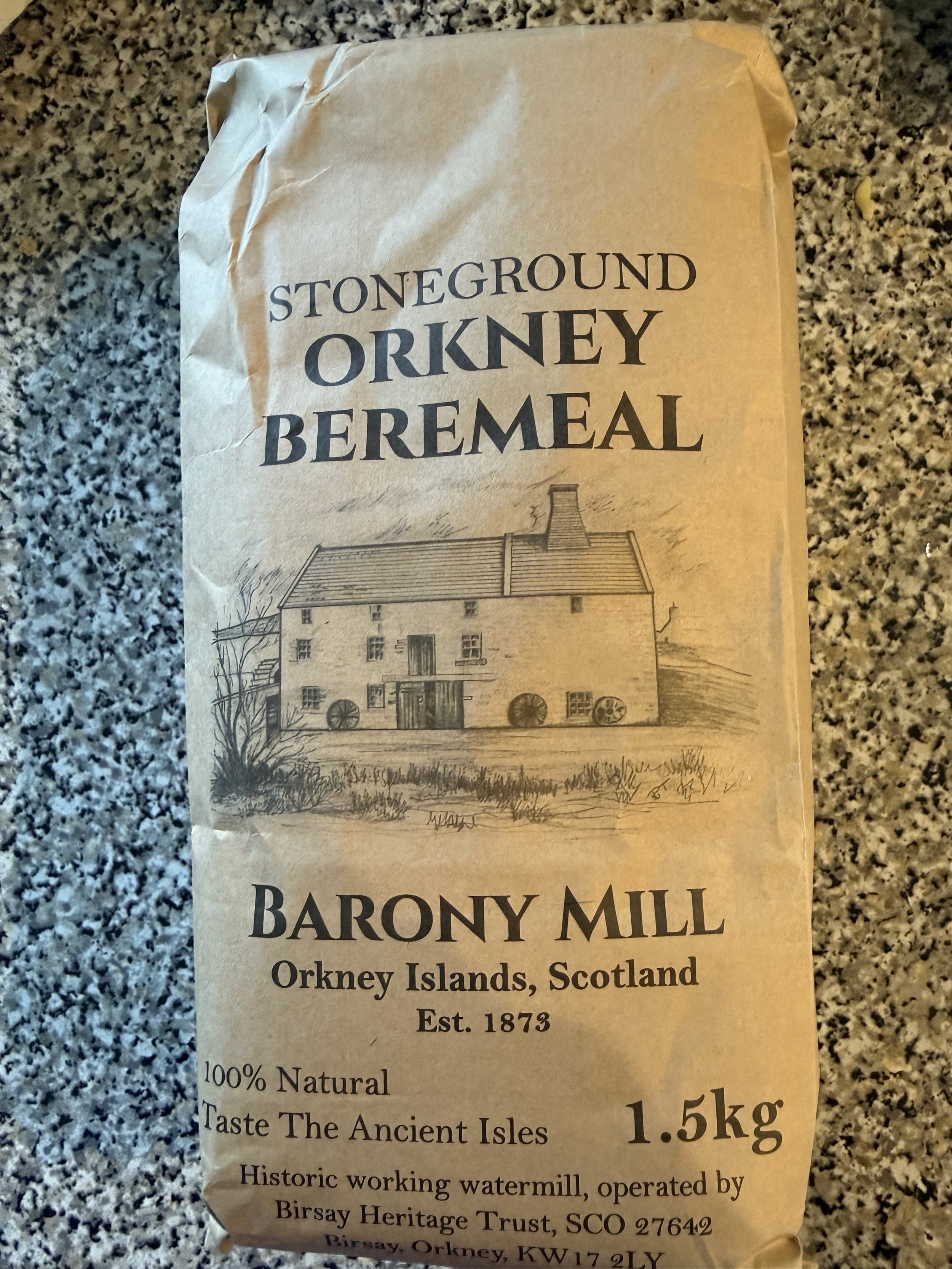
With beremeal from Orkney — milled at Barony Mill, one of the last working watermills in Scotland, now run as a community heritage mill. Bere barley is an ancient barley, dating back to Neolithic times, once widely grown across the Highlands and islands, valued for its resilience in poor soils and short seasons. It fell out of use, as so many older grains did, but has quietly endured in the north.
There is something about using it that feels fitting. Not as a statement, but as a continuation.
This morning’s version on our breakfast table is a simple one. Served warm or cooled, Uncomplicated. Best with good butter.
There will be other versions in time, in the hands of our chefs. It’s already part of dinner as well as breakfast. There it feels like a beginning rather than a finished thing, something that our relaxed, refined dining will take further.
But for now, it sits quite simply where it belongs.
On the table in a former manse in the North West Highlands.. A small detail, perhaps — but one that carries a longer story. Not new, exactly. Just remembered.
The bannock, travelling full circle.
Old World to New World, and back again. For when we break bread or bannock together we are all one family.
With thanks to Jeanine Cathers, Cathers Wilderness Adventures, for that morning on Lake Laberge — and for the reminder of how food travels, and how it returns.