
The Clearances and “Improvements” in Northwest Sutherland: What the Landscape Doesn’t Say Out Loud
Visitors look across the Northwest Highlands and sense something missing. This article explores the Clearances and “Improvements” in Sutherland — without romance, without easy villains. It explains why conscience changed the Church in this parish and why the building housing today’s Eddrachilles Hotel ceased to be a Presbyterian manse.
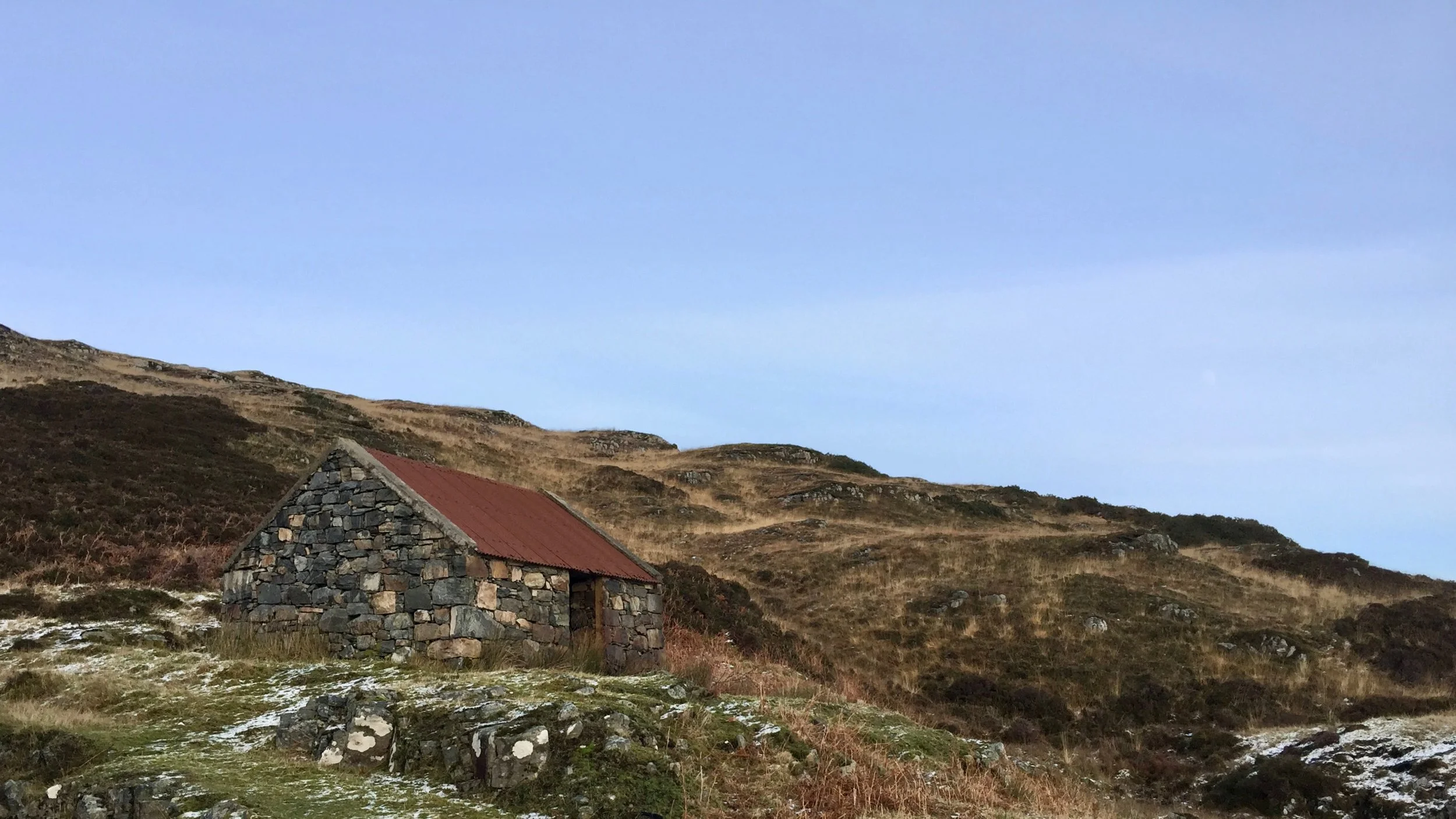
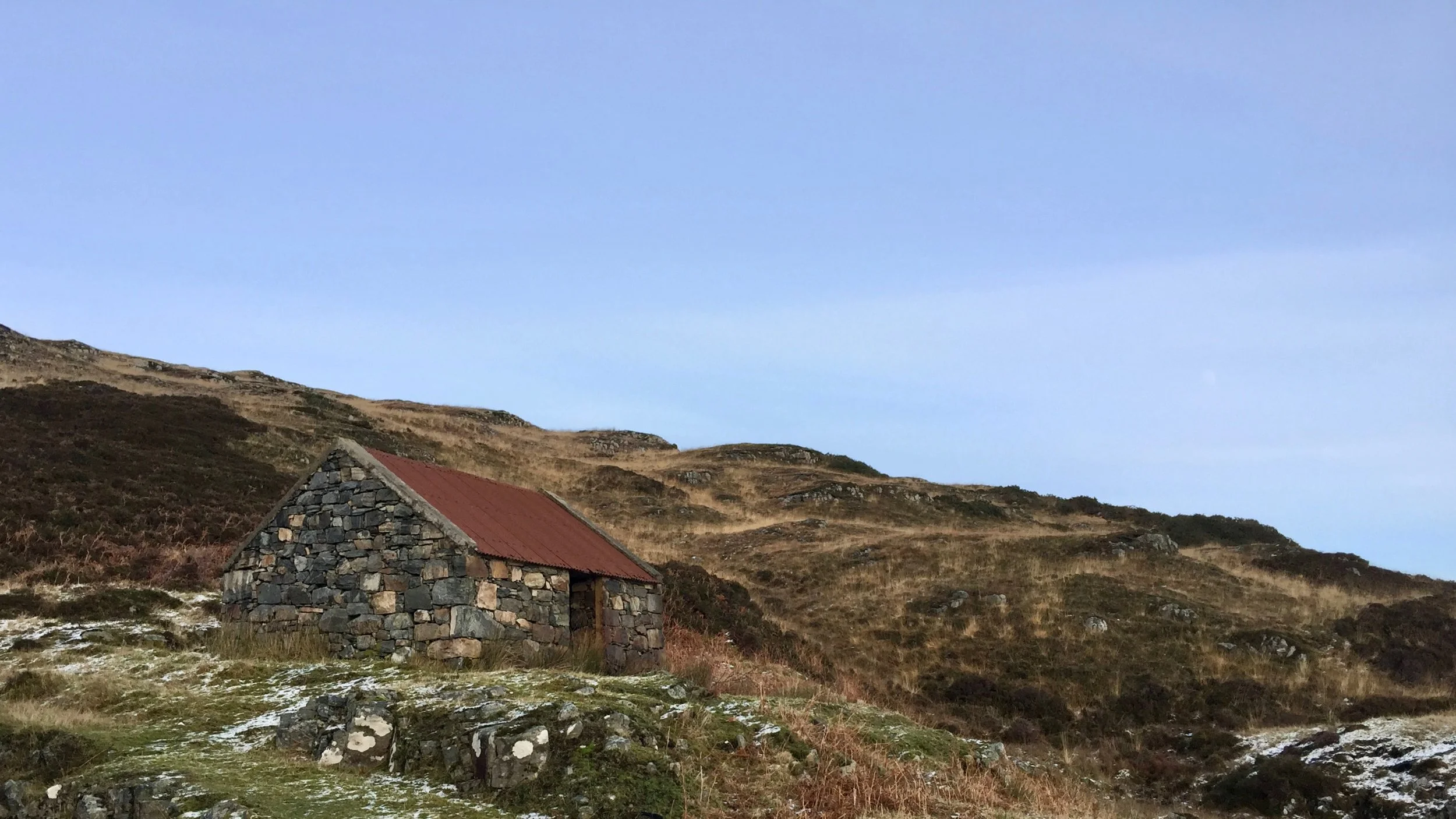
Glascaig, near Kylesku, Sutherland
To run a hotel in a heritage listed building in the North West Highlands is to invite questions. Visitors look across the openness of the hills and the long, quiet coastline and sense that something is missing — and they’re right to. This is not a landscape that became “empty” by accident. It was shaped by law, economics, estate policy and, at times, coercion. If we tell this story at all, we owe it to the people who lived here to tell it without romance, and without easy villains or comforting excuses.
The old manse at Badcall — now the heart of Eddrachilles Hotel — was built in the early 1800s, as the most intense period of clearance in Sutherland gathered pace. Much of what reshaped these glens and straths sits uncomfortably close to family memory, and its consequences are still evident: in where people live, who those people are, in how land is used, and in the quiet assumptions visitors make when they see “empty” hills.
Not an empty place — a changed one
Before we talk about Sutherland, it helps to name the misunderstanding. The North West Highlands were never “untouched.” They were lived in: townships and shielings, grazing and seasonal movement, fishing and cultivation on marginal ground, kinship networks and communal obligations. What changed was not simply population numbers, but the conditions under which ordinary people could remain on the land.
After the Jacobite rising of 1745–46, the old clan order was dismantled and landholding increasingly re-made through modern property law This happened both in rebel lands and within the significant areas where there had been no uprising to the Jacobite cause. This part of Sutherland had not risen, the clans here were broadly supportive of the Hanoverian Royals.
In the immediate aftermath of the Battle of Culloden, there were executions of Jacobite chiefs and exile for many more. Fines were levied. By the time the later generations returned to their lands at the end of the 18th century it was to a very different social and economic order, and they came with very different outlooks.
Across the Highlands, chiefs (both Jacobites and those tolerant of the Hanoverians) had once been bound by older obligations. Now they became landlords within an estate system shaped by improvement thinking, market opportunity and (often) distance between decision-makers and those who would carry the cost. Univeral suffrage was still generations away, and even equality under the law was not as we might understand it. For many tenants, that shift among the landowners was decisive: it altered what “belonging” meant, and made clear who truly had the power to decide.
“Improvement”: a word with two meanings
By the early 1800s, many landowners and estate managers, both Highland and Lowland, believed they were pursuing “improvement.” In their terms it meant rationalising agriculture, increasing productivity, and stabilising income. In human terms, in the Highlands it often meant clearing people from inland townships to make way for large sheep farms, and concentrating families into smaller coastal holdings on poorer land. Families, who had believed for generations that they had a right to live off the land in the glens, abruptly found no such rights existed. At this level, there were few, if any, benefits from the “impovements”.
Sheep — particularly the large Cheviot flocks introduced from the south — could be profitable on Highland pasture. But they required scale. Scale required space. And space was created by removing settlements that had existed for generations.
Strathnaver and the brutality that made Sutherland infamous
In Sutherland, clearance became a defining trauma. The Sutherland estate, held by the Countess of Sutherland and her husband (later the Duke of Sutherland), was vast. Its management became closely associated — then and since — with removals carried out with a harshness that made this corner of Scotland notorious.
The figure most often named is Patrick Sellar, a factor involved in the Strathnaver clearances in 1814. Contemporary testimony and later accounts describe houses being set on fire during removals sometimes with no consideration for those inside. This episode remains one of the most bitterly remembered in Highland history. Those memories are supported by detailed historical work, whether or not the episodes are seen as a Highland experience or one important part of a wider shift across Britain.
Sellar was tried in Inverness in April 1816 on charges including culpable homicide and other offences and was acquitted. The acquittal, however, did not settle the moral question — and it did not settle the argument about the trial itself. One sustained criticism, repeated by historians, is that the jury was drawn from “gentlemen” and men of property while key witnesses were Gaelic speakers who were not given a fair hearing, with landlord influence widely assumed to have shaped the outcome.
From Badcall, the minister and his household would have heard these stories at close range. A manse is not an estate office — but it sits at the nexus of policy, economics, and-owners, and the people. Ministers baptised children, buried the dead, heard anguish and grief. They also lived in a system where manses (their homes), stipends and appointments were entangled with landlord power. That proximity matters when we ask from the 21st Century what was seen, what could be said, and what could be done.
When the economy collapsed, hardship deepened
Clearance and resettlement were only part of the story. Families moved to the coast were often expected to remake their lives through fishing or kelp work. For a time, kelp — burned seaweed used in industrial processes — offered an income on marginal land. It was a harsh, precarious life but it was just about workable.
Then came a devastating shift. After the Napoleonic Wars ended in 1815, wartime protections fell away and markets changed. Kelp prices collapsed. Cattle prices fell. The same households asked to survive on thin coastal strips found that the fragile economy they depended on was crumbling beneath them.
It is hard to overstate what this meant in daily life: not “poverty” as an abstract concept, but food insecurity, arrears, illness, and choices no family should have to make.
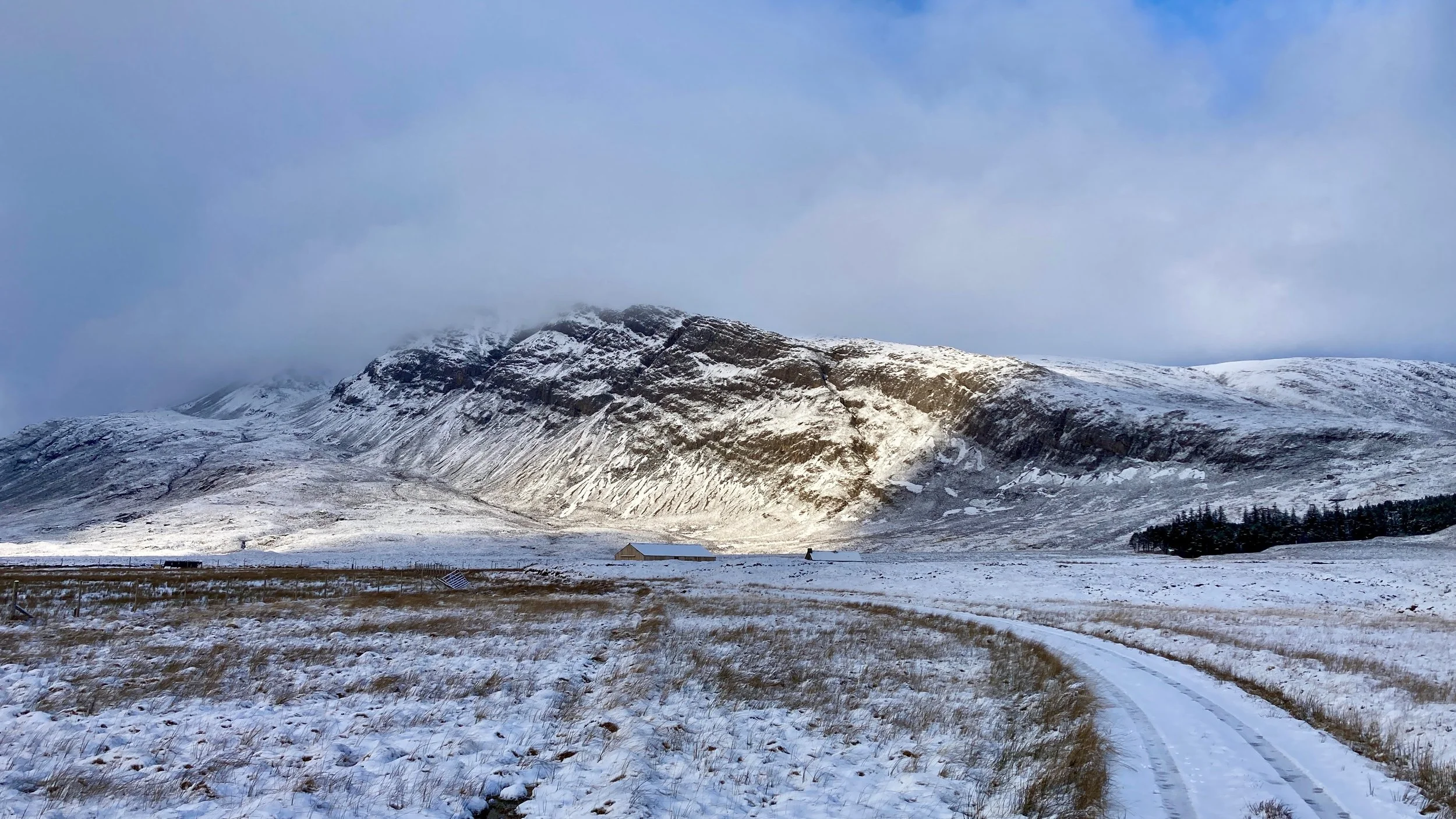
Today’s landscape with a few inhabited buildings.
Evander McIver and the “King of Scourie” years
,in the 1830’s the administration of the Duke of Sutherland’s Northwest estates changed with subdivisions with separate factors.
Key in this was the appointment in 1845 Evander McIver, based at the new Scourie Lodge, only a few miles from Badcal, a rather intended as a gift and occasional residence for the Duchess of Sutherland
The period is often described less in terms of dramatic fire-raising and more in terms of steady but completely ruthless consolidation: re-organisation of holdings, rent pressures, and the administrative machinery that makes eviction possible. His word was often absolute, one of many reasons why he was referred to as the “King of Scourie”.
McIver advocated emigration and appears, in some accounts, to have believed it offered opportunity. For some families, emigration did become a beginning. For many others, it was displacement dressed as choice: leaving because local conditions for survival had been made untenable. There has been a lot of research on emigration from this district revealing both the scale of the movement and the pressures shaping it.
This is where language matters: “voluntary” and “assisted” can be technically true and morally incomplete at the same time.
Handa Island: when “choice” narrows to a single path
One episode that stays with many people is Handa Island, visible from the coast near Scourie, and today uninhabited, a wildlife reserve for seabirds including puffins. Back in the 1840s a small community lived there. When potato blight struck in 1846–47 — the same crisis that devastated Ireland — the islanders faced hunger and insecurity. Emigration in 1848 is sometimes described as “voluntary.” But context is everything: when the alternative is starvation, choice is a narrow gate.
What awaited families overseas was not guaranteed security. Some endured further poverty and loss; some died soon after arrival. The Clearances are often told as a story of removal; they are also a story of what happened after removal — in new countries, new climates, new economies, and lives lived with longing for a place left behind.
The Church: witness, constraint, and rupture
The Church of Scotland was entangled in this world. Manses were provided through landowner systems; appointments were influenced by patronage; ministers were bound to the institutions that kept them housed and paid. The Church was not the engine of clearance — but it was rarely free of compromise.
For some ministers and congregations that compromise became unbearable, particularly when it sat alongside changes in theology, the rise of evangelism and the increased authority of the Bible. In 1843, the Great Disruption split the Church of Scotland and created the Free Church. Here in the Highlands, that wasn’t only a theological event; it was a social rupture.
At Badcall, the Reverend George Tulloch left the established church, walking away from a relatively signifiant stipend and security, to join others in the new Free Church. Many of his congregation followed. In fact this parish was recorded as the most complete secession from the established Church by any parish on the Scottish mainland. The new congregation resolutely worshipped in a tent each Sunday, then outdoors at the Worship Rocks in Scourie when storms destroyed the tent. In a matter of a few years, the Free Church was built in Scourie with its own manse. This was in a more conventional, detached Victorian house than the taller white manse from the Regency period overlooking Badcall Bay.
The established Church of Scotland manse at Badcall remained along with its lands. The successor Church of Scotland ministers for the parish of Eddrachillis still lived there, although the parish roll was for a time only four families. But the building’s purpose as a centre of parish life had changed. It may have taken several decades but in the early decades of the 20th century, the white building overlooking Badcall Bay ceased to be a manse. It was sold to a private individual as further schisms and reunifications in the Presbyterian churches in Scotland led to complicated exchanges and disposals of assets. But that is for another journal article.
What remains — and how to look at it
When you look out from Eddrachilles today, you are not looking at an empty stage where “nothing happened.” You are looking at a landscape that has been inhabited for millennia and reshaped, within the last two centuries, by forces that decided who could remain and who must leave.
The chambered cairns and standing stones speak to people living here thousands of years past. The ruins of crofts and shielings in the hills are closer — often within two hundred years, sometimes much less as depopulation continued. They are not picturesque props. They are traces of ordinary lives: work, family, worship, argument, hunger, endurance.
And then there is the building that became Eddrachilles Hotel.
A manse was never neutral. It was a place of faith and duty, certainly, but also a practical part in a community. People came here with news and petitions, with births and deaths, with disputes, arrears, illness, and fear about what might come next. It sat uncomfortably close to the systems that shaped Highland life in the nineteenth century, and that proximity carried moral weight. The minister’s household could not stop estate policy. It could not reverse the collapse of kelp, or conjure work where there was none. But it could listen. It could record. It could feed one more mouth, write one more letter, stand with a family at the edge of a decision they did not choose.
That is the kind of “echo” people often sense at Eddrachilles…not as a ghost story, but as a residue of purpose. A house that stayed open while communities were in turmoil tends to absorb something of what passed through it: grief, courage, dignity under pressure, the well practised habit of making room to host others. When guests say this place feels different, we think it is partly because of that original role: a steady presence in a landscape where steadiness was repeatedly tested.
As hosts, we don’t tell this story to darken the view, or to perform sorrow, or to assign a single, simple blame. We tell it because visitors sense the absence and because a truthful welcome includes what the landscape will not say out loud on its own. If you walk these grounds and the moorlands beyond, you walk in a place that has heard human questions for a long time. And if, for a moment, especially if you have sorrows of your own, this house feels quietly attentive — as though it has heard hard things before — that may be because it has.
And if Sutherland’s story is notorious, it is worth being honest about that notoriety — not to rehearse grievance, but to measure the distance travelled since, and to keep faith with the people, the many people, whose lives were reordered here.
Further reading and local context
Strathnaver Museum (Bettyhill) — community-centred interpretation of the Clearances in north Sutherland.
Eric Richards, “The Mind of Patrick Sellar (1780–1851)” (Scottish Studies) — readable, careful on sources, and on why the trial remains contested.
Jim Hunter on the 1816 trial (Community Land Scotland) — accessible summary of removals and the trial’s disputed outcome.
Eric Richards, “Highland Emigration in the Age of Malthus: Scourie, 1841–55” (Northern Scotland, EUP)— strong scholarly context for emigration pressures in this district.
Museum of the Highlands: Strathnaver Museum overview