
Hogmanay in the Highlands: Fire, Gifts and the First Foot
Hogmanay in the Highlands has never been just a single moment at midnight.
Long before fireworks and formal celebrations, the turn of the year unfolded through days of preparation, visiting and shared food. From juniper smoke and fresh-laid fires to first-footing gifts of coal, bread and whisky, these customs were rooted in protection, hospitality and the reassurance of community in deep winter. Here at the old manse, it is easy to imagine those traditions continuing quietly — in the kitchen, at the threshold, and in the simple act of sharing food made to last.
With Christmas discouraged after the Reformation — and later banned outright by statute — it was New Year rather than Christmas that became Scotland’s great winter festival. In the Highlands especially, Hogmanay was never confined to a single midnight moment. It unfolded over days: of preparation, visiting, ritual and shared food. A season as much as an event.
Long before fireworks and televised bells, Hogmanay marked the turning of the year through customs rooted in protection, luck and the careful crossing of thresholds — practices shaped by landscape, climate and the realities of winter life in the north.
Preparation began well before midnight. Houses were thoroughly cleaned in a practice known as “redding”: fires laid fresh, debts settled, quarrels resolved where they could be. The principle was simple — to enter the new year without clutter, physical or moral, weighing on the household. Those of us who grew up in the 1960s and 1970s can remember a similar flurry of activity each year.
In many Highland districts, this clearing extended beyond the domestic. Hogmanay opened with saining — a ritual blessing of house and byre using water drawn from a “dead and living ford”, where the living and the dead might both cross. Water was sprinkled around doors and animal stalls; juniper smoke carried through every room to purify the space. Only then were doors and windows flung open, the household revived with whisky, and the solemnity eased into gathering and conversation.
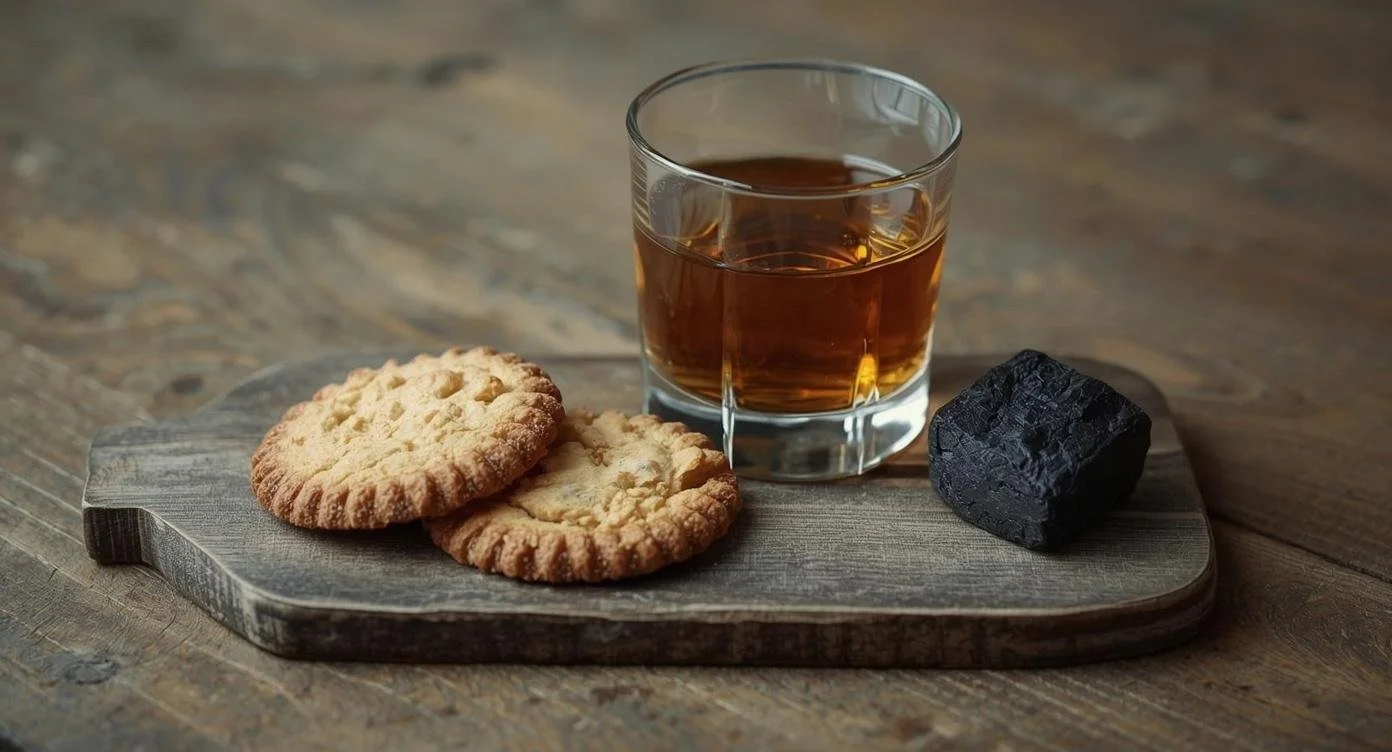
Traditional gifts brought by a first footer. - to arrive without was unlucky
After midnight came first-footing — the best-known Hogmanay custom, and one still quietly observed across the Highlands. The first person to cross the threshold set the household’s fortune for the year ahead and could not arrive empty-handed.
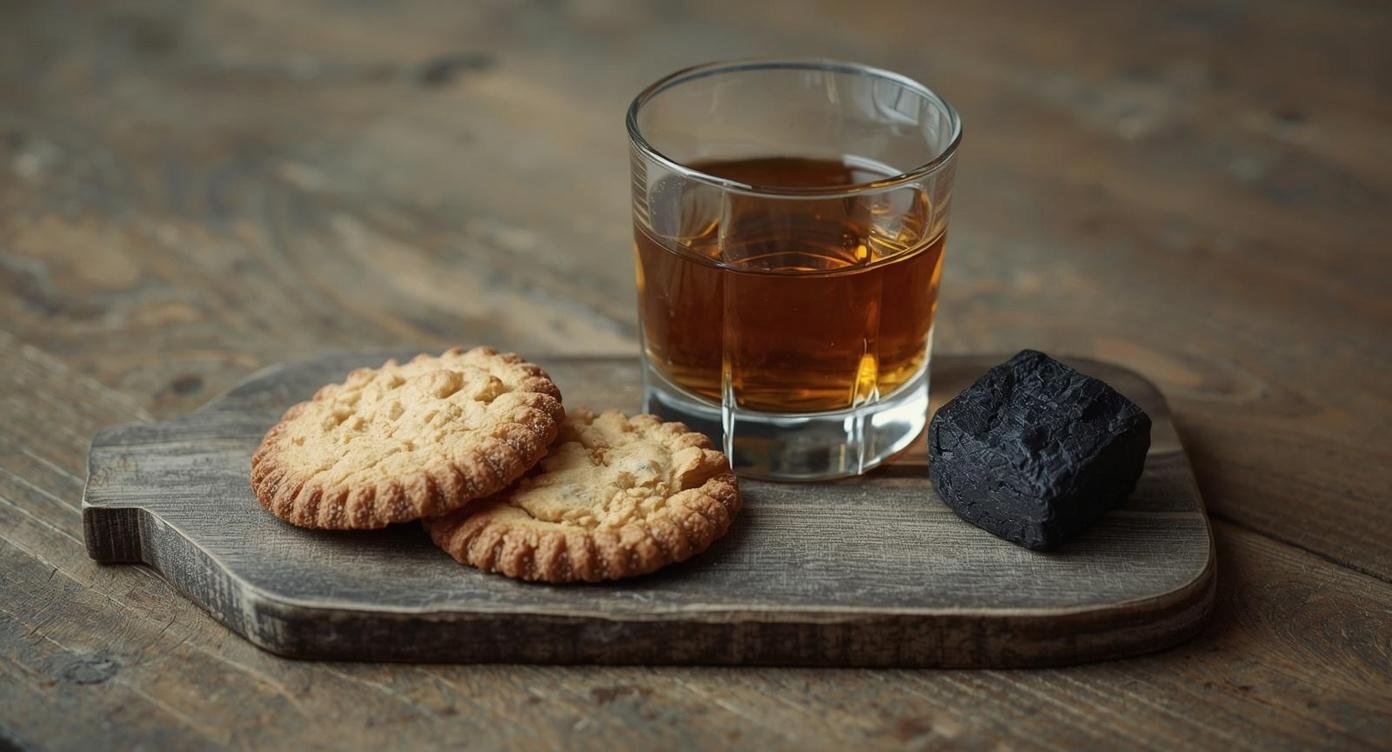
Each gift carried meaning. Coal promised warmth and a fire that would not fail. Bread — whether bannock, shortbread or black bun — spoke of food and plenty on the table. Whisky brought good cheer and the hope of kindness between people. Salt symbolised health and protection; a silver coin, or in some coastal communities a dressed herring, promised prosperity and the assurance that the household would not go entirely without.
To arrive without gifts was said to bring bad luck — as if scarcity itself might slip through the door. Hospitality flowed both ways: the visitor offered luck; the host returned food and drink. It was a mutual exchange that echoed older Celtic “luck visit” customs, when door-to-door callers brought blessings in return for sustenance.
Traditionally, the ideal first-footer was a tall, dark-haired man; a fair-haired visitor was considered unlucky. The usual explanation — repeated often, if cautiously by historians — is cultural memory of Viking raids, when a blond stranger at the door suggested danger rather than welcome. In the northwest Highlands and Islands, shaped by Norse settlement, this interpretation feels plausible, though it remains inference rather than firm documentation. Like many Hogmanay customs, first-footing appears to be a layered tradition: Celtic ideas about thresholds and luck, medieval visiting practices, and later folklore woven together over centuries.
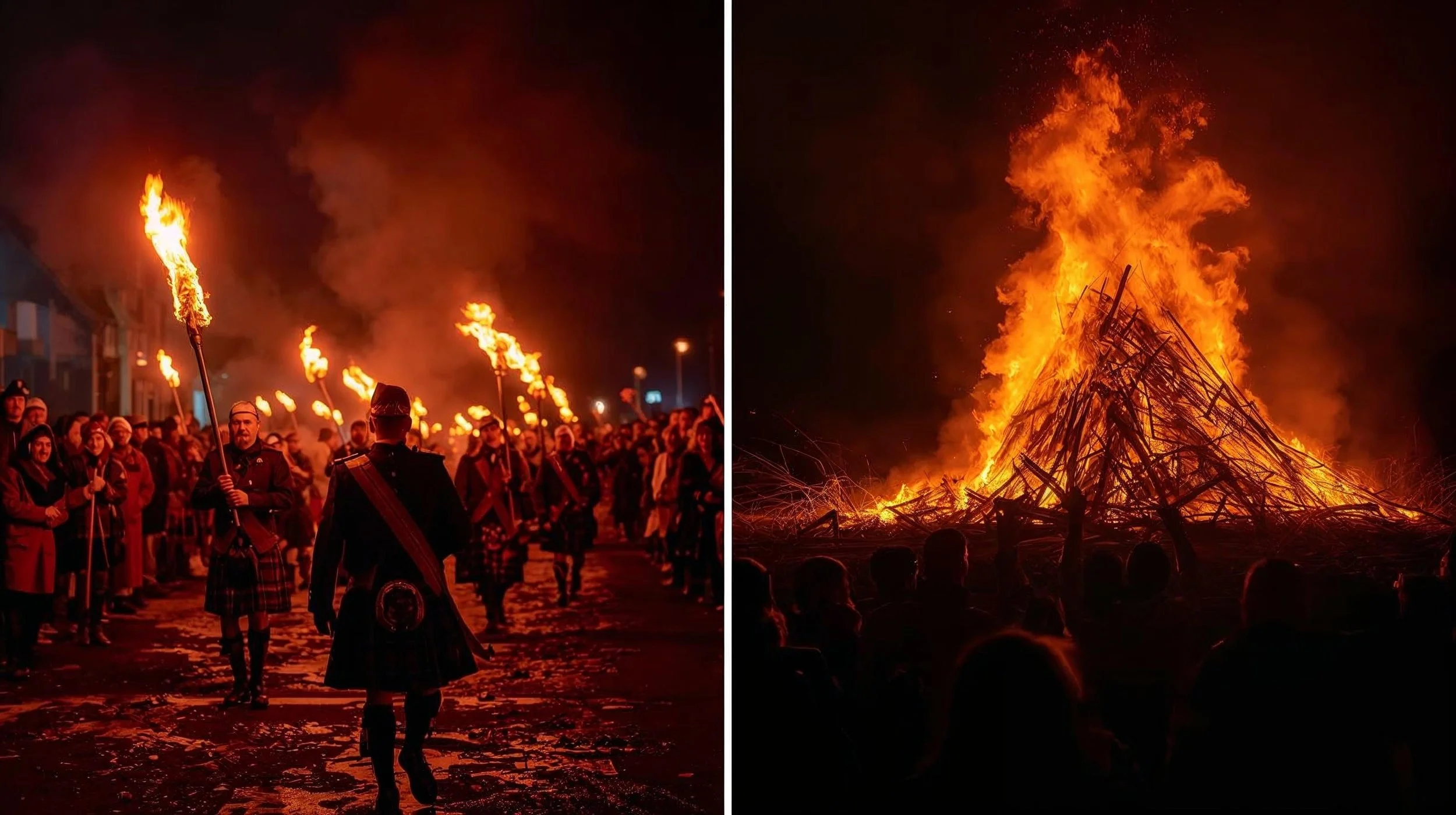
Fire customs existed long before firework displays of today
Fire customs show Norse influence more clearly. Across Highland and northeast Scotland, torchlit processions, burning tar barrels and communal bonfires marked the turning of the year, driving out misfortune and welcoming the returning light. In Shetland these traditions remain especially strong. On the mainland, one striking survival is the Burning of the Clavie at Burghead in Moray on 11 January — “Old New Year” by the Julian calendar — when a tar-filled cask is carried through the town and set ablaze on the headland, its embers taken home as charms of luck.
In the Hebrides, Hogmanay once involved young men travelling from house to house, one wearing a sheepskin while others carried sacks, reciting Gaelic verses and receiving bannocks or fruit buns in return. On Lewis, strict Sabbath observance shaped the timing of celebrations, but Hogmanay remained a deeply communal moment, carefully negotiated around religious life.
In rural Highland communities, Hogmanay traditionally stretched over several days. Neighbours visited according to the geography of glen and coast; hospitality unfolded slowly, shaped by distance, weather and winter darkness. These customs mattered because winter was long and isolating. Fire, food, whisky and the luck carried over the threshold were not merely symbolic — they were practical assurances of warmth, sustenance and survival.
Here at the former manse, it is easy to imagine those traditions continuing quietly, even when the language has changed. The kitchen — now the Glebe Kitchen — would once have known the work of Hogmanay well: butter creamed for shortbread, spice and dried fruit folded into a dark, rich black bun, both intended to keep, to be shared, and to mark the year’s turning with generosity.
Shortbread, with its simplicity and reliance on good butter, was always more than a treat: it was a statement of plenty. Black bun — dense with fruit, spice and spirit — was a Hogmanay offering designed to last through winter days. Both would have crossed this threshold many times, carried in hand as much as coal or whisky, binding neighbour to neighbour in the quiet contract of hospitality.
Perhaps that is why Hogmanay still resonates here. Not for spectacle, but for its understanding of what matters most in midwinter: a clean hearth, food prepared with care, and the steady reassurance of people crossing the threshold with goodwill for the year ahead.
19th Century Shortbread Recipe
(Great Granny’s Recipe from another Highland manse)
Not claiming this is the best recipe (today Fiona would use a slightly different combination) but this was certainly much used and appreciated in its 19th century day. Something very similar was no doubt made in the manse kitchen, now the Glebe Kitchen restaurant within Eddrachilles Hotel.
14 oz/400g Plain Flour
2 oz/50g Rice Flour
4 oz /100g sifted sugar (i.e. caster)
1/2 lb/225g butter (noted in pencil - best quality)
Mix flour and sugar together on baking board, work it in, knead well, shape into a cake, pinch the edges, prick over top, lay on greased tin, and bake in a slow oven for about 30 minutes, allow to stand for several minutes before moving. Sprinkle with sugar before cutting.