Garden Notes, Winter 2025-26
Building Stairways and Honouring the Light at Eddrachilles Hotel
For those who have stayed with us, you’ll know the Garden Notes we leave in the lounges: an update on creating a garden here, seasonal observations about what’s flowering, what’s been planted, and what might be next. Plus unashamed pleas for advice or suggestions from those guests who are keen gardeners (thank you!).

Eddrachilles Hotel above Badcall Bay. January snow
For those discovering Eddrachilles for the first time, these notes offer an honest account of how a small, seasonal, heritage hotel is slowly turning three acres of coastal grounds, which had been a Stika Spruce plantation, into a sustainable woodland garden at the heart of the NW Highlands UNESCO Geopark. Doing so, of course, while located at 58° North (think Juneau in Alaska). Where summer brings eighteen hours of daylight and winter reduces it to barely six. And the “borrowed landscape” of Badcall Bay brings multi-day coastal gales in winter and all-year sea spray. This is a remote Highland garden quite literally “far from ordinary”.

Winter is the season when the real work happens, away from guest eyes but very much for guest experience. Between the late October hotel closing and early April reopening lies a compressed window for substantial projects that can’t be accomplished while ten guest rooms are occupied. It involves replacing aging infrastructure before it fails, creating new pathways that open up parts of the grounds previously accessible only to the determined, and planning for greater biodiversity as well as richer seasonal colour in the years ahead.
Once the hotel has been deep-cleaned and closed down for winter, and our team members have departed like snowbirds, November marks the beginning not only of our “owners only” winter season but of a new cycle of life in the garden. Less happens above ground for plants but below the surface, roots are busy establishing themselves, seeking moisture in what has been another dry period (receiving less than 70 per cent of our typical rainfall this winter).

Days shorten dramatically here. By mid-December there are barely six hours of daylight. Head torches are essential. Night skies occasionally light up above this old manse with the Northern dancers. This has been a good winter for them.
Plants slip into dormancy, well, they do in most winters. This winter is proving uncommonly dry but windier for us with easterly rather south-westerly winds and low rainfall - in contrast with other parts of Scotland. It’s also warmer. We had roses continuing to flower well into December. Birds, too, were unexpectedly choosy about the feeders until snow finally arrived for a few days in January. Only then did the garden feel properly claimed by winter.
This is the season when we watch the weather closely and make the most of the better days — and there are some lovely ones — to begin work that is done not for display, but for future use. Pruning, clearing and mulching, yes, but also larger projects: selective tree felling, renewing wooden planters (after 8 years), and improving how the garden is walked and experienced on the way down from the hotel building through the woodland to the shore. The aim is simple enough: that future guests might enjoy being in our famous view, not only admiring it from the sun lounge.
Mid-November through to early February had an ambitious schedule this year.
⸻
Making the garden walkable — for guests, not just gardeners
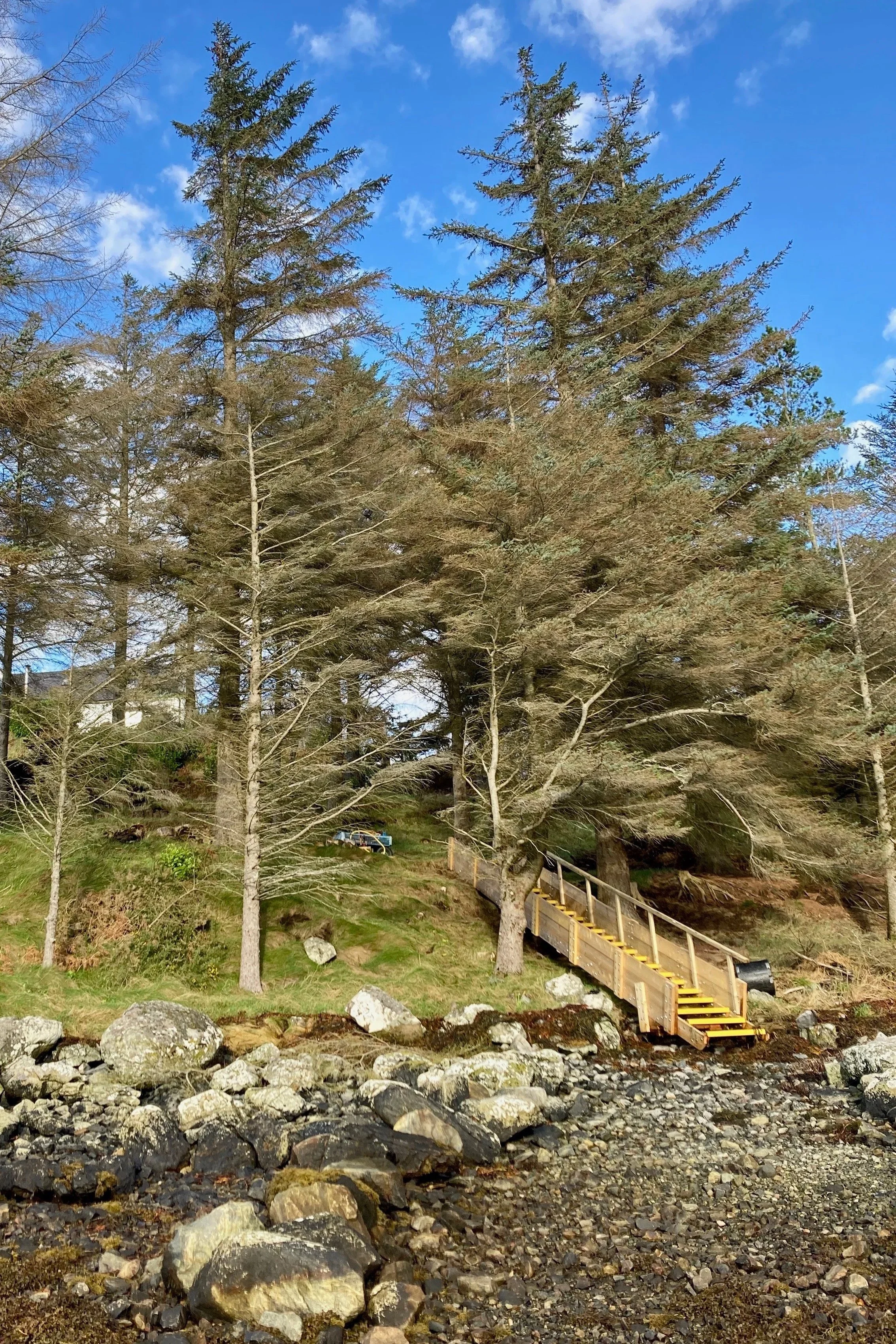
The first project began with a very practical need: provide easier access to our running mooring and tender by the shore. This will allow us to reach our traditional wooden motor yacht when she is moored in the bay. Moreover, 2026 guests arriving by yacht (there’s a new Eddrachilles Hotel guest mooring in the bay) can come ashore safely.
This should also open up the rocky shoreline to all hotel guests — for exploration, photography, or the occasional conversation with seals swimming past. However, it’s not a beach so tread carefully!
Old stones had once been set into the shore bank,, but tree roots, time and tides had rendered them unstable and impractical, especially when carrying equipment. Late in the 2025 season, Richard began designing and then — assisted by our colleague James — building a proper stairway from the shore to the top of the bank: twenty-five steps in all. A project led by someone whose previous stair-building experience had been confined to a model railway.
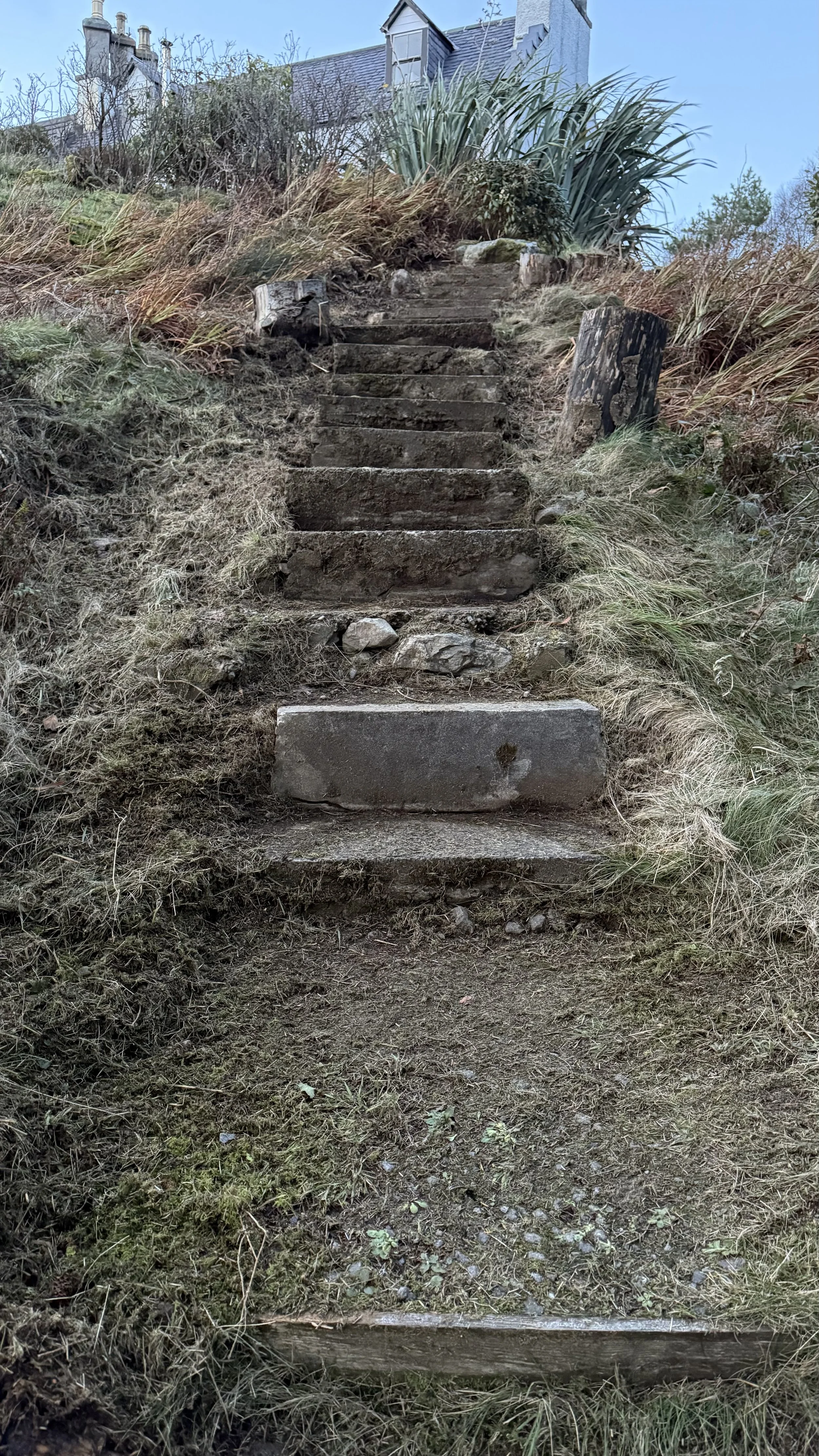
With those completed in mid-November, attention turned to the old concrete steps in the middle garden. We discovered these during our first summer at Eddrachilles, buried beneath years of growth in the Sitka spruce plantation. They had seen good service over more than fifty years providing a short cut alternative to the gentler main path which ascends on a traverse. However, they were steep, uneven in height, and without a handrail. Some steps were beginning to crumble. We had nursed them along as a garden access route — for the team rather than guests — but it was time to replace them.
The new steps are wooden, with non-slip treads, high-visibility edges and a handrail ensuring safety first for guests and staff alike. Nineteen steps lead from the bottom to a small landing, where a side path offers an alternative route back across the upper garden. A further ten steps rise from the landing to a small deck, which now incorporates a favourite spot for photographers: a place to pause and look out across the island-studded bay below. On especially lucky nights, it has already proved to be a fine vantage point for the northern lights.
Rustic but practical, the new wood will weather and fade in time, settling quietly into the garden rather than standing apart from it.
Project statistics
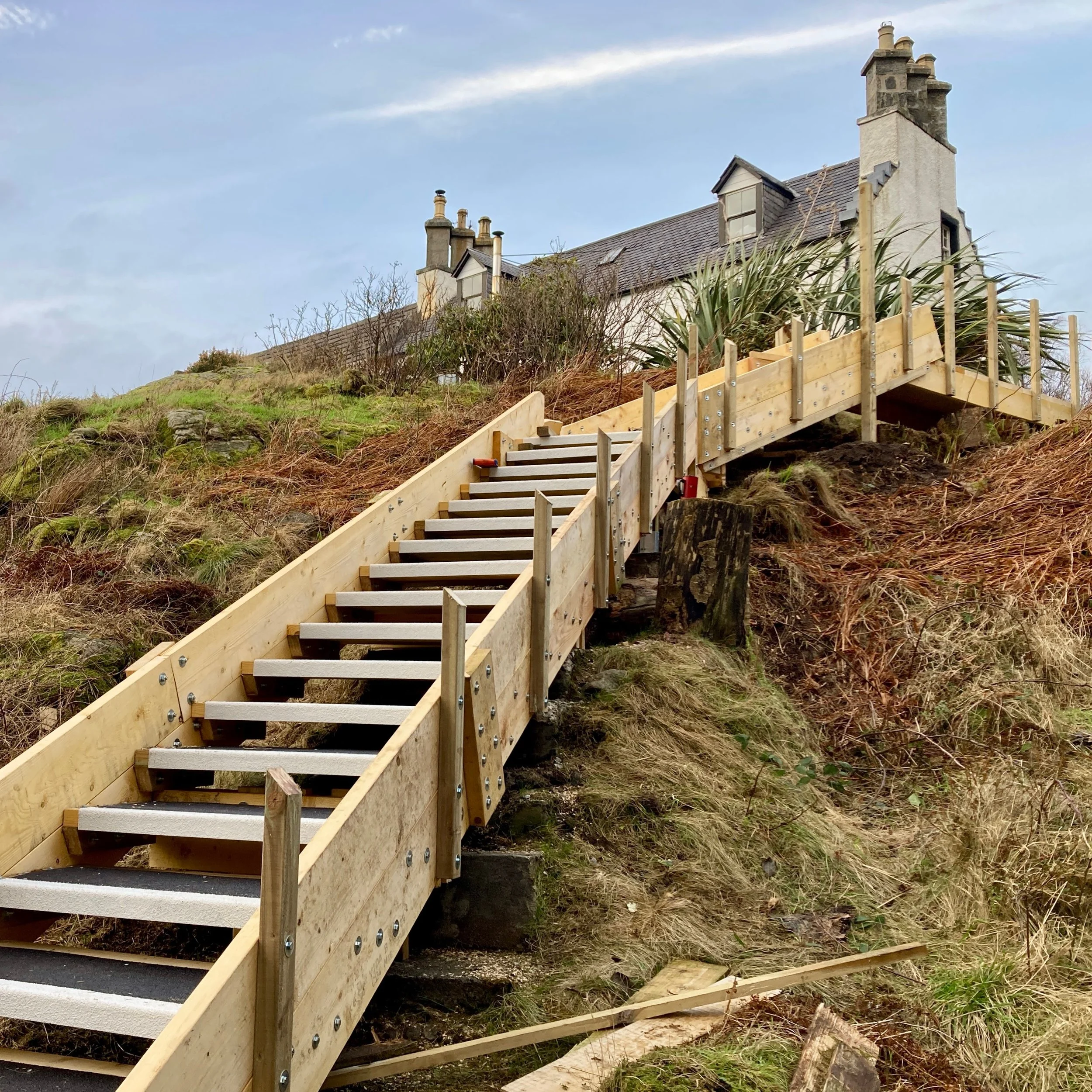
New steps in the middle garden almost complete. Old crocosmia leaves, grasses etc provide shelter for frogs, voles, beetles etc so are left for clearance in early Spring.
Crafted by hand, the two flights required over 1,000 bolts, 1,000 wing nuts, and more than 2,000 washers in four different sizes - all of which needed organizing and tracking throughout the build. Hat tip to a collection of mushroom trays acquired from wholesaler supplier Williamson’s of Inverness in the summer season. There are worse sorting systems, and they stack beautifully…unless a helpful dog gets involved….Monty Don on BBC Gardeners’ World never seems to have these issues!
Given that the labour was “free”, the cost divides roughly a third each for hardware, a third for HSE compliant treads, and a third for the timber.
Getting materials to site proved nearly as challenging as the build itself. Timber merchants quoted delivery charges that would have added hundreds of pounds to the project cost - an example of the hidden economics of remote locations that many visitors assume must make everything cheaper. Moreover those delivery charges came with a promise that the delivery from Tain would be “sometime in the next 3-4 months”…hmmmm, could do better Travis Perkins.
In the end, Richard hired a small truck in Inverness and collected the entire load himself in a single six-hour round trip. We are occasionally grateful that he can draw on heavier vehicle qualifications from his army days. The sort of skill a hotelier in the Northwest Highlands keeps in his back pocket, alongside the more conventional hospitality credentials.
Canine Project management
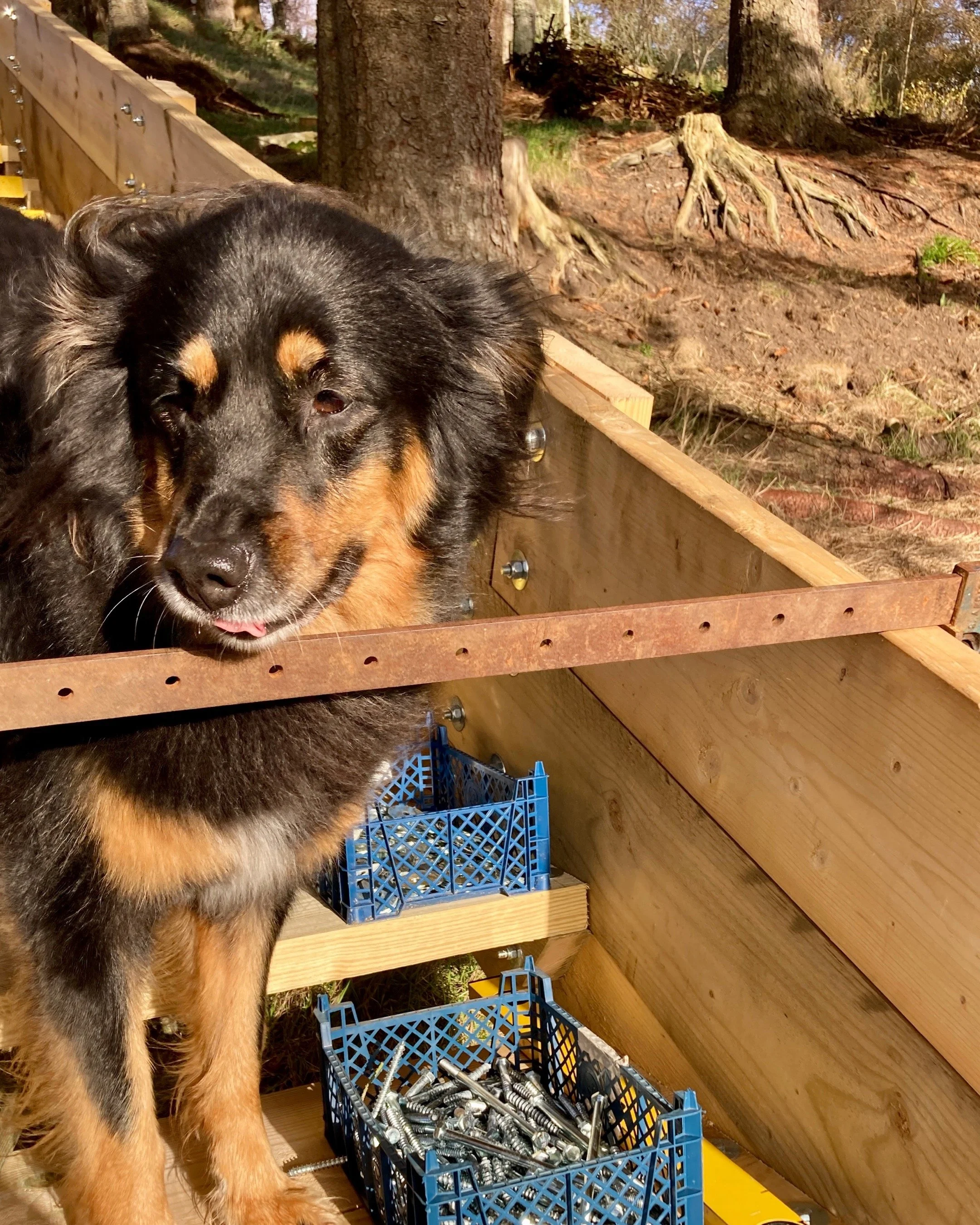
The steps were supervised — and tested — by our two dogs. Bydand, our uncomplicated Gordon Setter, discovered very quickly that the mid-point exit is perfect for canine games of hide-and-seek. He has a cunning plan. Pretend you’re heading down towards the shore, dash down the first 10 steps, then slip off via the landing exit onto the path that cuts back across the garden with an option to pop out on the front lawn. No-one ever expects The Gordon Setter! Cue doggie disbelief at his own cleverness, delight and then galloping celebrations.
Wooo wooo woo. This routine never gets old. At least, not for dogs.
⸻
Tree work: conservation, not clearing
Winter is when a garden tells the truth about its structure.
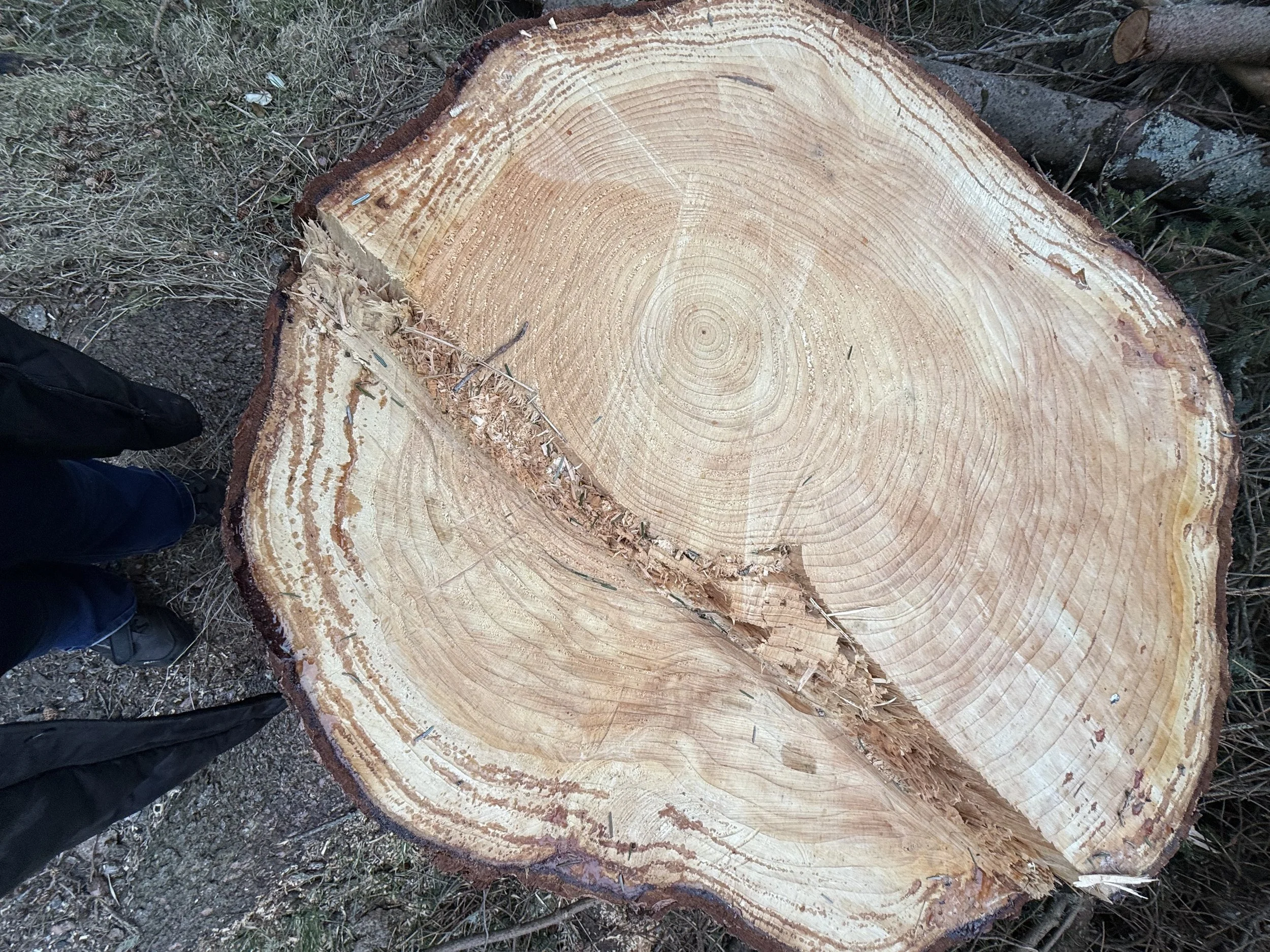
The Sitka spruces that survived the major felling in the winter of 2016–17 are now over fifty years old and definitely at the end of their expected lifespan. Those on the western side of the property continue to thrive, but trees closer to the shore and along the eastern edge of the grounds are faring less well.
Realistically, in ten years time there will be significant reductions in the numbers of tall trees on the site. There’s a lot of planning underway to provide alternative windbreaks that wont require thirty years to grow.
Small tree and hedges planting may be a significant part of winter 2026-27. Escallonia and griselina are proven plants for this at Eddrachilles, hawthorn less so and we have concerns about olearia. Native buckthorn does reasonably well (and pleases the chefs) and we’ll try again with tamarisk and arbutus in selected spots. Beech (currently on the west side of the courtyard) is probably a non-starter, those hedge plants really struggle here.
In other woodland settings, we might be inclined to leave a dying or dead tree standing — they provide valuable habitat for birds and insects and can remain stable for years. Here, however, our immediate coastal exposure to persistent winter winds with gusts Gale Force 10+ rapidly desiccates weakened trees, making them unsafe.
This winter, four large trees had to come down.
It is never an easy decision, particularly when you know that tawny owls favour one of the condemned trees as a year-round hunting and seasonal nesting post. It’s been magical after dinner service to slip out in the fading light of summer to stand near the tree. Especially in the weeks when patient parent owls try to persuade outraged teenage off-spring to leave the nest and come “over here instead” for supper. You really can translate the response : “No, I don’t want to“ “do I have to?” rising to full meltdown “I didn’t asked to be hatched! You are ruining my life!”
This tree, over fifty feet tall and fifty-two years old by its rings, was however, dying from the top down and judged by experts to be beyond recovery. Difficult decision , but necessary, felling was now the only option.
For a night or two after the felling there were no screeches and hunting conversations overhead in the dark. Then we were woken at 2 am. An irate lecture was being delivered somewhere south of our bungalow by a pair of owls to another creature (presumably one of our cats) spoiling their hunting. The tawnies are still very much here in the grounds and have adapted to the new treescape.
Brash will have been cleared by the time guests begin arriving in April, though some fallen timber will remain visible. This is, after all, a working garden and one always very much in progress.
⸻
Right Plant, Right Place - Plus Highland Fortitude and Attitude
Early and mid-winter is a good moment for gardeners to assess what has worked well in the passing year — and what has not. This far north, our long summer daylight shortens rapidly after the September equinox, and autumn gales tend to curtail any lingering display of foliage. This is not leaf-peaker terrain (but do try West Perthshire for that, especially Faskally by Pitlochry!).
Some of the perennial and shrub planting undertaken in the hotel’s first decade lacks depth in later summer and endurance in early autumn. The lack of a protective walled garden is felt keenly. Many annuals, including native wild flower are over. Frankly, to a keen gardener late September-October can feel disappointing if they bring gales as well. This is something we plan to address in 2026. A few experiments are already under way - the kind where we won’t know the results for a year or two, but they’re worth trying, including some prairie planting in the more open areas.
This garden sits not only on the coast but also at the nexus of the the North Atlantic Rainforest’s northern reach and the southern scoping of the Arctic periphery, as well as at the heart of a UNESCO Geopark. It’s really a multitude of microclimates: sheltered pockets where most plants will grow, to barely concealed ancient rocks and exposed ridges where only the genuinely hardy survive. Gardening philosophy at Eddrachilles? Right plant, right place, with Highland fortitude and attitude.
The new middle-garden steps have created slightly more protected areas immediately on either side. This on a slope exposed to the prevailing moist but turbulent South West wind. We are introducing two orange-flowering buddleia (for late summer colour and butterflies, they do find us this far north), junipers and some ornamental grasses. We will transfer in a few rhododendrons to join the miniature azaleas,
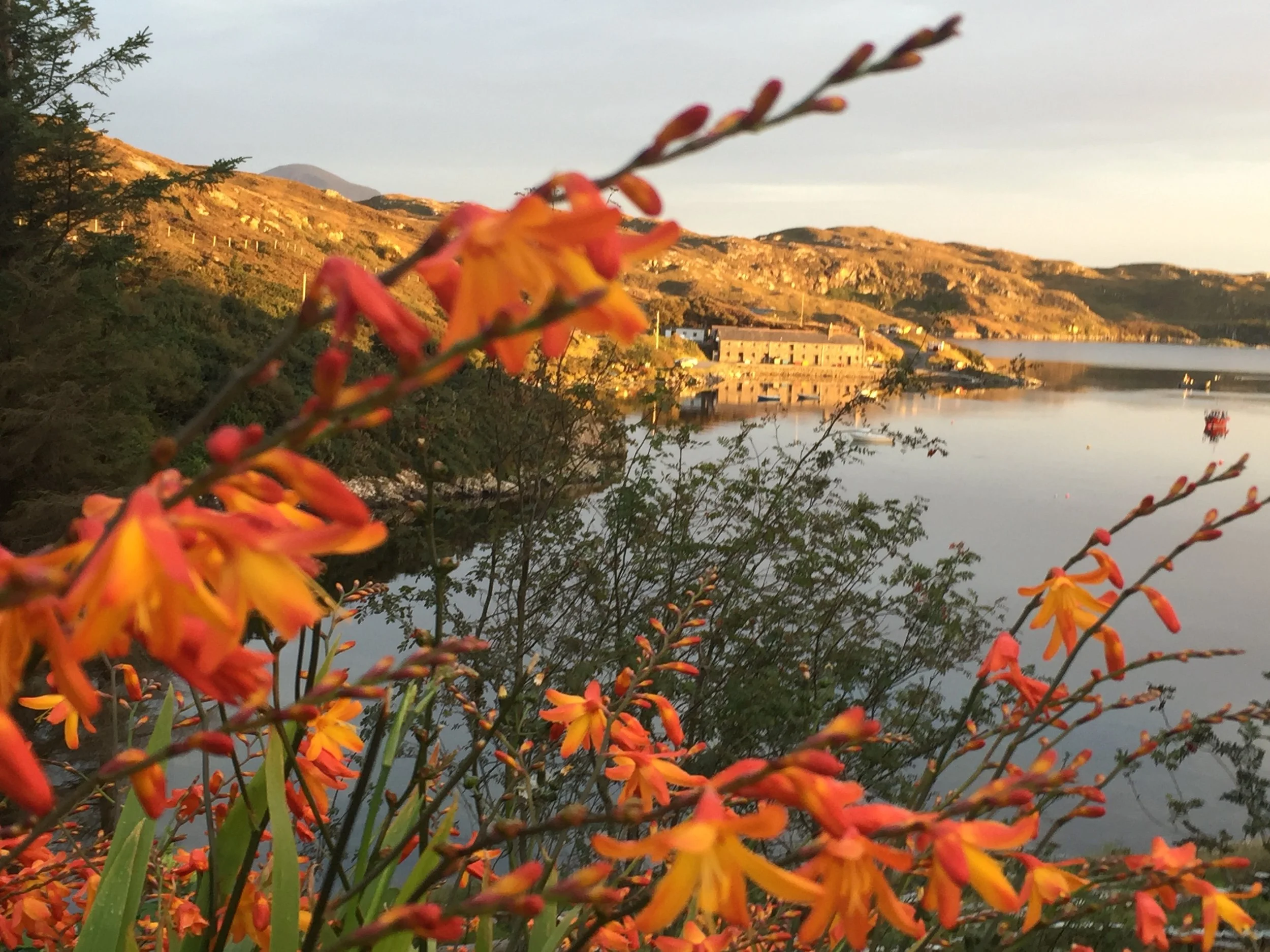
Montbretia (also known as crocosmia) performs reliably here — sometimes too reliably — but we break up the sways of inherited orange and move to varieties such as Emily Mackenzie (more yellow), George Davison (definitely yellow) and Lucifer (bright red). This will also extend the flowering period. In 2026, expect to find gardener Fiona thinning out the original orange abundant growth…please let her know if you would like free of charge some vigorous thugs for your own garden, but “be careful what you ask for”.
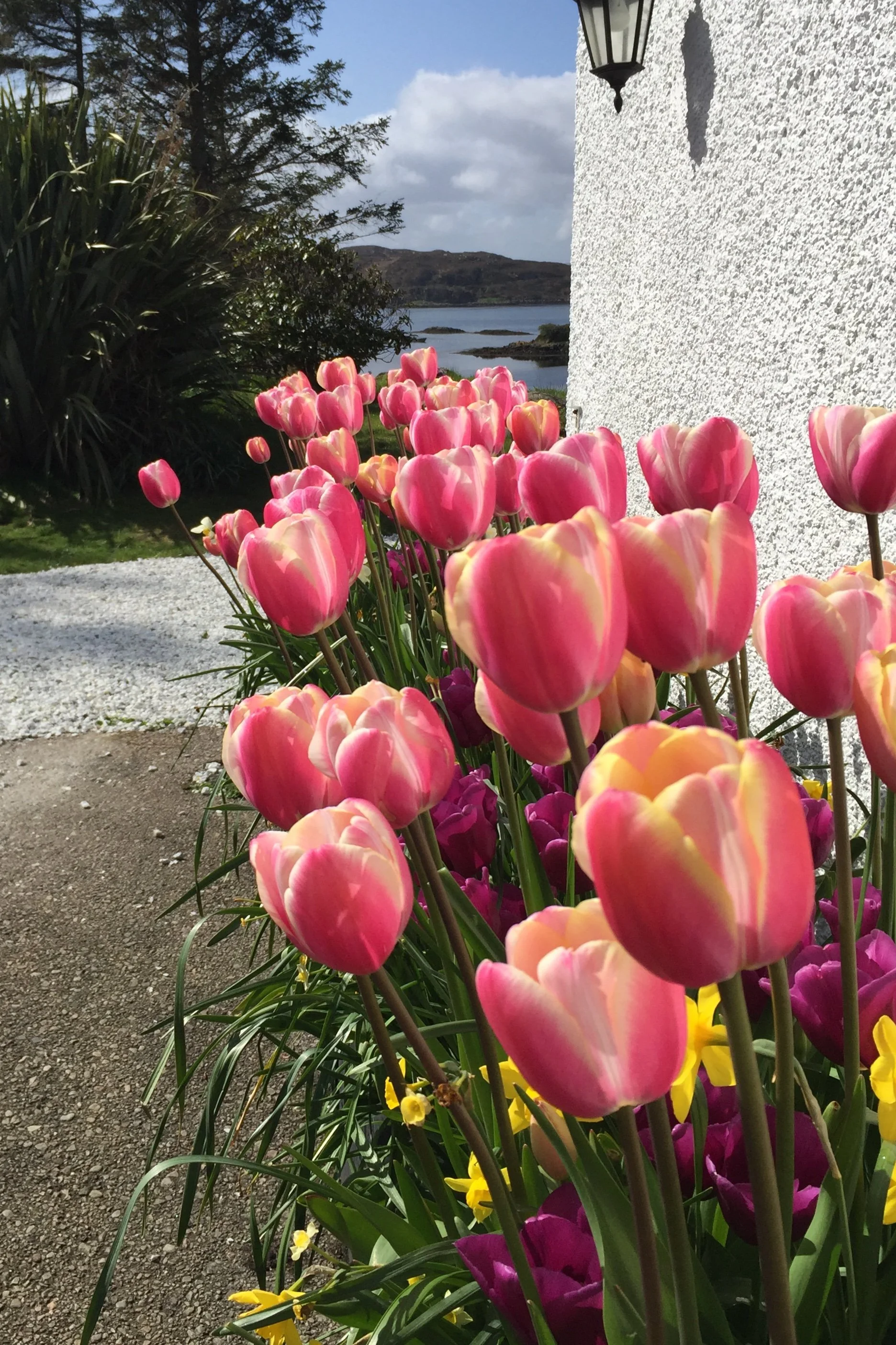
Spring bulbs have been added throughout the grounds and are topped up each winter in existing beds, pots and planters. This year we are also bringing Spring Bulbs and junipers into the areas our colleague James cleared last year in his epic campaign against encroaching gorse. Every patch of bare earth here has been won at personal discomfort!
James is one of our hospitality General Assistants: our guests encounter him serving breakfast in the mornings and working alongside housekeeping (his lifting strength is much appreciated by colleagues), but later in the day they’re more likely to spot him in midge nets, strimming grassy banks, removing the nastier invasive returner plants, or tackling outdoor maintenance projects with Richard. He’s returning for a second season in 2026, which delights us - and will no doubt alarm the gorse.
We’ll see what takes, what struggles, and what thrives beyond expectation. Guests who garden - and we’re fortunate to have many skilled ones among our regulars - often have welcome suggestions. Crab apples and a Amelanchier with lovely white Spring blooms are now in our sights for the next phase and we’re eagerly listening for your ideas…
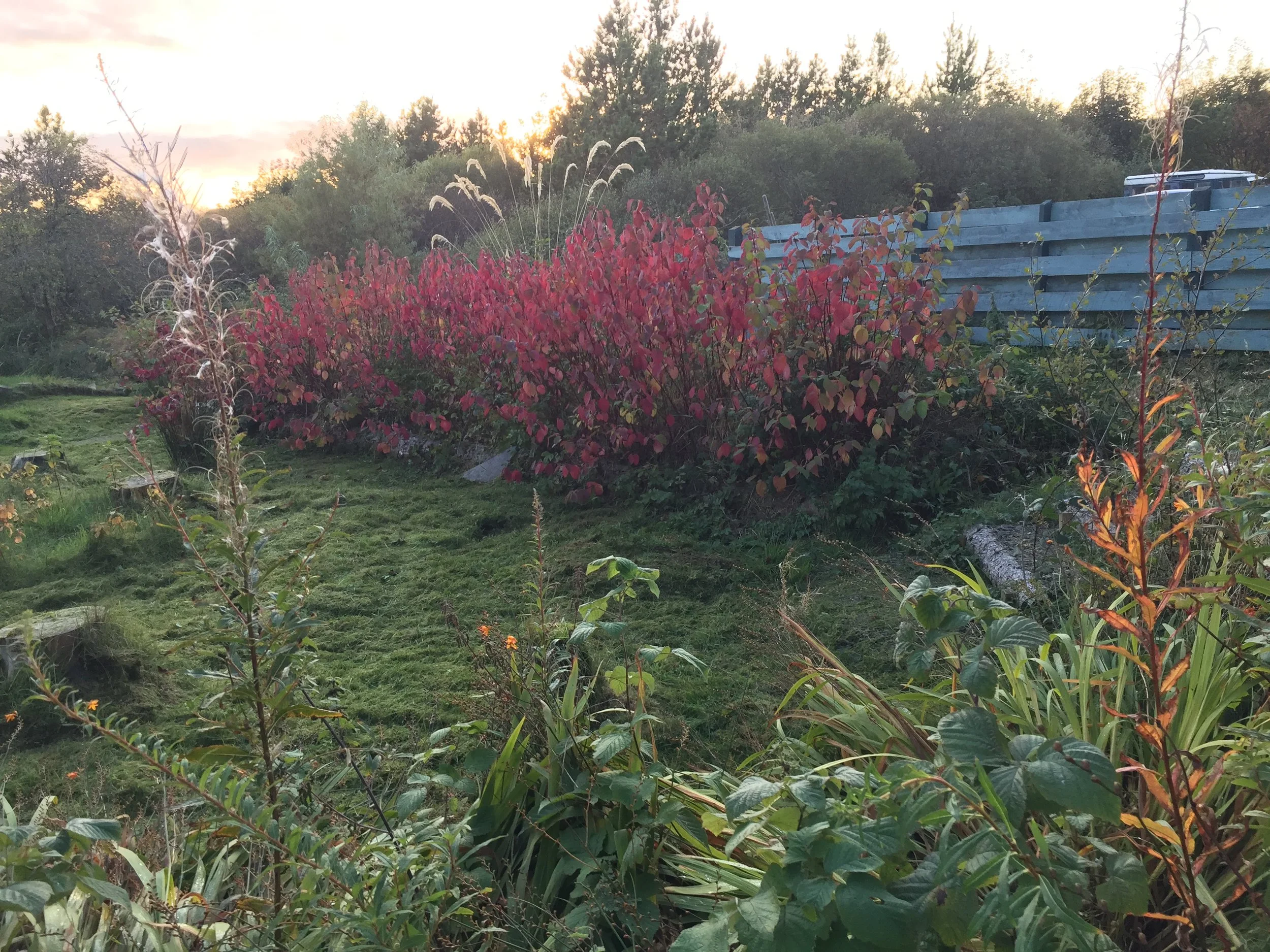
It is equally important to notice what is already doing well each season. For winter, Cornus (Dogwood) thrives here, and this year more Siberia Scarlet have been ordered for mid February planting, as well as plans to take our own from cuttings from existing plants in late February In two or three winters’ time, deep red should frame the driveway approach to the house, colour at it’s best in late autumn and winter and giving way to vibrant blooming azaleas and rhododendrons in later Spring.
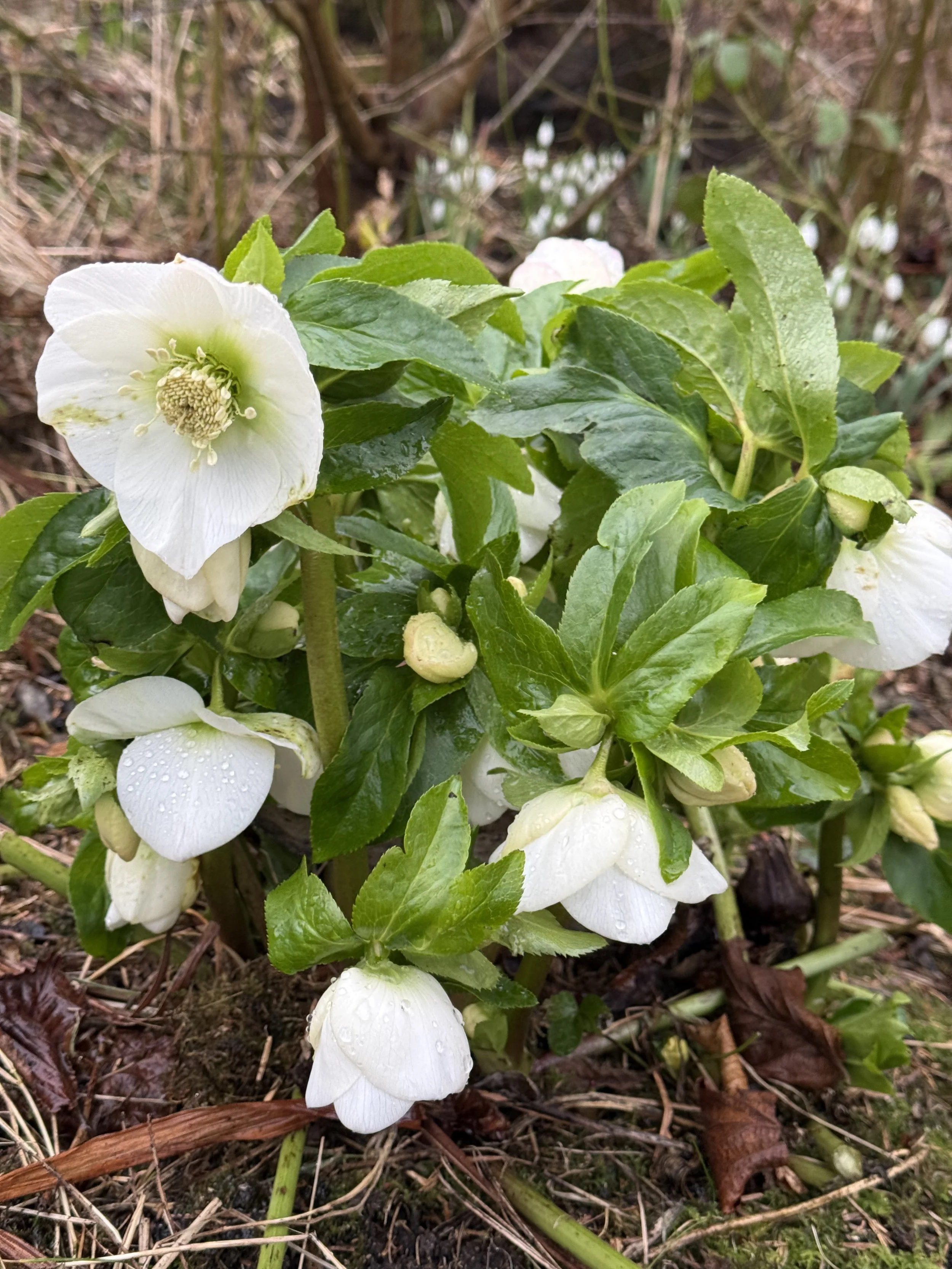
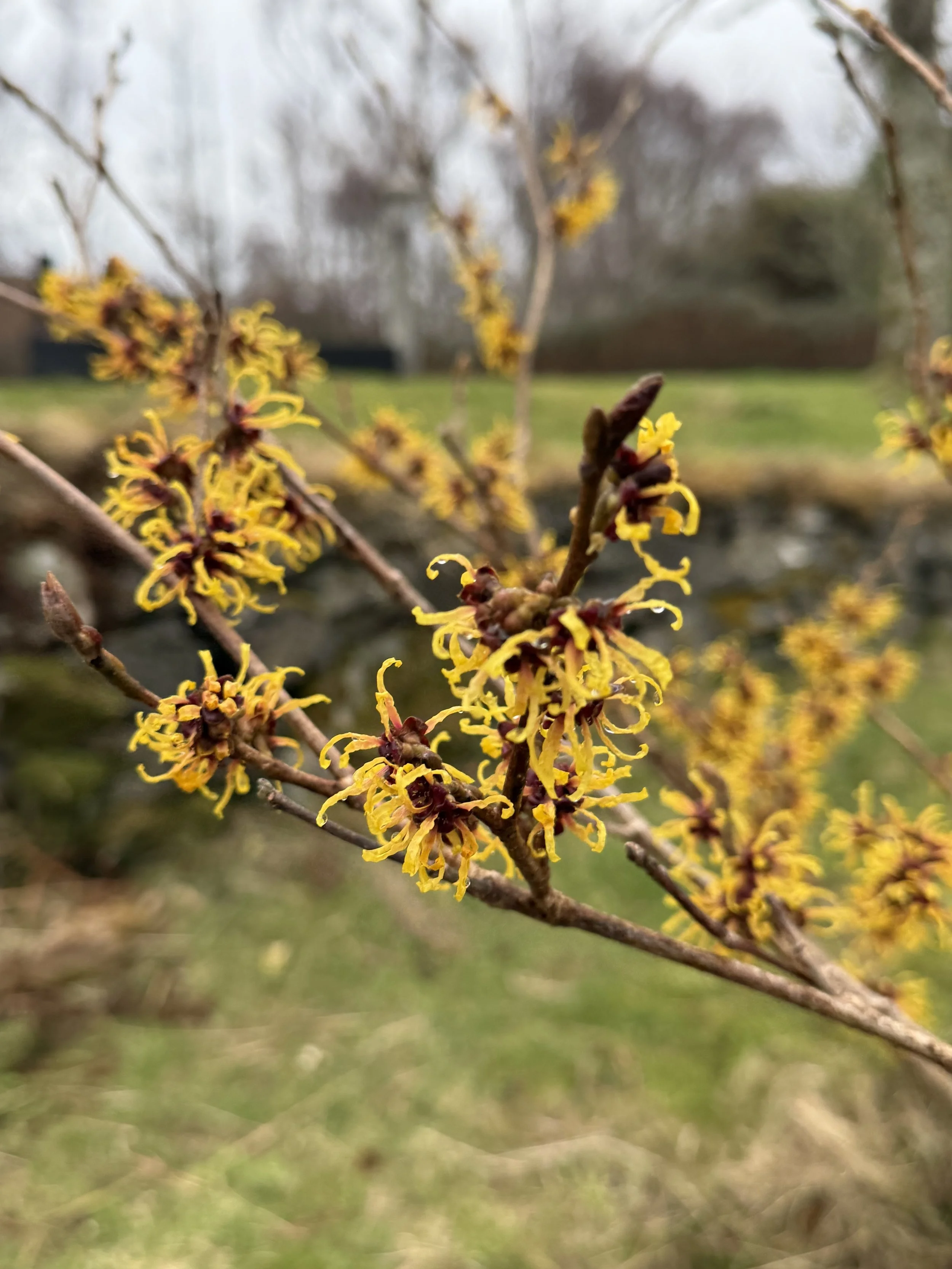
One woodland bed combines hellebores, snowdrops and a witch hazel that flowers reliably in January which we’d like to repeat elsewhere. We’ll be planting snow drops in the green as they struggle to establish on land dominated by spruces for 40 year. As for witch hazel, next time we’ll avoid an exposed position which means the scent is often carried away on the wind. You live and learn, in any garden.
⸻
The quiet turn toward spring
No January would be complete without evenings by the fire and seed catalogues spread across the table. With an unheated Polycrub limited light until well into February, we take a measured approach. There is no rush, early planting can easily result in leggy seedlings here. Growth will accelerate after the March equinox. In the meantime, a few trays and deep root leaders inexplicably end up in the hotel’s sun lounge - soaking in the south facing light.
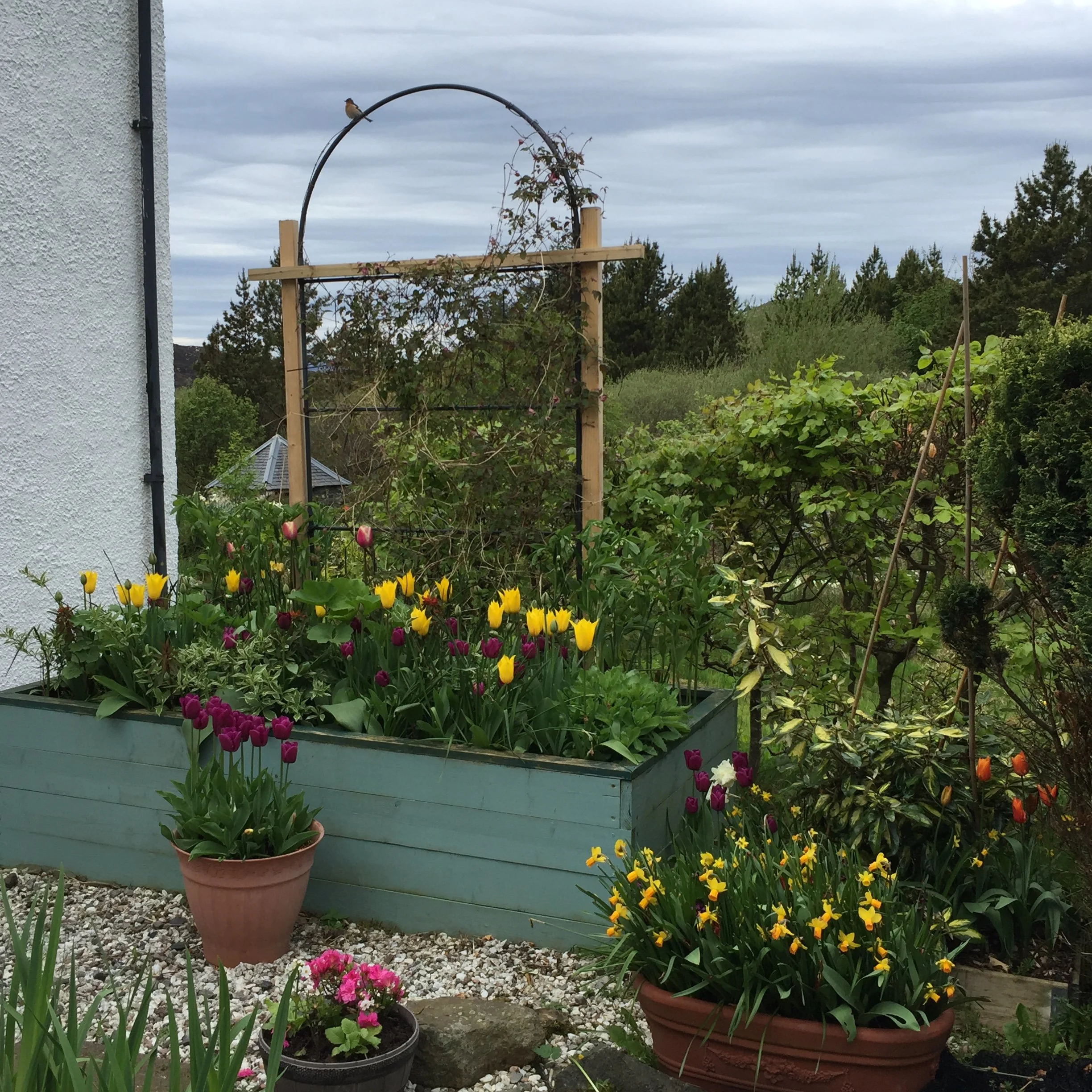
If the wind drops sufficiently, we’ll be making our maintenance cuts of hedges in February before the nesting season begins. We missed this last year due to family illness so double duty will be required. We will also be replacing wooden planters, the last outdoor projects until we confine Richard to painting the hotel indoors in preparation for the reopening.
On wet and windy days, the slower work takes precedence: cleaning pots, sorting seed trays, sharpening tools, and making quiet decisions about what to try, and what to leave alone for another year.
Reality Check
Come April, when the garden stirs and guests return, none of this winter work will announce itself. The steps will simply be there when someone wants to reach the shore. The photographer’s small deck will offer its view without fanfare. The cleared areas will hopefully bloom as though they’d always intended to. This is as it should be. A garden — like a good hotel — reveals its careful care not in what it displays, but in what it makes possible for its guests. The best work is the kind that goes unnoticed, felt only in the ease with which a guest moves through our grounds, pauses in exactly the right spot, or finds themselves unexpectedly at home in a landscape they’ve only just met.